Lowkey meaning is one of those things everyone kind of understands—but almost no one explains clearly. You hear it in texts, TikToks, voice notes, and casual conversations, yet it still feels fuzzy when you try to define it.
That confusion makes sense. “Lowkey” isn’t just a dictionary word anymore. It’s a social signal. A tone-setter. A way people soften feelings, hide intensity, or express something without making it a big deal.
Quick Answer
Lowkey means something is subtle, not obvious, or quietly felt. When people say “lowkey,” they usually mean they feel something a little, secretly, or without wanting too much attention.
What Does Lowkey Mean in Simple Words?
The lowkey meaning is actually simple once you stop overthinking it. At its core, lowkey means something is felt, said, or done quietly—without making a big deal about it. It’s not hidden, but it’s not loud either.
When people ask “what does lowkey mean?”, they’re usually trying to understand the emotional tone, not the dictionary definition. Lowkey signals restraint. It’s how modern conversations avoid sounding dramatic, needy, or too intense.
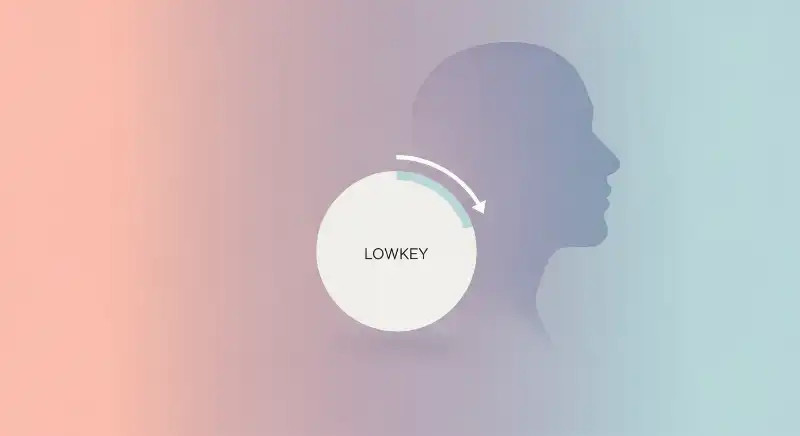
Think of it like dim lighting. The room isn’t dark—you just don’t want the spotlight on.
What is the basic definition of lowkey?
In plain English, lowkey means subtle, understated, or toned down. It often describes feelings, opinions, or desires that are real—but expressed gently.
Example:
“I lowkey like this show.”
You’re saying you enjoy it, just not obsessively.
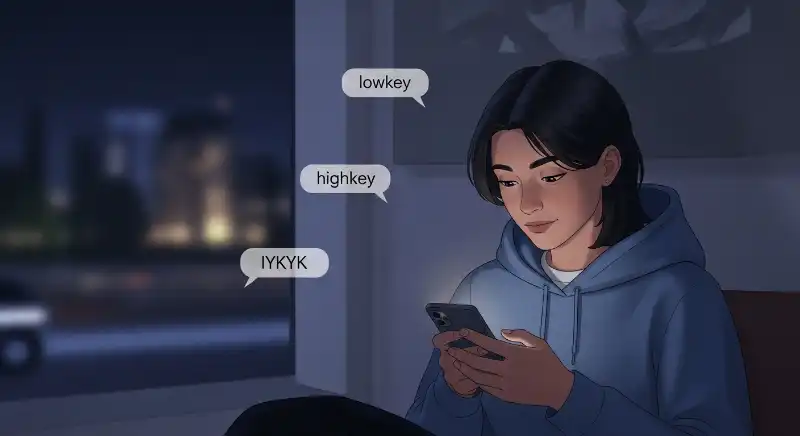
This same idea appears in other modern slang like highkey (the opposite) or context-dependent terms such as IYKYK, where meaning depends on shared understanding rather than direct explanation.
Does lowkey always mean something is small or subtle?
Not necessarily. Sometimes the feeling is strong, but the speaker chooses to express it calmly.
Example:
“I’m lowkey proud of you.”
The pride might be deep—it’s just not shouted.
That’s why the lowkey meaning in slang isn’t about weakness. It’s about control.
Lowkey Meaning in Slang and Everyday Conversation
In everyday slang, the lowkey meaning goes beyond “a little bit.” It’s a social tool. People use it to protect themselves emotionally while still being honest.
In real conversations, lowkey helps people say things without fully committing—or without inviting pressure.
How is lowkey used in everyday speech?
You’ll usually hear lowkey before:
- opinions
- emotions
- confessions
- soft disagreements
Examples:
- “I lowkey want to travel solo.”
- “That was lowkey awkward.”
These don’t sound dramatic. They sound human.
What does lowkey mean when a girl says it?
This is a huge People Also Ask query, and context matters.
When a girl says something like:
“I lowkey like you,”
it often means she has interest but doesn’t want to sound too obvious or vulnerable yet.
It’s emotional caution—not mixed signals.
What does lowkey mean when a guy says it?
When a guy uses lowkey, it often signals guarded honesty.
Example:
“I lowkey miss you.”
That usually means he does miss you—but doesn’t want to seem overly emotional.
Different delivery, same purpose: emotional balance.
What Does Lowkey Mean in Text Messages?
The lowkey meaning in text is especially important because tone gets lost in short messages. One word can completely change how a sentence feels.
In texting, lowkey often acts as a softener.
What does lowkey mean when someone texts it?
In texts or DMs, lowkey usually means:
“I’m saying this… but I’m not pushing.”
Example:
“I’m lowkey excited to see you.”
This shows interest without pressure or expectations.
That’s why lowkey appears so often in modern texting culture.
Can lowkey change the tone of a text?
Absolutely.
Compare:
- “I like you.” → direct, intense
- “I lowkey like you.” → relaxed, emotionally safer
This subtle shift is why the lowkey meaning in text is tied closely to intent, not just words.
Lowkey Meaning on TikTok, Instagram, and Social Media
On social platforms, lowkey thrives because it fits the culture of relatable understatement. People want to express thoughts without sounding extreme—or getting dragged in comments.
That’s why the lowkey meaning in slang exploded on TikTok and Instagram.
How is lowkey used in social media captions?
Creators often use lowkey to soften bold opinions.
Examples:
- “Lowkey obsessed with this song.”
- “This outfit is lowkey fire.”
It invites agreement without forcing it.
Why is lowkey so popular on TikTok and Instagram?
In 2026, online culture values controlled authenticity. Oversharing feels risky. Lowkey lets people be real—without being exposed.
Similar slang terms, like highkey or IYKYK, work the same way: shared context, minimal explanation, maximum relatability.
Lowkey vs Secretly vs Kind Of — What’s the Difference?
This is where most confusion happens. People mix these words up, but they’re not the same, and Google clearly distinguishes them.
Understanding this comparison strengthens the real lowkey meaning.
Lowkey vs secretly — are they the same?
Not exactly.
- Secretly = hidden on purpose
- Lowkey = not emphasized
Example:
“I secretly like her.” → no one knows
“I lowkey like her.” → some people might know, but you’re not announcing it
Lowkey doesn’t require secrecy—just softness.
Lowkey vs kind of / slightly — what’s the difference?
- Kind of / slightly describe degree
- Lowkey describes tone
Example:
“I’m slightly tired.” → energy level
“I’m lowkey tired.” → feeling it, but not complaining
That’s why lowkey feels more emotional and human than technical words.
Lowkey vs Highkey — What’s the Difference?
To really understand the lowkey meaning, you have to look at its opposite: highkey. These two words work like emotional volume controls. One turns feelings down. The other turns them up—on purpose.
People don’t choose between lowkey and highkey randomly. They choose based on how much attention they want their feelings to get.
What does highkey mean compared to lowkey?
Highkey means openly, strongly, and without hiding anything. There’s no subtlety involved.
Examples:
- “I lowkey like this song.” → mild, relaxed enjoyment
- “I highkey love this song.” → full excitement, no filter
If lowkey says “don’t make this a big thing,” highkey says “yes, this is a big thing.”
When should you use lowkey instead of highkey?
Use lowkey when you want to:
- avoid sounding dramatic
- express feelings without pressure
- keep conversations emotionally balanced
Example:
At work, saying “I lowkey disagree” sounds thoughtful.
Saying “I highkey disagree” sounds confrontational.
That’s why lowkey appears more often in real-life conversations.
Is Lowkey Positive, Negative, or Neutral?
One reason the lowkey meaning confuses people is because it doesn’t carry a fixed emotion. It’s not automatically good or bad—it’s tone-dependent.
Lowkey adjusts how something feels, not what it means.
Is lowkey usually meant in a positive way?
Most of the time, yes. People often use lowkey to express soft positivity.
Examples:
- “That was lowkey impressive.”
- “I lowkey enjoyed our conversation.”
These sound sincere but not exaggerated. They feel genuine without pressure.
Can lowkey ever sound negative or dismissive?
It can—especially when paired with criticism.
Here, lowkey doesn’t soften much. It can actually feel passive-aggressive, like criticism wearing casual clothes.
So while lowkey often sounds friendly, delivery still matters.
How to Use Lowkey Naturally Without Sounding Awkward
The biggest mistake people make is forcing the word lowkey everywhere. When used naturally, it sounds smooth. When forced, it sounds artificial.
The key is understanding where it belongs.
How can beginners use lowkey correctly?
A simple rule:
Use lowkey with feelings, opinions, or thoughts—not facts.
Natural examples:
- “I lowkey want to move abroad.”
- “I’m lowkey nervous about the interview.”
These sound like real inner thoughts, not internet slang pasted into a sentence.
What are common mistakes people make using lowkey?
Avoid these:
- Using lowkey with pure facts
- Overusing it in every sentence
- Using it in formal or professional writing
Awkward example:
“I lowkey submitted the report.”
That’s just an action—no emotional tone needed.
Is “Lowkey” Still Used in 2026?
Yes—but the way people use it has matured. In 2026, lowkey isn’t about sounding trendy. It’s about emotional efficiency.
People want to say more while revealing less.
Do Gen Z and Millennials still say lowkey?
Absolutely.
- Gen Z uses lowkey to express controlled vulnerability
- Millennials often use it with humor or irony
Across both groups, the lowkey meaning in slang remains the same: honest, calm, and intentional.
Is lowkey becoming outdated or still relevant?
It’s still relevant because the need for it hasn’t gone away. In fact, constant online exposure makes subtle language more valuable than ever.
That’s why lowkey continues to live alongside slang like highkey, IYKYK, and other context-driven expressions.
People Also Ask
What does lowkey mean in simple terms?
In simple words, lowkey means quietly, subtly, or without making a big deal. People use it to express feelings or opinions in a calm, toned-down way instead of sounding intense or dramatic.
Is lowkey slang or a real word?
It’s both. Lowkey started as a real word meaning “low intensity,” but today it’s widely used as modern slang in conversations, texts, and social media to describe emotions or thoughts that aren’t loudly expressed.
What does “lowkey like you” mean?
When someone says “I lowkey like you,” it usually means they have feelings but are keeping them understated or private. The feeling may be real, but the speaker doesn’t want to sound too forward or vulnerable.
Does lowkey mean secretly?
Sometimes, yes. In many contexts, lowkey can mean secretly or privately, especially when talking about emotions. Other times, it simply means a little bit. Context decides the meaning.
Is lowkey positive or negative?
Most of the time, lowkey is neutral to positive. It often softens statements and makes them feel relaxed. However, depending on tone, it can sometimes sound dismissive or passive-aggressive.
What’s the opposite of lowkey?
The opposite of lowkey is highkey, which means openly, strongly, or without hiding feelings. If lowkey turns the volume down, highkey turns it all the way up.
Can lowkey be used in formal writing?
Not really. Lowkey is best suited for casual conversation, texting, and social media. In formal writing or professional settings, clearer words like “slightly,” “subtly,” or “privately” are better choices.
Conclusion
The reason lowkey refuses to disappear isn’t hype—it’s usefulness. It gives people a way to be honest without being exposed, expressive without being overwhelming.
In real life, we rarely feel things at full volume all the time. Most emotions live somewhere in the middle—quiet likes, soft doubts, mild excitement, private hopes. Lowkey gives language to those in-between feelings.
So when someone says they’re “lowkey happy,” “lowkey stressed,” or “lowkey interested,” they’re not being unclear. They’re being human.
And in a fast, noisy digital world, that kind of emotional control is exactly why lowkey still matters.
Why Do People Call Others “Sus” in Conversation?

Mush explores trending words, viral slang, and social media phrases, explaining them in simple English with fun examples for everyone.