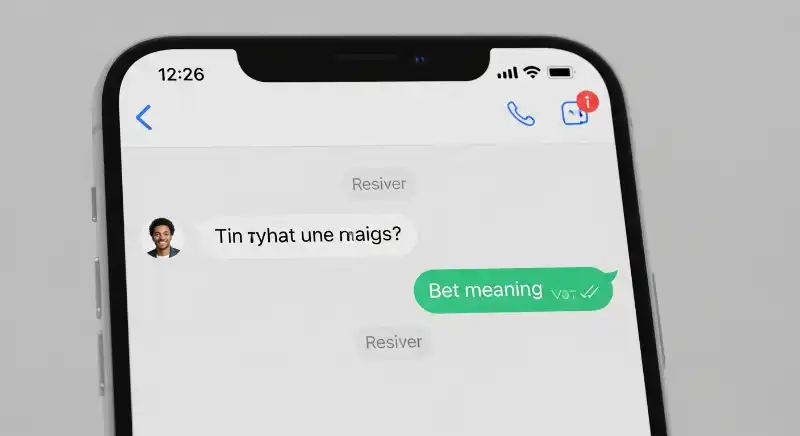
In modern English, the bet meaning has shifted far beyond gambling. Bet meaning often confuses people because this tiny word quietly changed its personality over time. One moment it sounds like gambling, the next it feels like a confident “okay,” and sometimes it lands somewhere in between—especially in texts and casual talk.
If you’ve ever paused after someone replied “bet” and wondered what exactly they meant, you’re not alone. By the end of this guide, that confusion will be gone, and the word will feel simple, human, and surprisingly logical.
What Does “Bet” Mean? (Core Definition)
The Two Sides of “Bet” – Agreement vs. Wager
At its core, “bet” has two distinct personalities:
- Traditional (Gambling): To risk something of value on an uncertain outcome.
- Modern (Slang): To agree, confirm, or express confidence in a casual setting.
The modern usage is what confuses most people today. When someone says “bet” in a text, they aren’t pulling out a wallet—they’re saying “yes,” “okay,” or “I’m on board.”
Why Context Changes Everything
The same word can mean completely different things depending on the situation.
- Gambling context: “I placed a bet on the game.” (Money + risk)
- Casual context: “Meet me at 7?” — “Bet.” (Agreement + confidence)
The surrounding words and the tone of the conversation tell you exactly which meaning is intended.
What Does “Bet” Mean in Slang?
Slang doesn’t replace meaning—it compresses it. The slang meaning of “bet” has become one of the most versatile words in modern English.
“Bet” as “Okay,” “Sure,” or “I Agree”
In most everyday conversations, “bet” simply means agreement. It’s faster than saying “okay” and feels more confident.
Example:
Friend: “Can you pick me up at 6?”
You: “Bet.”
Here, “bet” means “yes, I’ll do that.”
“Bet” as Confidence and Approval (“I’m in”)
Sometimes “bet” goes beyond simple agreement—it signals enthusiasm or readiness.
Example:
Friend: “We’re going to the beach tomorrow.”
You: “Bet.”
This doesn’t just mean “okay”; it means “I’m excited, count me in.”
“Bet” as a Challenge (“Prove it” or “Say less”)
This is where “bet” gets interesting. It can also mean “challenge accepted” or “prove it.”
Example:
Person A: “I can beat you in a race.”
Person B: “Bet.”
Here, “bet” doesn’t mean “I agree.” It means “Let’s see you try. I’m ready for the challenge.”
“Bet” as Sarcasm or Doubt (The Playful Edge)
Sometimes, “bet” is used sarcastically to express disbelief or irony.
Example:
Person A: “I’m going to become a millionaire tomorrow.”
Person B: “Yeah, bet.”
Here, “bet” is a playful, sarcastic way of saying “sure you are” without being openly rude.
What Does “Bet” Mean in Text and Chat?
Texting changed how words behave. Short replies gained emotional weight, and “bet” thrived in that environment.
The One-Word “Bet” Reply
In texts, “bet” works perfectly as a one-word response. It’s short, confident, and clear.
Example:
Text: “Send me the details.”
Reply: “Bet.”
Meaning: “Got it, I’ll send them.”
“Bet” When Confirming a Plan
“Bet” is frequently used to confirm plans quickly.
Example:
Text: “See you at 8 PM?”
Reply: “Bet.”
Meaning: “Confirmed. I’ll be there.”
“Bet” as “I Got You” or “Understood”
It can also mean understanding or acknowledgment.
Example:
Text: “Make sure to lock the door.”
Reply: “Bet.”
Meaning: “Understood, I’ll take care of it.”
How Does the Tone of “Bet” Change Its Meaning?
The tone of “bet” is everything. The same word can be warm, competitive, or sarcastic based on delivery.
Friendly and Confident “Bet”
This is the most common usage. It sounds warm and reliable.
Example:
“Let’s grab lunch later.”
“Bet.”
It feels like a high-five in word form.
Competitive or Challenging “Bet”
When said with a sharp or playful tone, it becomes a challenge.
Example:
“You can’t finish that pizza.”
“Bet.”
It means “Oh yeah? Watch me.”
Sarcastic or Ironic “Bet”
With a flat or exaggerated tone, it can be sarcastic.
Example:
“I’m the smartest person in the world.”
“Bet.”
It means “I don’t really believe you, but okay.”
Why Do People Say “Bet” on Social Media?
Platforms like TikTok, Snapchat, Instagram, and Discord have amplified the popularity of “bet.”
“Bet” on TikTok, Snapchat, and Instagram
On these platforms, “bet” is used in comments, stories, and DMs to show quick engagement with a post or plan.
Example:
Influencer: “Who’s coming to the meetup?”
Comment: “Bet.”
It’s a fast way to say “I’m in” without typing a long sentence.
Why Gen Z Loves This Word
Gen Z adopted “bet” because it’s:
- Short — fits perfectly in fast-paced digital conversations.
- Confident — sounds stronger than “okay.”
- Flexible — can mean agreement, challenge, or even sarcasm.
Where Did the Slang “Bet” Come From? (Origin)
Understanding the origin helps everything else make sense.
From Gambling Tables to Everyday Language
The word “bet” has been part of English for centuries, originally meaning “to risk money on an outcome.” Over time, it evolved into a casual expression of certainty.
The phrase “you bet” (meaning “you can be sure”) was the bridge. If you can say “you bet” to mean “certainly,” it’s a small step to drop the “you” and just say “bet.”
The Connection Between “Bet” and “You Bet”
“You bet” has been a common American phrase for decades, meaning “definitely” or “of course.”
Example:
“Can you help me?”
“You bet!”
From there, younger generations shortened it to a single word: “Bet.” It’s the natural evolution of language becoming more efficient.
What Does “Bet” Mean in Its Traditional (Gambling) Sense?
Before texts and slang, “bet” meant risking something of value on an uncertain outcome. That meaning still exists and remains valid—just more specific now.
Bet as a Verb (Risking Money)
As a verb, “bet” describes the act of placing a wager.
Example:
“He bet $50 on the final score.”
Here, “bet” is an action—money is being risked.
Bet as a Noun (The Wager)
As a noun, “bet” becomes a thing—the wager itself.
Example:
“That was a smart bet.”
Here, “bet” is the wager or agreement.
Slang “Bet” vs. Gambling “Bet”
The difference is simple:
- Gambling bet = money + risk + outcome.
- Slang bet = confidence + agreement + no money involved.
Comparison:
Gambling: “I bet $100.”
Slang: “Bet, see you there.”
Same word. Completely different world.
Is “Bet” Formal, Casual, or Rude?
One of the most common questions is whether “bet” is appropriate or if it sounds rude.
Can You Use “Bet” at Work or in Emails?
In formal emails or client communication, avoid “bet.” Use “understood,” “confirmed,” or “sure” instead.
In casual work chats (Slack, Teams) with close teammates, “bet” is increasingly normal in 2026.
Example:
Team chat: “Can you review this deck?”
Reply: “Bet.” (Perfectly fine in a relaxed office culture)
When “Bet” Sounds Natural vs. Dismissive
“Bet” is not rude by default. It only sounds rude if:
- The tone is sharp.
- The context expects formality.
- The listener interprets it as dismissive.
Example:
Casual friend chat → “Bet.” (Fine)
Apology response → “Bet.” (Awkward)
Tone always wins over dictionary meaning.
How Is “Bet” Used in Different Real-Life Conversations?
Here’s where “bet” truly shines—it adapts to almost any casual interaction.
“Bet” When Making Plans with Friends
The most common and safest usage.
Example:
“Let’s meet at 7 PM.”
“Bet.”
Simple, clear confirmation.
“Bet” When Accepting a Challenge
This adds a competitive edge.
Example:
“I bet you can’t finish that workout.”
“Bet.”
It means “Challenge accepted.”
“Bet” in a Relationship or Dating Context
(Based on your GSC data, where "a bet meaning in relationship" is ranking at Position #4)
In relationships, “bet” often carries a slightly different emotional weight—it can mean “I trust you” or “I’m on your side.”
Example:
Partner: “We’ll figure this out together.”
You: “Bet.”
Here, “bet” is not just agreement—it’s emotional support, meaning “I trust you” or “I’m with you.”
Sometimes it can also be playful:
Partner: “You owe me a coffee.”
You: “Bet.” (Agreeing to the playful deal)
Important: Don’t overuse it in serious relationship conversations, but in light-hearted moments, it works perfectly.
Bet vs. Okay vs. Sure vs. Say Less (What’s the Difference?)
All these words signal agreement, but they feel different. People don’t choose “bet” randomly—they choose it for tone.
Bet vs. Okay (Neutral vs. Confident)
- “Okay” is neutral. It’s safe. It’s emotionally flat.
- “Bet” adds confidence.
Comparison:
“Okay.” → I agree.
“Bet.” → I agree and I’m solid about it.
Bet vs. Sure (Polite vs. Casual)
- “Sure” sounds polite and cooperative.
- “Bet” sounds relaxed and self-assured.
Comparison:
“Sure, I can do that.” → Friendly, helpful.
“Bet.” → Confident, ready, no hesitation.
Bet vs. Say Less (Enthusiastic Agreement)
- “Say less” means “I already agree, you don’t need to convince me.”
- “Bet” is shorter, more versatile, and fits almost anywhere “Say less” does.
Example:
“We’re going to the party tonight.”
“Say less.” / “Bet.”
Both work, but “bet” is more universally understood.
Frequently Asked Questions (FAQs) About “Bet”
What does “bet” mean when someone texts you?
When someone texts “bet,” they usually mean “yes,” “okay,” “I agree,” or “I’m on board.” It’s a short, confident way to confirm a plan or acknowledge a message.
Does “bet” always mean gambling?
No. In modern English, most uses of “bet” have nothing to do with gambling. If there’s no money, no risk, and no outcome involved, it’s almost always agreement or confidence.
Does “bet” mean the same as “sure”?
Not exactly. “Sure” sounds polite and cooperative. “Bet” sounds confident and relaxed. Both agree, but “bet” feels cooler and more casual.
Can “bet” sound rude?
Yes, but only in specific tones. When said sharply or in a challenging context, “bet” can mean “prove it.” In normal friendly conversation, it’s not rude at all.
What does “you bet” mean?
“You bet” is a traditional phrase meaning “of course” or “definitely.” It’s the root from which the modern slang “bet” evolved.
How should I reply to “bet”?
You can reply with:
- A simple “Great!”
- A thumbs-up emoji 👍
- Or just continue the conversation naturally. There’s no special rule—it’s just a confirmation.
Final Takeaway: One Word, Infinite Meaning
The word “bet” looks simple, but it carries confidence, agreement, belief, challenge, sarcasm, and tone—all packed into three letters.
That’s why it works so well today. Language is moving faster, conversations are shorter, and people want words that feel human. “Bet” doesn’t overexplain. It doesn’t hesitate. It quietly says, “I get it.”
Once you stop tying it only to gambling, everything clicks. In most everyday situations, “bet” just means “yes with confidence.”
Quick Recap:
| Context | Meaning |
|---|---|
| Gambling | Risking money on an outcome |
| Slang / Text | Agreement, confirmation, “okay” |
| Challenge | “Prove it” / “Say less” |
| Sarcasm | Playful disbelief |
| Relationships | Trust, emotional support, agreement |
So next time someone replies with “bet,” you won’t second-guess. You’ll know exactly what they meant.


