What does pansexual mean? It describes a sexual orientation where someone can feel romantic or sexual attraction to people regardless of their gender.
That single sentence answers the search query. But for many people, the real question goes deeper. They’re not just asking for a definition. They’re trying to understand identity, language, and how attraction works in a world where gender conversations are evolving quickly.
In 2026, searches for the meaning of pansexual continue to rise. From “what does pansexual mean in sexuality” to “what does pansexual mean vs bisexual,” curiosity reflects a cultural shift. This guide explains the definition, the history, real-life meaning, differences from similar identities, and the most common myths — clearly and respectfully.
Quick Definition
Pansexual means being attracted to people regardless of gender. A pansexual person may experience romantic or sexual attraction to men, women, nonbinary individuals, transgender people, or others across the gender spectrum. Gender is not a limiting factor in their attraction.
What Is the Meaning of Pansexual? A Clear, Modern Definition
The word “pansexual” comes from the Greek prefix pan-, meaning “all.” In the context of sexuality, it refers to attraction that is not restricted by gender categories.
This does not mean:
- Attraction to everyone
- Lack of preference
- Confusion about identity
It simply describes openness to attraction across genders.
Major psychological organizations and LGBTQ advocacy groups recognize pansexuality as a legitimate sexual orientation. It appears in modern research, inclusive education programs, and global identity discussions.
In simple terms:
Pansexuality describes attraction where gender does not limit who someone can love.
What Does Pansexual Mean in Simple Words?
In everyday language?
It means: “I’m attracted to the person, not limited by their gender.”
Imagine meeting someone who shares your humor, values, and emotional wavelength. For a pansexual individual, whether that person identifies as male, female, nonbinary, or transgender does not automatically restrict attraction.
Think of it like this:
Some people filter attraction through gender first.
Pansexual people don’t use gender as the deciding filter.
That’s the core idea.
Is Pansexual a Real and Recognized Sexual Orientation?
Yes.
Pansexuality is recognized within the broader LGBTQ spectrum. Organizations such as the American Psychological Association have acknowledged diverse sexual orientations beyond traditional categories.
The identity has gained increased visibility over the past two decades, but the experience itself is not new. Many individuals historically described attraction that transcended gender categories — they simply didn’t always have the vocabulary we use today.
In 2026, educational institutions, inclusivity programs, and media outlets commonly include pansexuality in discussions about sexual diversity.
Visibility has increased. Legitimacy has already existed.
Why Is Pansexuality So Widely Discussed in 2026?
Search interest around this identity has grown significantly. The question “what does pansexual mean again?” appears frequently in search data, indicating repeated exposure.
Why the rise?
Several cultural factors contribute:
- Greater LGBTQ representation in media
- Open conversations about gender identity
- Social media amplifying personal stories
- Younger generations exploring identity with more nuance
What feels “new” is often simply more visible.
The Role of Generational Change
Gen Z and Gen Alpha grew up in an environment where gender identity is more openly discussed.
Previous generations often worked with three primary labels:
- Straight
- Gay
- Bisexual
Now, language has expanded. Identity exploration feels less restricted.
A teenager might say:
“I don’t focus on gender when I like someone. I focus on connection.”
That statement closely reflects pansexual attraction.
This shift isn’t about trends. It’s about vocabulary catching up with lived experience.
Pansexual vs Bisexual: Understanding the Difference Clearly
One of the most common comparisons is between pansexuality and bisexuality.
Both involve attraction beyond a single gender. However, there are nuanced differences.
| Pansexual | Bisexual |
|---|---|
| Attraction regardless of gender | Attraction to two or more genders |
| Gender is not a limiting factor | Gender may still influence attraction |
| Often described as gender-inclusive | Often described as multi-gender attraction |
The overlap is real. The distinction is personal.
Is Pansexual the Same as Bisexual?
Not exactly — but they share similarities.
Bisexual typically means attraction to more than one gender. Pansexual emphasizes that gender itself does not determine attraction.
Think of it like overlapping circles in a Venn diagram. Some individuals feel both terms apply to them. Others feel strongly connected to one label.
Neither invalidates the other.
Identity labels are tools for self-description, not competition categories.
How Is Pansexual Different from Omnisexual or Polysexual?
Omnisexual individuals may acknowledge gender as part of attraction but still feel attraction to all genders.
Polysexual refers to attraction to multiple genders — though not necessarily all.
Pansexual emphasizes that gender is not a limiting condition.
These distinctions may seem subtle, but for many people, they matter deeply in describing personal experience.
What Does Being Pansexual Look Like in Real Relationships?
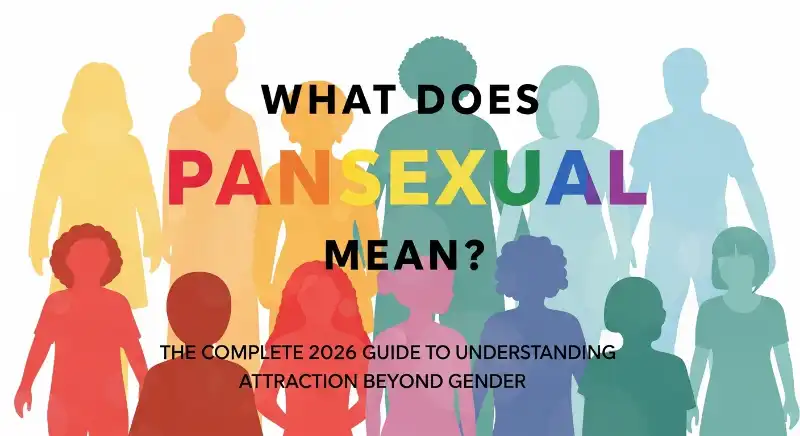
In real life, pansexual relationships look like any other loving relationship.
There is:
- Emotional intimacy
- Dating
- Commitment
- Long-term partnership
- Heartbreak
- Joy
The difference is simply this: gender does not restrict who a pansexual person can form those connections with.
What Does Pansexual Mean in Sexuality and Relationships?
It means someone’s romantic or sexual attraction can develop toward individuals of any gender identity.
For example:
- A pansexual person may date a man for years.
- Later, they might fall in love with a nonbinary individual.
- Later still, they could marry a woman.
Their orientation remains consistent. Their capacity for attraction was always broad.
Does Pansexual Mean Attraction to Everyone?
No.
This is the most persistent myth.
Pansexuality describes possibility — not inevitability.
Just as a heterosexual person isn’t attracted to every person of a different gender, a pansexual person isn’t attracted to every individual they meet.
Attraction still depends on:
- Chemistry
- Emotional connection
- Compatibility
- Shared values
Capacity does not equal constant attraction.
Common Myths About Pansexuality (And the Truth)
Myth 1: It Means Gender Doesn’t Exist
Reality: Pansexual people recognize gender. They simply do not treat it as a limiting factor.
Myth 2: It’s a Trend
Reality: Increased visibility does not equal new existence. Language evolves to describe long-standing experiences.
Myth 3: It Means Confusion
Reality: Choosing a specific identity label often reflects clarity, not confusion.
A Brief History of the Term Pansexual
The prefix “pan” has existed for centuries, but the modern identity usage became more visible in the late 20th and early 21st centuries.
Early online LGBTQ forums in the 1990s and 2000s helped popularize the term. As gender identity conversations expanded, pansexuality gained stronger recognition.
In the 2010s and 2020s, public figures openly identifying as pansexual contributed to wider awareness.
By 2026, the term is widely included in inclusive sexuality education.
Language evolves. Identity recognition grows with it.
The Pansexual Flag: Symbolism Explained
The pansexual pride flag consists of three horizontal stripes:
- Pink
- Yellow
- Blue
Pink represents attraction to women.
Blue represents attraction to men.
Yellow represents attraction to nonbinary and gender-diverse individuals.
The flag visually communicates inclusivity across gender identities.
How Do You Know If You Might Be Pansexual?
There is no checklist.
But you might reflect on patterns such as:
- Feeling attraction that isn’t limited by gender
- Not viewing gender as a deciding factor in who you connect with
- Feeling that traditional labels don’t fully describe your experience
Self-reflection matters more than external definitions.
Labels are optional. Understanding yourself is what matters most.
Global Understanding: Across Languages and Cultures
Whether someone searches:
- What does pansexual mean in English
- What does pansexual mean in Spanish
- What does pansexual mean in Arabic
The core concept remains consistent: attraction that is not restricted by gender.
Cultural attitudes may vary, but the definition remains stable across translations.
Conclusion: Understanding Beyond the Definition
When someone types “what does pansexual mean,” they are often searching for reassurance, clarity, or language that feels right.
Pansexuality describes the ability to feel attraction without gender acting as a boundary. It doesn’t suggest universal attraction, and it certainly doesn’t erase anyone’s identity. Confusion isn’t part of the definition.
At its core, the term simply communicates that gender is not the deciding factor in who someone can love or desire.
In a world where identity conversations are evolving rapidly, understanding terms like this helps build empathy and respectful dialogue.
Language grows. Awareness grows. And with clarity, conversations become more human.
📚 Related Articles
[Why Are So Many Students Confused About Idiom Meaning?]
[What Is the Temu App & How Does It Work?]

Mush explores trending words, viral slang, and social media phrases, explaining them in simple English with fun examples for everyone.