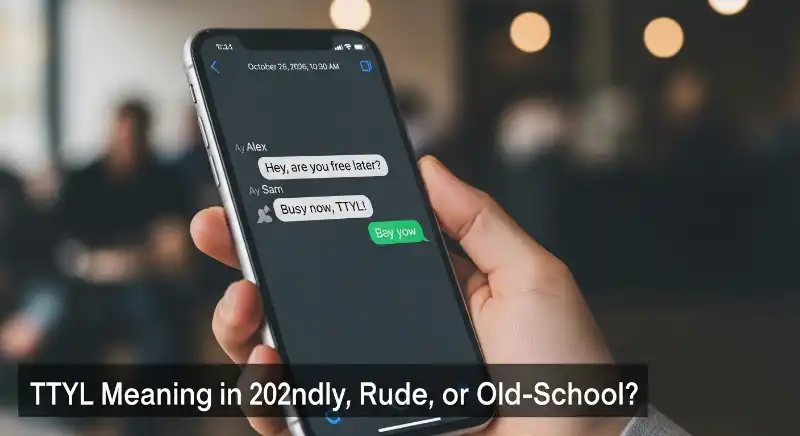
TTYL meaning is one of the most searched texting abbreviations online — and for good reason. You’ve probably received a message that simply said “ttyl” and wondered: Is that polite? Dismissive? Are they mad?
It looks harmless. Just four letters. But in digital conversations, tone lives between the lines. Understanding what TTYL really means — and how it feels — can save you from awkward misunderstandings.
Quick Answer
TTYL means “talk to you later.” It is an informal abbreviation used in texting and online chats to end a conversation politely while implying you will continue talking at another time. It is casual, friendly, and commonly used between friends or in relaxed digital conversations.
Now let’s unpack it properly.
TTYL Meaning Explained: What It Stands For and Why Everyone Is Suddenly Searching It
At its simplest, TTYL is a texting shortcut.
It removes extra words. It speeds things up. And it signals a temporary goodbye.
Searches like “ttyl meaning in text,” “ttyl meaning text message abbreviation,” and “text ttyl meaning” are rising again in 2026 because language cycles refresh. New generations rediscover old slang. Others forget it ever existed.
What does TTYL stand for in texting?
TTYL stands for “Talk To You Later.”
It tells the other person:
- I’m leaving the conversation.
- We’ll continue another time.
- This isn’t permanent.
Example:
Person A: I have to leave for dinner.
Person B: Okay, ttyl!
It’s short. It’s efficient. It keeps the door open.
You might also see searches like:
- ttyl meaning in texting
- ttyl meaning text messaging
- ttyl meaning in chat
All point to the same expansion.
What does TTYL mean in simple everyday language?
Imagine explaining it to a child.
You’d say:
“It just means we’ll talk again later.”
That’s it.
No hidden meaning. No secret tone by default.
Think of it like waving goodbye while saying, “See you soon.”
Simple. Clear. Friendly.
Why Does TTYL Sometimes Feel Dismissive or Cold?
Here’s where things get interesting.
Words are neutral. Tone is emotional.
Sometimes people search:
- ttyl meaning from a girl
- ttyl meaning from a guy
- ttyl meaning in text from a guy
Not because the meaning changes — but because tone does.
Is TTYL rude or polite in conversations?
It depends on context.
If a casual chat ends with:
“Okay, ttyl!”
It feels normal.
But imagine this:
Person A: I’m really upset about what happened.
Person B: ttyl.
That feels different.
The word didn’t change. The situation did.
Short replies after emotional messages can feel abrupt.
Can TTYL sound passive-aggressive in certain situations?
Yes — but usually unintentionally.
Example:
“Sure… ttyl.”
That extra pause (the dots) changes everything.
Text doesn’t carry facial expressions. So people fill gaps with assumptions.
In reality, most people who type “ttyl meaning.” or “i’ll ttyl meaning” are simply ending a conversation politely.
Misinterpretation happens because digital communication removes tone cues.
The Real Reason TTYL Became Popular in the First Place
Before smartphones, texting wasn’t unlimited.
In the 1990s and early 2000s, SMS had character limits. Keypads required multiple presses per letter.
Efficiency mattered.
When did TTYL first start being used online?
TTYL became common during early chatroom and instant messaging days.
Platforms like AOL Instant Messenger encouraged quick typing.
People shortened:
- Be right back → BRB
- Talk to you later → TTYL
Typing less saved time — and thumb energy.
It wasn’t slang for coolness. It was slang for convenience.
How did texting culture make TTYL mainstream?
Early mobile phones had numeric keypads.
To type “T,” you pressed the 8 key once. To type “O,” you pressed 6 three times.
Now imagine typing full sentences constantly.
Abbreviations became survival tools.
Later, social platforms adopted that shorthand culture.
By the mid-2000s, TTYL was everywhere.
Even phrases like:
- gtg ttyl meaning
- i’ll ttyl meaning
emerged as stacked abbreviations.
GTG = Got to go.
TTYL = Talk to you later.
One signals leaving. The other promises future contact.
Is TTYL Still Used in 2026 or Is It Outdated Now?
Language evolves.
Some slang fades, some stays, and some eventually returns.
In 2026, TTYL sits in an interesting middle ground.
Is TTYL still common among Gen Z users?
Gen Z tends to prefer:
- “later”
- Emojis 👋
- Voice notes
But TTYL hasn’t disappeared.
It appears more in:
- Casual texts
- Gaming chats
- WhatsApp conversations
Searches like “ttyl meaning in whatsapp” show it still circulates globally.
It may not dominate TikTok comments, but it hasn’t vanished either.
Why do some people think TTYL sounds old-fashioned?
Because it peaked during early internet culture.
Just like:
- “LOLZ”
- “ROFL”
Some abbreviations carry nostalgic energy.
TTYL feels slightly millennial-coded.
That doesn’t make it wrong. Just generational.
Think of slang like fashion. Some styles come back. Some stay classic.
TTYL feels like denim — not trendy, not outdated, just familiar.
TTYL in Professional Messages: Is It Appropriate or Risky?
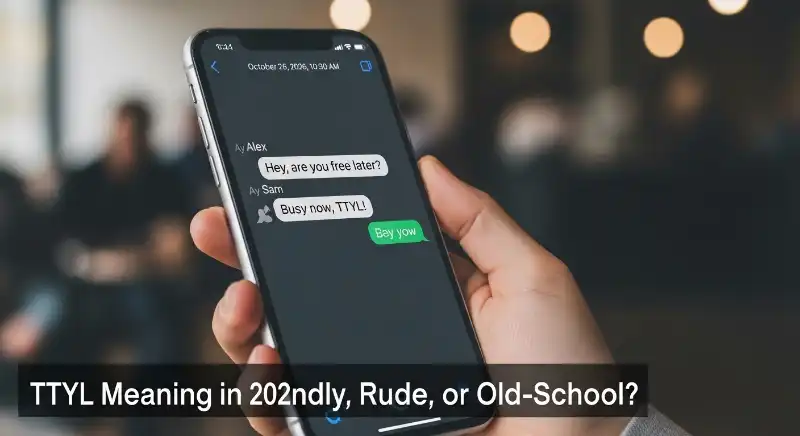
Casual slang and professional tone don’t always mix.
Can you use TTYL in work emails or Slack?
In most workplaces, it’s better to avoid it.
Instead of:
“Okay, ttyl.”
Try:
“Talk soon.”
“I’ll follow up later today.”
Professional communication values clarity.
Abbreviations can feel overly informal.
What are safer professional alternatives to TTYL?
Here are better options:
- “Speak soon.”
- “Looking forward to reconnecting.”
- “I’ll check back in tomorrow.”
These keep warmth without sounding casual.
Work culture in 2026 is flexible — but clarity still wins.
TTYL vs BRB vs CYA: What’s the Actual Difference?
At first glance, these all look like random capital letters from early internet days.
But they serve different purposes.
Think of them like exit signs. Each one tells you how long someone will be gone — and whether they’re coming back soon.
Understanding the difference helps you avoid confusion.
What’s the difference between TTYL and BRB?
BRB means “Be Right Back.”
The key word is right.
BRB implies:
- Short absence
- Minutes, not hours
- Conversation will resume quickly
Example:
Person A: Hold on, someone’s at the door.
Person B: Okay.
Person A: brb
That means they’re stepping away briefly.
Now compare with TTYL:
Person A: I have to go to work now.
Person B: ttyl
That suggests a longer gap — maybe later today or tomorrow.
In simple terms:
- BRB = short break
- TTYL = longer break
Small difference. Big clarity.
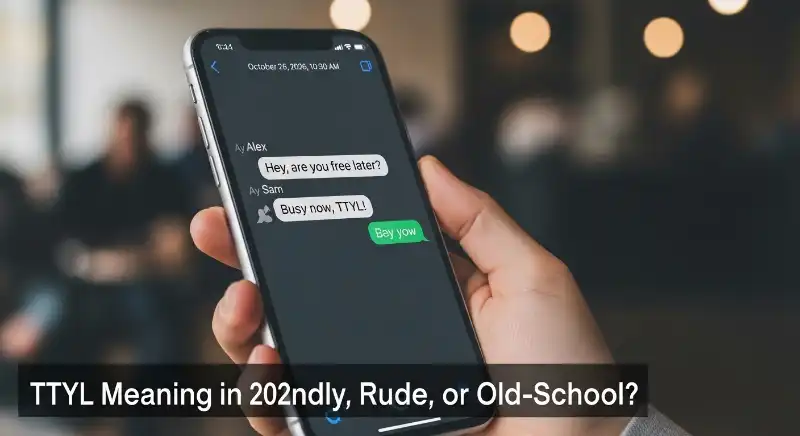
How is TTYL different from CYA or GTG?
CYA stands for “See You.”
GTG means “Got To Go.”
These feel stronger and more final.
Example:
GTG, ttyl.
That combination means:
- I need to leave immediately.
- We’ll talk later.
GTG focuses on urgency.
TTYL focuses on future connection.
CYA feels slightly more final than TTYL.
Compare:
ttyl 🙂
cya.
The first sounds softer.
The second sounds more like a closing goodbye.
Tone lives in nuance.
How Should You Reply When Someone Says TTYL?
When someone ends with TTYL, the conversation is closing.
Your reply doesn’t need to be dramatic.
It just needs to acknowledge.
Many searches like:
- ttyl meaning in text reply
- text ttyl meaning
happen because people overthink this moment.
Don’t.
What are friendly replies to TTYL?
Keep it light.
Examples:
- Okay, ttyl!
- Sure 🙂
- Sounds good!
- Talk soon!
Mini example:
Them: I’m heading out now, ttyl.
You: Okay, talk later!
You don’t need to reopen the conversation.
You’re simply confirming the pause.
How do you reply professionally to TTYL?
If someone says TTYL in a semi-professional space, mirror with clarity.
Examples:
- “Speak soon.”
- “Looking forward to reconnecting.”
- “I’ll follow up tomorrow.”
In workplace chats, clarity beats slang.
Instead of responding casually, match the environment.
Digital etiquette in 2026 is flexible — but context still rules.
TTYL on Different Platforms: Text, WhatsApp, Discord, and Dating Apps
The meaning stays the same.
The vibe changes.
Platform culture influences perception.
How is TTYL used in SMS or WhatsApp chats?
In SMS or WhatsApp, it’s normal.
Example:
Heading to the gym, ttyl!
It feels everyday. Relaxed. Friendly.
Searches like “ttyl meaning in whatsapp” reflect global usage, especially in regions where WhatsApp dominates daily communication.
It doesn’t feel outdated there — it feels practical.
Does TTYL feel different on Discord or dating apps?
Yes.
On Discord, it may signal stepping away from a server temporarily.
Example:
Logging off for tonight, ttyl.
On dating apps, tone becomes more sensitive.
If someone says:
ttyl 😊
It suggests interest will continue.
If someone says:
ttyl.
With no emoji and after short replies, it might feel like fading interest.
Same letters. Different emotional weight.
Common Mistakes People Make When Using TTYL
The word is simple.
The misuse isn’t.
When should you avoid using TTYL entirely?
Avoid it during:
- Serious conversations
- Emotional discussions
- Apology exchanges
- Conflict resolution
Example:
I’m really hurt by what happened.
ttyl.
That feels dismissive.
In sensitive moments, a fuller sentence works better:
Let’s talk more later when we’re both calm.
Tone matters most when emotions are involved.
What misunderstandings can TTYL create in serious conversations?
Brevity can feel cold.
Short exits may be interpreted as avoidance.
Imagine this:
Person A: Can we talk about what happened?
Person B: ttyl.
That can feel like shutting down.
Even if the sender is just busy.
Digital communication removes voice tone. So people read between lines — sometimes incorrectly.
When clarity matters, spell things out.
TTYL Variations and Related Slang You Might See Online
Slang evolves.
It stretches, morphs, and plays.
TTYL has variations too.
What does TTYL8R or TTYLS mean?
- TTYL8R = Talk to you later (with “8” replacing “ate”)
- TTYLS = Talk to you later, soon
These playful versions appeared during peak texting creativity.
They mean the same thing — just stylized.
Think of them as decorative versions of the original.
Are there modern slang replacements for TTYL?
Yes.
In 2026, some people prefer:
- “later!”
- “brb” (if short)
- 👋 emoji
- “catch you later”
Language adapts to tone trends.
Some users feel “ttyl meaning internet slang” sounds retro.
Others use it comfortably.
That’s the beauty of digital language — it doesn’t expire overnight.
It shifts gradually.
And sometimes, older slang feels refreshing again.
People Also Ask About TTYL
What does TTYL mean in text?
TTYL stands for “Talk To You Later.” It’s a casual way to end a conversation while signaling that communication will continue in the future. Instead of saying goodbye permanently, the sender is simply pausing the interaction. The phrase became popular during the early days of internet chat rooms and messaging platforms like AOL, where typing speed mattered and short forms saved time.
Today, TTYL still carries the same meaning. It’s friendly. It’s informal. It suggests connection isn’t ending — just shifting. If someone texts “ttyl,” they’re not closing the door. They’re stepping away temporarily.
The tone can vary slightly depending on context and punctuation. “ttyl 😊” feels warm and positive. “ttyl.” can feel neutral or slightly distant. But the core meaning remains consistent: we’ll talk again later.
Is TTYL rude or dismissive?
On its own, no. TTYL isn’t rude. It’s casual.
However, context shapes perception. In a relaxed conversation between friends, it feels natural. During a serious or emotional discussion, it might seem abrupt if not paired with explanation.
For example:
- “I have to run to a meeting, ttyl.” → Clear and polite.
- “We need to talk about what happened.” → “ttyl.” → Feels dismissive.
The difference isn’t the acronym itself. It’s the emotional timing. Digital communication lacks tone of voice, so people interpret brevity differently. When conversations carry weight, adding clarity helps avoid misunderstandings.
Used thoughtfully, TTYL is neutral and socially accepted.
What’s the difference between TTYL and BRB?
BRB means “Be Right Back.” TTYL means “Talk To You Later.” The difference lies in timing.
BRB suggests a short absence — minutes, not hours. It implies the conversation will resume almost immediately. TTYL suggests a longer gap. The discussion may continue later that day or even another day entirely.
Example:
- “Someone’s at the door, brb.” → Quick pause.
- “I’m heading out for the night, ttyl.” → Extended break.
Both are friendly. Both are informal. The key distinction is duration.
Is TTYL outdated in 2026?
Not exactly — but it feels nostalgic to some users.
Younger generations often prefer emojis, voice notes, or phrases like “later!” or “catch you.” Still, TTYL remains widely understood. Because it’s simple and clear, it continues to appear in texts, WhatsApp chats, and casual messaging spaces.
Language online doesn’t disappear overnight. It evolves. Some acronyms fade. Others become timeless shorthand. TTYL sits somewhere in the middle — familiar, recognizable, and still usable without confusion.
In fact, its simplicity makes it enduring.
How should you reply when someone says TTYL?
You don’t need a complicated response. A short acknowledgment works perfectly.
Examples:
- “Okay, ttyl!”
- “Talk soon!”
- “Sounds good.”
- “Later!”
The goal isn’t to restart the conversation. It’s to confirm the pause. If you want to maintain warmth, adding an emoji can soften tone.
Keep it simple. Match their energy. Let the conversation close naturally.
Conclusion
Some words feel bigger than they look.
TTYL is just four letters. There’s no emotion, no punctuation, and no decoration.
And yet it carries intention — the promise of continued connection.
That’s what makes it powerful.
In a world where conversations start and stop constantly, clarity matters. TTYL doesn’t demand attention. It doesn’t overexplain. It simply signals, “This isn’t goodbye. Just later.”
The beauty of digital language is efficiency. But efficiency only works when both people understand it. Now you do.
So the next time someone types TTYL, you won’t hesitate. You won’t overthink. You’ll recognize it for what it is: a pause, not a full stop.
And when you use it yourself, you’ll use it with awareness.
Because even the smallest words shape how we connect.
Why Are So Many People Suddenly Confused About GTG in 2026?

Mush explores trending words, viral slang, and social media phrases, explaining them in simple English with fun examples for everyone.



1 thought on “TTYL Meaning in 2026: Is It Friendly, Rude, or Just Old-School Text Slang?”