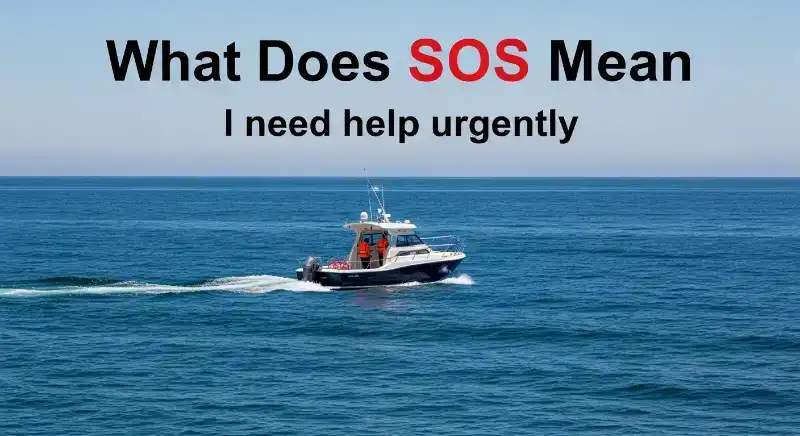
The SOS meaning is one of the few things almost everyone recognizes — yet many people still misunderstand how and when it should actually be used. From emergency situations to casual text messages, SOS appears everywhere, often carrying very different emotional weight depending on the context.
Understanding what SOS truly means helps avoid panic, confusion, or miscommunication, especially in moments where clarity matters most.
Quick Answer:
SOS is a universal distress signal that means urgent help is needed. It is not a word or an abbreviation, but a signal designed to be easy to recognize in emergencies. Today, SOS is also used casually in messages to express stress or overwhelm, though its original meaning is serious.
What Does SOS Mean?
At its core, SOS is a universal distress signal used to ask for help. It signals that someone is in trouble and needs immediate assistance. While many people assume SOS is an abbreviation for a phrase, its real meaning is much simpler and more practical.
SOS Meaning in Simple Words
In simple terms, SOS means “I need help urgently.”
It does not explain the problem, the danger, or the situation — it only communicates urgency. That simplicity is exactly why SOS became so powerful. Anyone who sees or hears SOS understands that something is wrong and attention is required.
In modern use, SOS has expanded beyond emergencies. People now use it in texts or social media to express stress, overwhelm, or frustration. For example, someone might text “SOS, this exam is impossible,” even though no real danger exists. The meaning shifts, but the emotional signal — I’m struggling — remains.
Is SOS a Word, an Abbreviation, or a Signal?
SOS is not a word and not an abbreviation in the traditional sense. It is a signal. It was chosen because it is easy to transmit, recognize, and remember, especially under pressure. Unlike regular words, SOS does not rely on language, grammar, or pronunciation, which makes it universally effective.
What Does SOS Stand For and Where Did It Come From?
Many people believe SOS stands for phrases like “Save Our Souls” or “Save Our Ship,” but this is a common misconception. These explanations came later, not at the beginning.
SOS Full Form Explained
Technically, SOS does not stand for anything.
It is not an acronym or abbreviation. The phrases associated with it were created afterward to help people remember it. The original purpose of SOS was functional, not linguistic.
This misunderstanding happens because humans naturally look for meaning in letters. Over time, repeated explanations turned into assumed “full forms,” even though they were never officially defined.
The Origin of SOS in Morse Code
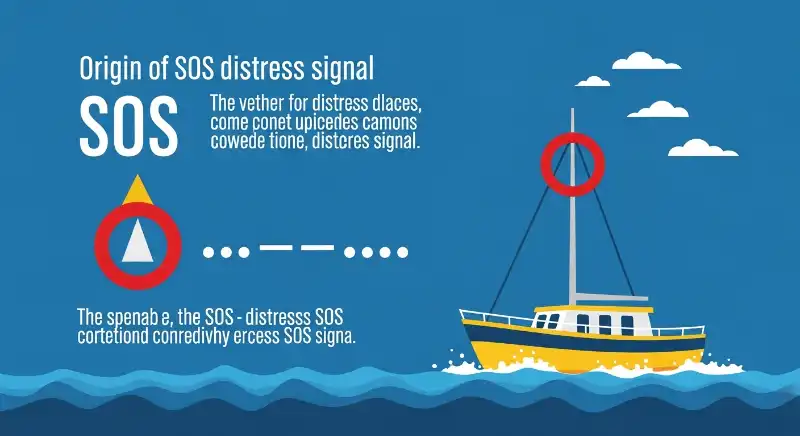
SOS originated in Morse code, where it is written as:
• • • — — — • • •
This pattern was chosen because it is extremely simple and hard to confuse with other signals. It can be sent quickly using sound, light, or movement, even by someone with limited training.
Why SOS Was Chosen as a Distress Signal
SOS was selected because it is clear, short, and unmistakable, especially in poor conditions. In emergencies, clarity matters more than language — and SOS delivers that clarity instantly.
What Does SOS Mean in Emergencies?
In emergency situations, SOS carries its original and most serious meaning. It indicates real danger and the need for immediate help.
When Should SOS Be Used for Help?
SOS should be used when there is immediate risk and no time for detailed communication. Examples include being lost, stranded, injured, or facing a life-threatening situation. It is meant to alert anyone nearby that assistance is urgently required.
Is SOS Only for Life-Threatening Situations?
Traditionally, yes — SOS was reserved for serious emergencies. However, in real life, it can also be used when someone is in severe distress, even if the danger is not fatal. The key factor is urgency, not drama.
Difference Between SOS and 911
SOS is a signal, while 911 is a service.
SOS can be sent anywhere, even without a phone network. 911 requires infrastructure and location access. SOS works when systems fail — that’s why it still matters.
What Does SOS Mean in Text Messages and Chat?
In modern communication, SOS has taken on a more casual and emotional role, especially in texting.
SOS Meaning in Texting
In texts, SOS often means “I’m overwhelmed” or “I need help right now”, but not necessarily in a dangerous way. It might refer to stress, deadlines, or emotional overload rather than physical danger.
SOS Meaning in Chat and Online Messages
In chats and group messages, SOS is frequently used for emphasis. It signals urgency, but the urgency is usually emotional or situational, not life-threatening. Context is everything.
Can SOS Be Used Casually in Messages?
Yes — and this is where confusion begins. Casual SOS usage has softened its meaning online, but people still instinctively react to it. That emotional pull is why it remains powerful, even when jokingly used.
What Does SOS Mean on Social Media?
On social platforms, SOS is often dramatic, expressive, and attention-driven rather than literal.
SOS Meaning on Instagram, Snapchat, and TikTok
On social media, SOS is commonly used to express chaos, humor, or exaggerated struggle. Captions like “SOS my life is a mess” are emotional signals, not emergency calls. The platform culture encourages expressive language.
Why People Use SOS for Drama or Jokes Online
People use SOS because it instantly communicates intensity. Even when joking, it grabs attention and creates relatability. Social media thrives on emotion, and SOS delivers it in just three letters.
What Does SOS Mean When Someone Sends It to You?
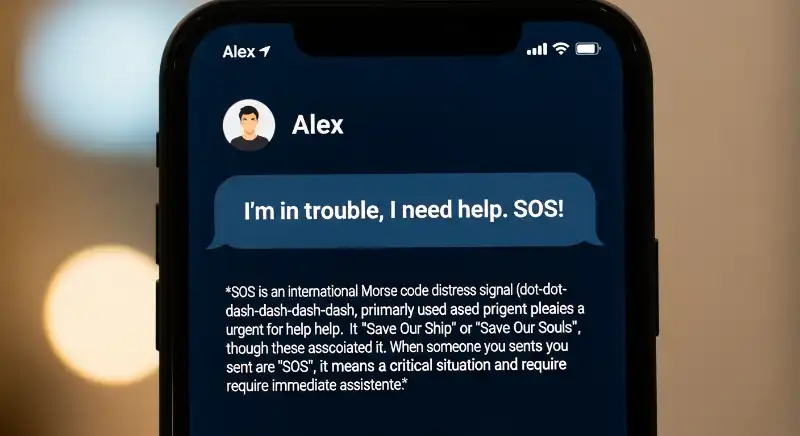
When someone sends you SOS, the meaning depends less on the word itself and more on the situation, tone, and timing. This is where many people feel unsure — should they worry, react immediately, or treat it casually?
How to Understand the Context of SOS
The first thing to check is where and how SOS is sent. A late-night message, repeated SOS texts, or SOS sent without explanation often signals emotional distress or urgency. In contrast, SOS paired with emojis, jokes, or casual language usually indicates stress, not danger.
Context includes:
- Your relationship with the sender
- The platform (text, DM, story, comment)
- Previous conversation tone
SOS is rarely random. Even when playful, it usually reflects some level of pressure or need for attention.
Is Someone Asking for Help or Just Joking?
If SOS feels ambiguous, it’s okay to ask for clarification. A simple response like “Are you okay?” is never wrong. In real emergencies, people may not have time to explain. In casual use, they’ll clarify quickly.
The safest approach is to acknowledge first, judge later. SOS is designed to trigger awareness — responding calmly shows emotional intelligence, not overreaction.
Can SOS Have Different Meanings Based on Context?
Yes — context completely shapes the meaning of SOS. While its original definition is fixed, its modern use is flexible.
Emergency SOS vs Casual SOS
In emergencies, SOS means immediate danger and need for help. There is no exaggeration or metaphor involved. However, in daily communication, SOS often means “I’m overwhelmed” or “I need support.”
The words stay the same, but the stakes change.
Serious vs Playful Use of SOS
A playful SOS might appear in messages like:
- “SOS, I forgot my charger 😭”
- “SOS this deadline is killing me”
A serious SOS usually lacks humor, emojis, or extra words. It’s short, direct, and urgent. Learning to spot this difference helps prevent both panic and neglect.
Understanding SOS today means understanding human behavior, not just definitions.
Common Misunderstandings About SOS Meaning
Because SOS is so well-known, people often assume they understand it — and that assumption causes confusion.
Does SOS Always Mean Danger?
No. This is one of the biggest misunderstandings. While SOS can mean danger, modern usage often reflects emotional urgency, not physical harm. Treating every SOS as a crisis can cause unnecessary stress, but ignoring all of them can be risky.
Is SOS Rude or Overreacting in Texts?
Using SOS casually is not rude, but it can feel dramatic if overused. Some people interpret frequent SOS messages as attention-seeking, while others see them as honest expressions of stress. Tone matters more than the word itself.
The misunderstanding comes from mixed expectations, not bad intentions.
How SOS Is Used in Real-Life Examples
Seeing SOS in action makes its meaning clearer than any definition.
SOS Example in Emergency Situations
A stranded hiker using a flashlight to signal SOS at night is using the signal exactly as intended. The message is simple: I am here, and I need help.
SOS Example in Texting and Social Media
A student posting “SOS finals week” is not in danger — they are expressing pressure. The word becomes emotional shorthand, not a literal request.
Both uses are valid — but only when interpreted correctly.
How to Send an SOS Signal
Knowing how to send SOS can be genuinely useful, especially when technology fails.
SOS in Morse Code
The SOS pattern — three short, three long, three short — can be sent using:
- Sound
- Light
- Tapping
- Visual signals
Its simplicity is why it survives even today.
Sending SOS Using Phones or Devices
Modern smartphones include Emergency SOS features that contact authorities or emergency contacts automatically. These systems use the spirit of SOS, even if the signal itself is digital.
Why SOS Is Recognized All Over the World
Few signals are as globally understood as SOS.
Universal Meaning of SOS
SOS works across languages, cultures, and borders. You don’t need translation to recognize distress. That universality makes it one of the most powerful symbols of help ever created.
Why SOS Still Matters Today
Even with advanced technology, SOS remains relevant because simplicity saves lives. When panic hits, simple signals work best.
FAQ Section
What does SOS mean?
SOS is a universal distress signal used to ask for help in emergencies. Today, it’s also used casually to express stress or urgency in texts and online messages.
What does SOS stand for?
SOS does not officially stand for any words. It was chosen in Morse code because it is easy to recognize and transmit.
Is SOS only used in emergencies?
No. While SOS originally meant serious danger, people now use it casually in texts and social media to show emotional stress or urgency.
What does SOS mean in texting?
In texting, SOS usually means “I need help” or “I’m overwhelmed,” not necessarily a life-threatening emergency.
Should I worry if someone sends me SOS?
It depends on the context. If SOS is sent repeatedly, late at night, or without explanation, it’s best to check in and ask if the person is okay.
Is it rude to use SOS jokingly?
Using SOS jokingly is common online, but overusing it can make some people think the situation is more serious than it is.
How do you send an SOS signal?
SOS can be sent using Morse code (three short, three long, three short signals), light flashes, sound, or emergency features on smartphones.
Final Thoughts on SOS Meaning
The meaning of SOS hasn’t changed — but how people use it has evolved. It still represents urgency, but urgency now includes emotional, social, and psychological stress, not just physical danger.
Understanding SOS today means understanding context, intent, and human emotion. Whether it appears in an emergency, a text message, or a social post, SOS is a signal worth paying attention to — not with panic, but with awareness.
Sometimes SOS means help me now.
Sometimes it means I’m overwhelmed.
Either way, it’s a reminder that communication is about more than words — it’s about listening.
What Does FYI Literally Mean in Communication?

Mush explores trending words, viral slang, and social media phrases, explaining them in simple English with fun examples for everyone.