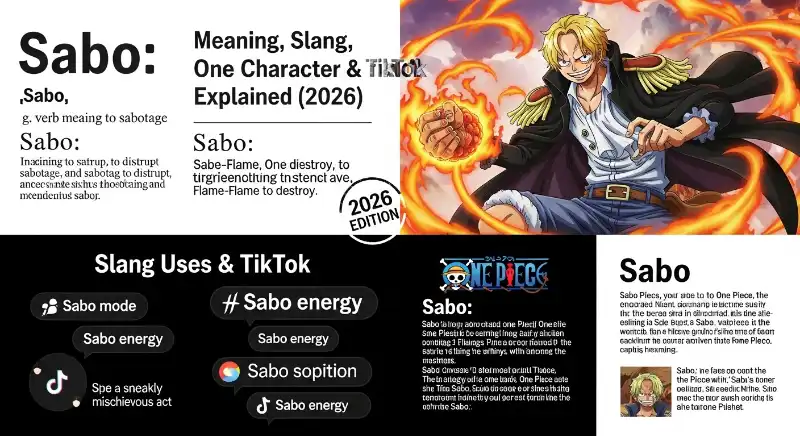
If you’ve ever typed no sabo in a chat, seen the viral no sabo kid meme, or searched for Sabo meaning online, you know it can feel confusing. The term pops up across languages, social media, and pop culture and each context slightly changes its tone.
At its core, sabo meaning is linked to the idea of sabotage ruining or disrupting something but in casual slang, TikTok memes, or anime fandoms, it can mean much more. By the end of this guide, you’ll understand all major meanings, when to use it, and why it keeps trending in 2026.
What Does Sabo Mean? Clear Definition & Context Breakdown
What Is the Core Dictionary Meaning of Sabo?
In standard English, sabo is an informal shorthand for sabotage. It describes actions that interfere with, ruin, or undermine plans or efforts. While sabotage sounds formal, sabo is casual, flexible, and often used in everyday speech.
Examples:
- Stop trying to sabo the project.
- I felt sabo’d when my teammate canceled at the last minute.
Think of it like a playful warning: someone’s messing with your plan, but in a light, conversational way.
Which Meaning Are People Usually Searching For?
Sabo can refer to different things depending on context. Most searches fall into three categories:
- Slang usage playful or teasing in casual conversations
- No sabo kid meme viral TikTok content often humorously referencing language mistakes
- One Piece character anime fans looking for Sabo, the pirate with fire powers
Example Scenario:
- Workplace chat: Don’t sabo my plan! → professional slang usage
- Teen TikTok comment: No sabo kid → meme reference
- Anime forum: Sabo VS Luffy → character discussion
Dictionary Meaning & Word Origin: Is Sabo Short for Sabotage?
Where Does the Word Sabo Come From?
The term sabo originates as a shortened form of sabotage, which comes from the French word sabot, meaning wooden shoes historically used by workers to damage machinery during strikes. Over time, English speakers clipped it to sabo for casual, everyday usage.
Example:
- Formal: The workers tried to sabotage the factory.
- Informal: Don’t sabo my homework!
Is Sabo an Official Dictionary Word?
Technically, sabo isn’t listed in all standard dictionaries yet. It’s informal slang, widely understood in workplaces, Southeast Asian English, and online spaces. The key distinction: formal sabotage vs casual sabo.
Example:
- Workplace: That move felt sabo’d. → casual, understood internally
- Report: The project was sabotaged. → formal, official
Sabo as Slang in Southeast Asia (Singlish & Casual English)
What Does Sabo Mean in Singlish?
In Singaporean English (Singlish) and casual Southeast Asian English, sabo is commonly used to describe someone unfairly messing with your plans or outcomes. It’s playful, accusatory, or teasing depending on tone.
Examples:
- You sabo me again! → playful blame
- He sabo the whole group! → mild exaggeration for humor
Is It Offensive or Just Playful?
Tone matters. Among friends, sabo is light teasing. In serious contexts like work meetings, it can feel accusatory. Context cues like voice, emojis, or follow-up help interpret intent.
Example:
- Friends texting: Don’t sabo me 😆 → playful
- Colleague email: You sabo’d the schedule → serious
What Does No Sabo Kid Mean on TikTok? (2026 Trend Explained)
What Does No Sabo Actually Mean?
The viral no sabo kid phrase stems from non-native Spanish misinterpretation. Kids saying no sé (I don’t know) get written as no sabo online, creating a humorous meme that spreads across TikTok.
Example TikTok Caption:
- When the teacher asks something and you have no idea… #nosabokid 😂
Why Is the Term Culturally Sensitive?
While funny, the meme involves linguistic mistakes that can reflect on non-native speakers. Respectful usage means laughing with, not at, the cultural context. Social media amplifies visibility, so understanding context helps prevent mockery.
Sabo in One Piece: Who Is Sabo and Why Is He Popular?
Who Is Sabo in One Piece?
Sabo is a beloved character in the anime and manga One Piece. He is Luffy’s sworn brother, a revolutionary fighter, and master of fire-based combat techniques. Fans search his name for story updates, character analysis, and battle scenes.
Example:
- Anime forum post: Sabo vs Fujitora – who wins?
Why the Name Sabo Matters in the Story
In One Piece, Sabo’s name symbolizes rebellion, freedom, and fighting against unfair systems echoing the sabotage origin in a literary sense. Unlike slang, this Sabo carries narrative weight and fan loyalty.
Example:
- Character discussion: Sabo embodies justice while challenging oppressive forces.
Is Sabo Rude? Tone, Emotion & Social Interpretation
When Does Sabo Sound Playful?
In casual conversations among friends or peers, sabo often carries a teasing, lighthearted tone. It’s like saying, You got me there! without serious blame. Emojis, laughter, and context clues help signal this playfulness.
Example:
- Friend 1: You sabo me again 😆
- Friend 2: Haha, just kidding!
The key is that everyone involved understands the joke; in friendly circles, sabo strengthens camaraderie.
When Can It Feel Accusatory or Harsh?
In professional, serious, or unfamiliar contexts, sabo can sound like blame or criticism. Misreading intent may lead to tension or misunderstandings. Tone and audience awareness are essential to avoid conflict.
Example:
- Team chat: You sabo’d the schedule! → could be interpreted as serious accusation
- Solution: clarify context or choose formal alternatives like The schedule was disrupted.
How to Use Sabo Correctly (With Practical Examples)
Correct Casual Usage Examples
Using sabo in everyday conversations is straightforward once you understand context. Keep sentences casual, short, and flexible.
Examples:
- Don’t sabo my plan, I worked hard on it!
- He tried to sabo the group project, but we fixed it.
- She sabo’d me again by hiding my notes 😅
Notice how all examples are informal, humorous, or lightly accusatoryperfect for digital chat.
When to Avoid Using It
Avoid sabo in professional emails, formal presentations, or serious conversations. Stick to neutral alternatives like undermine, disrupt, or interfere in these cases.
Example:
- ❌ Please don’t sabo the client report. → sounds unprofessional
- ✅ Please ensure the report isn’t disrupted. → formal, clear
Common Mistakes People Make When Using Sabo
Confusing Slang with the Anime Character
Many online users mix up Sabo the character with casual slang. Posting You sabo’d me! in a fan forum may confuse anime fans expecting story discussions. Context is everything.
Example:
- Misunderstood comment: Sabo sabo’d Luffy → could refer to character, not slang
Using It in Formal Writing
Another frequent mistake is inserting sabo into professional or formal communication. Remember, it’s slang. Use formal alternatives in workplaces, schools, or official writing.
Example:
- ❌ Don’t sabo the report. → informal, unprofessional
- ✅ Please ensure the report remains accurate. → professional
Why Sabo Meaning Is Trending in 2026
Social Media Amplification & Short-Form Culture
TikTok, Instagram Reels, and Shorts have accelerated sabo’s popularity. Memes like no sabo kid go viral quickly, causing millions to search for its meaning and context. Short captions, quick trends, and global sharing fuel its 2026 visibility.
Example:
- Viral TikTok: When the teacher asks something and you have no idea… #nosabokid 😂
Fandom & Global Language Mixing
Anime fandoms, Southeast Asian slang, and online meme culture converge, making Sabo a multilingual, cross-platform keyword. The blend of pop culture, language learning, and humor keeps it relevant.
Example:
- Instagram: Don’t sabo me 😎 #OnePiece #funny
- TikTok: No sabo kid strikes again!
People Also Ask (PAA)
1. What does Sabo mean in English?
Sabo is informal shorthand for sabotage to ruin or interfere with someone’s plans but can also refer to memes or anime characters depending on context.
2. What is no sabo kid?
A viral TikTok meme derived from the misheard Spanish phrase no sé (I don’t know). It’s humorous and often playful, highlighting language mistakes.
3. Who is Sabo in One Piece?
Sabo is a character in One Piece, Luffy’s sworn brother, and a revolutionary fighter known for fire-based combat techniques.
4. Is sabo offensive?
Not usually. Among friends, it’s playful. In professional or unfamiliar contexts, it can feel accusatory, so audience awareness is key.
5. How do you use sabo correctly?
Use it casually with friends or online communities to indicate playful disruption. Avoid formal settings. Examples: Don’t sabo my plan! or He sabo’d the game 😅.
📝 Conclusion
Sabo meaning is versatile, spanning dictionary slang, regional English, viral memes, and anime characters. Context is everything: a friendly joke among peers, a playful meme on TikTok, or a heroic figure in One Piece.
Key takeaways for 2026:
- In casual chat, sabo = to ruin or mess up, usually playful.
- TikTok and social media trends make no sabo kid a humorous, viral phrase.
- Anime fans search Sabo for character insights completely separate from slang.
- Tone, audience, and platform matter: what’s fun with friends can be serious or confusing in professional or cross-cultural contexts.
Understanding sabo meaning lets you navigate conversations confidently, avoid misunderstandings, and even join viral trends without looking clueless. In short, it’s a small word with a big cultural footprint perfect for anyone exploring 2026’s digital language landscape.
📚 Related Articles