NPC meaning has quietly shifted from a simple gaming term into a powerful internet label—and that sudden change is exactly why so many people feel confused when they see it online. What once described a harmless background character in a video game now shows up in comments, memes, and even arguments on social media.
If you’ve ever scrolled past a TikTok comment calling someone an “NPC” and felt a strange mix of curiosity and discomfort, you’re not alone. The word carries different meanings depending on context, tone, and platform—and by the end of this article, you’ll understand why it’s everywhere and what people really mean when they use it.
Quick Answer
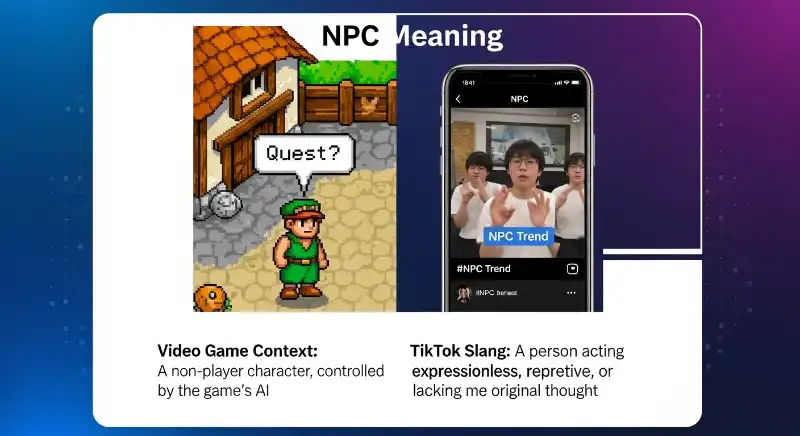
In simple terms, NPC means “Non-Player Character.” Originally, it described characters in video games that are controlled by the game, not by players. Today, on social media and slang, calling someone an NPC usually means they are behaving in a predictable, scripted, or trend-following way, often without much independent thinking. The meaning changes depending on context—sometimes it’s a joke, sometimes criticism, and sometimes just meme culture.
NPC meaning explained — why this word is suddenly everywhere online
At its core, NPC meaning has expanded far beyond gaming. Today, it sits at the intersection of internet humor, social commentary, and viral culture. That’s why it feels like it appeared overnight—even though the term itself is decades old.
In simple terms, people now use “NPC” to describe behavior that feels scripted, repetitive, or unthinking. The rise of short-form video platforms, especially TikTok, accelerated this shift. Algorithms reward trends, trends create repetition, and repetition makes people notice patterns. “NPC” became the shortcut word for that pattern.
What does NPC stand for originally?
NPC stands for Non-Player Character. The term comes from video games and tabletop role-playing games like Dungeons & Dragons.
An NPC is any character you don’t control. The game controls them.
Example:
In Skyrim, the shopkeeper who says the same line every time you enter the store is an NPC. They exist to serve a function—not to make independent choices.
What does NPC mean in simple words?
In the simplest language, an NPC is a character that follows a script.
Think of a theme park ride. The animatronic characters smile, wave, and repeat the same lines all day. They aren’t broken—they’re designed that way. When people use “NPC” online, they’re borrowing that idea and applying it to real-life behavior.
The original NPC meaning most people forget about
Before memes and slang changed the tone, NPC was simply a neutral, technical term used in games. It carried no insult or psychological meaning at all.
Instead, it existed purely as part of game design, helping developers build believable worlds and guide players through stories.
Understanding this original meaning helps explain why the modern version feels so different—and sometimes uncomfortable.
What does NPC mean in video games?
In games, NPCs serve specific purposes:
- Give quests
- Provide information
- Populate the world
- Make the environment feel alive
They don’t grow emotionally or develop personal views; instead, their responses stay fixed and predictable, reacting exactly as they were programmed to do.
Example:
In Grand Theft Auto, pedestrians walking the streets are NPCs. They exist to make the city feel real, not to drive the story.
How are NPCs different from player characters?
The difference is agency.
- Player characters: controlled by humans, unpredictable, evolving
- NPCs: controlled by code, predictable, repetitive
That contrast—control versus autonomy—is what later made the term attractive to internet culture.
Why people are confused by the NPC slang meaning
The confusion comes from speed. Internet slang evolves faster than definitions can stabilize. NPC jumped from gaming into social commentary without a clear rulebook.
Some people use it jokingly. Others use it critically. A few use it aggressively. Same word—very different intent.
What does NPC mean in slang?
In slang, NPC usually means someone who appears to:
- Repeat popular opinions without questioning
- Follow trends automatically
- React in predictable ways
It’s less about intelligence and more about perceived awareness.
Example:
Someone comments the same copy-paste opinion on every viral post, and another user replies, “NPC behavior.”
How did NPC become an internet meme?
Memes thrive on exaggeration. NPC fit perfectly.
Early viral videos showed people acting robotic, looping phrases, or responding identically to different situations. Internet culture did the rest—turning a game mechanic into a social metaphor.
By 2026, “NPC” has become shorthand for algorithm-shaped behavior.
What it really means when someone calls you an NPC
Being called an NPC can feel weirdly personal—even if the speaker insists it’s “just a joke.” That reaction matters, because language shapes how we see ourselves and others.
The meaning isn’t fixed. Context decides everything.
What does it mean to call someone an NPC?
Usually, it implies that the person is:
- Not thinking independently
- Following scripts (social, political, cultural)
- Reacting instead of reflecting
Example:
On social media, someone posts a predictable reply to a controversial topic, and another user says, “Same NPC response every time.”
Is being called an NPC an insult?
It can be—but not always.
- Playful: friends teasing each other
- Neutral: describing repetitive online behavior
- Insulting: implying someone lacks individuality
Tone, timing, and relationship matter more than the word itself.
NPC meaning on TikTok that surprised a lot of people
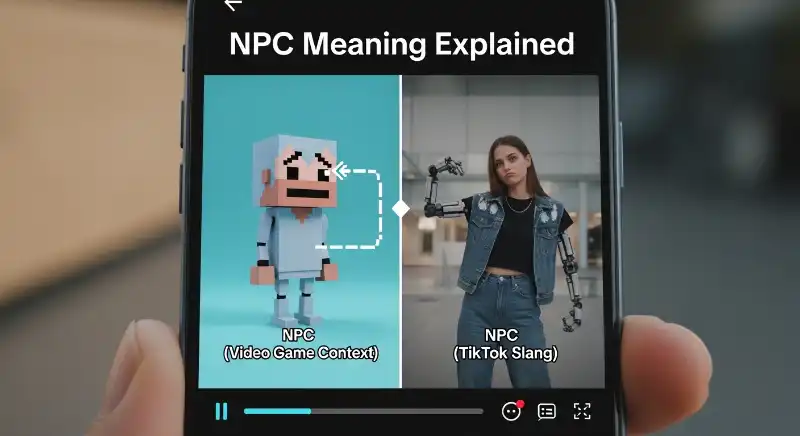
TikTok didn’t just spread the NPC term—it transformed it.
What shocked many users was that people started performing as NPCs intentionally, turning the label into content.
What does NPC mean on TikTok?
On TikTok, NPC often refers to creators who act:
- Robotic
- Repetitive
- Hyper-responsive to prompts
Comments drive the performance. Viewers request actions. Creators respond like in-game characters.
Example:
A comment says, “Wave if you like roses,” and the creator instantly waves and repeats a scripted phrase.
What is the NPC livestream trend?
NPC livestreams exploded because they blend humor, control, and audience participation.
Viewers feel like players. Creators become characters. It’s strange, fascinating, and very 2026—where identity, performance, and algorithms blur together.
Some see it as satire. Others see it as commentary on how online attention works. Either way, it proves one thing: NPC no longer belongs only to games.
Is NPC just a joke or something more serious?
At first glance, calling something “NPC behavior” feels like harmless internet humor. It’s quick, punchy, and often said with a meme-like tone. But as the term spread beyond jokes, people began to question whether it carries deeper social meaning.
In 2026, online language doesn’t just describe reality—it shapes it. That’s why NPC sits in a gray zone between satire and subtle harm.
When is NPC used as a joke?
NPC is commonly used in light, playful situations, especially when people talk about themselves.
- Laughing at your own routine
- Pointing out predictable habits
- Playing along with trends
Example:
Someone posts, “Me ordering the same coffee every morning like an NPC,” and everyone laughs because it’s relatable, not insulting.
Here, NPC equals human routine, not human worth.
When does NPC become offensive?
The tone shifts when NPC is used to dismiss someone’s thoughts or emotions.
- During political arguments
- In discussions about identity or beliefs
- To shut down disagreement
Example:
Instead of debating an opinion, someone replies, “You’re just an NPC,” implying the other person isn’t worth engaging with.
That’s when the term stops being funny and starts being dehumanizing.
NPC vs main character — why this comparison exists
The internet loves opposites. NPC vs main character became popular because it mirrors a deeper human desire: to feel seen, unique, and in control.
This comparison isn’t about games anymore—it’s about identity.
What does NPC vs main character mean?
Culturally, the contrast looks like this:
- NPC: background, reactive, routine-driven
- Main character: expressive, intentional, self-aware
Example:
A TikTok caption reads, “Stopped living like an NPC, started choosing myself.”
It’s symbolic, not literal. No one is actually an NPC—but the metaphor resonates.
Why do people use “main character energy”?
Because modern life often feels automated.
Algorithms suggest what to watch. Apps tell us where to go. Trends tell us what to like. “Main character energy” is a way of reclaiming agency—saying, I choose my story.
In 2026, this language reflects a deeper pushback against digital passivity.
Why the NPC term suddenly exploded in pop culture
NPC didn’t rise because of one meme. It exploded because it fit perfectly into how the internet works today.
Short attention spans. Repeatable formats. Visual jokes. NPC checks all the boxes.
Why is NPC trending right now?
Several forces collided:
- TikTok livestream trends
- Meme culture recycling gaming terms
- Frustration with repetitive online behavior
Example:
When thousands of videos follow the same format, calling them “NPC content” feels like an instant explanation.
What does NPC say about internet behavior?
It reveals a fear many people won’t admit:
That we’re all starting to act the same.
NPC isn’t just a joke—it’s a mirror. It reflects anxiety about conformity in a hyper-connected world.
The biggest misunderstandings about NPC meaning
As the term spread, so did misconceptions. Some of the loudest criticisms come from misunderstanding what NPC actually implies.
Clarifying these points matters.
Do NPCs mean someone is unintelligent?
No. Intelligence has nothing to do with it.
NPC slang targets behavior patterns, not mental ability. A highly intelligent person can still repeat ideas uncritically. A beginner can think independently.
Can NPC describe behavior instead of a person?
Yes—and this is the healthiest interpretation.
NPC works best when it describes moments, not identities.
- “That reply was NPC-like”
- Not: “You are an NPC”
It keeps the language observational instead of judgmental.
Should you actually use the term NPC online?
This is where awareness matters more than trends. Just because a word is popular doesn’t mean it’s always useful—or kind.
When is it okay to use NPC?
NPC works fine when:
- You’re joking about yourself
- You’re referencing meme culture
- Everyone understands the tone
Example:
A creator labels their video “NPC morning routine” as self-aware humor.
When should you avoid using NPC?
Avoid it when:
- Discussing serious topics
- Talking to strangers in conflict
- Critiquing beliefs or identities
Example:
Using NPC during a personal or emotional conversation usually escalates tension instead of adding insight.
Conclusion
NPC meaning has traveled a long way—from a quiet gaming term to a loud cultural signal. It can describe humor, routine, conformity, performance, or even social anxiety, depending on how it’s used.
The key takeaway isn’t to fear the word, but to understand it. Context gives it power. Tone gives it direction. And awareness decides whether it connects people—or pushes them apart.
In a world increasingly shaped by algorithms, NPC is less about judging others and more about asking ourselves a simple question:
Am I choosing this—or just following the script?
FAQ / People Also Ask section A strong, human-style conclusion SEO meta title + description
FAQ — People Also Ask About NPC Meaning
What does NPC mean on social media?
On social media, NPC usually describes behavior that feels repetitive, scripted, or overly influenced by trends. It’s often used when someone posts the same opinions, reactions, or comments that many others are already sharing. The meaning depends heavily on tone—sometimes it’s playful, sometimes critical.
Is NPC an insult or just a joke?
It can be either. Among friends or in meme culture, NPC is often a joke or self-aware humor. But when used to dismiss someone’s opinion or humanity, it can feel insulting or disrespectful. Context and intent matter more than the word itself.
What does NPC mean on TikTok comments?
On TikTok, NPC can refer to creators who act robotic or follow scripted patterns, especially in livestreams. In comments, it’s often used to point out predictable reactions or trend-following behavior.
Why do people call others NPCs?
People use NPC as a shortcut to describe behavior they see as unoriginal, automated, or uncritical. It reflects frustration with conformity and algorithm-driven content—not necessarily a judgment of intelligence.
Is being an NPC a bad thing?
Not inherently. Everyone follows routines and social patterns sometimes. NPC becomes negative only when it’s used to reduce someone’s individuality or silence them.
What is NPC vs main character?
This comparison contrasts passive vs intentional living. “NPC” represents routine and reaction, while “main character” symbolizes self-awareness and agency. It’s a cultural metaphor, not a literal label.
Final Thoughts: What NPC Really Says About Us
The rise of NPC meaning isn’t just about slang—it’s about how people feel in a hyper-digital world. Algorithms shape what we see, trends shape what we say, and repetition can make anyone feel like they’re stuck on autopilot.
Calling someone an NPC can be funny, revealing, or harmful. The difference lies in awareness. When used thoughtfully, the term highlights patterns worth questioning. When used carelessly, it strips away empathy.
In 2026, NPC isn’t really about them. It’s about us—how often we pause to think, choose, and act intentionally instead of just following the script.
Understanding the word matters less than understanding the behavior behind it.
The Hidden Truth Behind Why People Say “Sus”
Why the Meaning of OG Is Suddenly Confusing Everyone Online

Mush explores trending words, viral slang, and social media phrases, explaining them in simple English with fun examples for everyone.