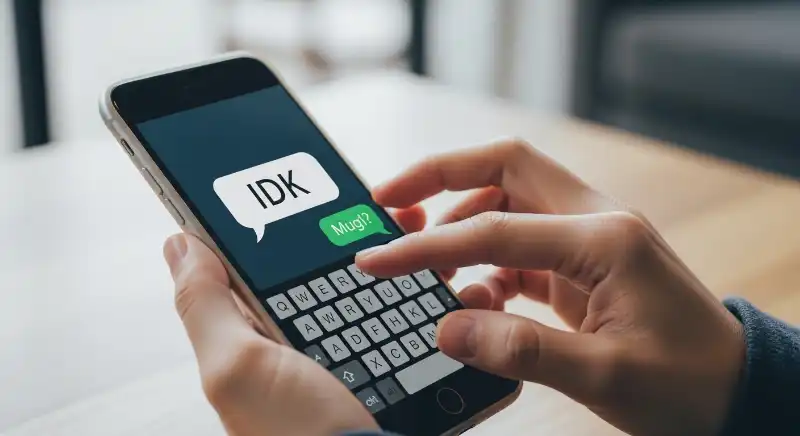
IDK meaning in chat is one of the most searched slang questions today—and the answer is surprisingly simple, yet powerful in how we communicate online.
We live in a world where typing fast matters. Whether you’re on WhatsApp, Instagram, or texting a friend, short forms like this save time—but they also carry tone, emotion, and intent.
In this guide, you’ll not only learn what it means, but also how it feels, when to use it, and when it might send the wrong message.
What Does “IDK” Mean?
IDK stands for “I Don’t Know.”
It is a casual internet slang used in chats, texting, and social media when someone is unsure or doesn’t have an answer.
👉 Example:
“Are you coming tonight?”
“IDK yet.”
What Is the Full Form of IDK?
The full form is simple:
- I = I
- D = Don’t
- K = Know
So, it literally means “I don’t know.”
But here’s the interesting part…
In real conversations, this short phrase often carries more than just uncertainty. It can express:
- Confusion 🤔
- Indecision 😅
- Lack of interest 😐
- Or even emotional distance
That’s why understanding context is just as important as knowing the meaning.
How Is “IDK” Used in Chat and Texting?
This phrase is extremely common in digital conversations, especially among younger users. But the way it’s used can change its tone completely.
IDK in WhatsApp Chats
On WhatsApp, it’s often used for quick replies when someone doesn’t want to type a full sentence.
Examples:
- “What time is the meeting?” → “IDK, ask Ali.”
- “Did she reply?” → “IDK yet.”
Here, it feels neutral and normal.
But sometimes…
- “Why didn’t you call me?” → “IDK”
This can feel cold or dismissive, depending on the situation.
IDK in Casual Conversations
In everyday texting, people use it to sound relaxed or informal.
Examples:
- “What should we watch?” → “IDK, you pick.”
- “Where do you want to go?” → “IDK honestly.”
Here, it shows:
- Flexibility
- Laziness (in a harmless way)
- Or just going with the flow
👉 Think of it like a shrug 🤷♂️ in text form.
📚 Related Articles…..IDM Meaning — What Does IDM Mean in Text, Chat & Social Media
Real-Life Examples of IDK in Sentences
Let’s make it super clear with real chat-style examples you’ll actually see:
- “IDK what to wear today.”
- “IDK if I can come.”
- “IDK why he said that.”
- “IDK yet, I’ll tell you later.”
- “IDK, maybe tomorrow?”
- “IDK anything about that.”
- “IDK how this works.”
- “IDK if it’s a good idea.”
- “IDK bro, sounds risky.”
- “IDK… I’m confused.”
Now notice something subtle…
Shorter replies like just “IDK” feel more distant, while longer ones like
“IDK, I’ll check and tell you” feel more polite and engaged.
Is Saying “IDK” Rude or Polite?
This is where things get interesting.
The phrase itself is not rude—but the way you use it can change everything.
When It Feels Polite
- When you genuinely don’t know
- When you add extra context
- When the conversation is casual
Example:
“IDK yet, but I’ll find out.”
👉 This sounds helpful and respectful.
When It Feels Rude
- When used as a one-word reply
- When someone expects a serious answer
- When tone matters (arguments, emotional chats)
Example:
“Why are you ignoring me?”
“IDK”
👉 This feels dismissive or careless.
Emotional Tone Interpretation (Important)
“IDK” can secretly express:
- 😕 Confusion → “IDK what’s happening”
- 😐 Disinterest → “IDK, do whatever”
- 😶 Avoidance → “IDK…” (ending conversation)
- 😅 Uncertainty → “IDK yet”
👉 Same word. Different emotions.
IDK vs IDC vs IMO — What’s the Difference?
These abbreviations often confuse people. Let’s break them down clearly:
| Term | Meaning | Tone | Usage |
|---|---|---|---|
| IDK | I Don’t Know | Neutral | When unsure |
| IDC | I Don’t Care | Cold / Harsh | When uninterested |
| IMO | In My Opinion | Thoughtful | Sharing opinions |
Quick Insight
- IDK = Lack of knowledge
- IDC = Lack of interest
- IMO = Personal view
👉 Mixing them up can completely change your message.
When Should You NOT Use IDK?
Even though it’s common, there are situations where using it is a bad idea.
Avoid it in:
- Formal emails
- Job interviews
- Professional chats
- Serious discussions
- Emotional conversations
Why?
Because it can sound:
- Lazy
- Disrespectful
- Unprofessional
Better Alternatives
Instead of:
- “IDK”
Say:
- “I’m not sure, let me check.”
- “I don’t have that information yet.”
- “Let me get back to you.”
👉 Same meaning, better impression.
Advanced Slang Guide: Beyond “IDK”
If you think IDK is everywhere, wait until you notice how many similar short forms people use daily.
In 2026, texting isn’t just about saving time—it’s about expressing personality in fewer words.
Each abbreviation carries its own tone, attitude, and even social signal.
Let’s explore what comes next.
IDK vs Other Popular Slang (Extended Comparison)
Here are some commonly used chat abbreviations you’ll often see alongside it:
| Slang | Full Form | Meaning | Tone | When to Use |
|---|---|---|---|---|
| IDK | I Don’t Know | Unsure | Neutral | When you don’t have an answer |
| IDC | I Don’t Care | No interest | Cold | When something doesn’t matter to you |
| IMO | In My Opinion | Personal view | Calm | Sharing thoughts politely |
| TBH | To Be Honest | Honest opinion | Friendly | Giving real feedback |
| FYI | For Your Information | Informing | Neutral | Sharing useful info |
| BRB | Be Right Back | Temporary leave | Casual | Leaving chat briefly |
| BTW | By The Way | Adding info | Light | Introducing new point |
Key Insight
- IDK = Uncertainty
- TBH = Honesty
- FYI = Information
- IDC = Emotional distance
👉 Understanding these differences helps you sound more natural—and avoid awkward misunderstandings.
IDK Meaning in WhatsApp, Instagram & Social Media
Not all platforms feel the same—and this changes how people use language.
WhatsApp Usage (Personal & Fast)
On WhatsApp, conversations are usually:
- Personal
- Quick
- Emotion-driven
That’s why “IDK” is used casually without much thought.
Example:
- “Did mom call you?”
- “IDK, my phone was silent.”
👉 Feels normal, friendly, and natural.
Instagram & Snapchat (Short + Cool)
Here, communication is even shorter.
People often reply with:
- “idk” (lowercase)
- “idkkk” (extra letters for emotion)
- “idk lol”
Example:
- “Why are you up at 3am?”
- “idk 😭”
👉 Adds humor, relatability, and personality.
Gaming & Online Communities
In gaming chats, speed matters the most.
- “Where is the enemy?”
- “idk”
👉 Quick, direct, no emotion attached.
Emotional Intelligence: What “IDK” Really Feels Like
Here’s something most guides don’t tell you…
Words don’t just carry meaning—they carry feeling.
Same Word, Different Emotion
- “IDK 🙂” → Friendly confusion
- “IDK…” → Hesitation or discomfort
- “IDK bro” → Casual and relaxed
- “IDK.” → Cold, final, distant
👉 Punctuation changes everything.
Why This Matters in Real Life
Imagine this:
You ask someone something important…
And they reply with just:
👉 “IDK”
It can feel like:
- They don’t care
- They don’t want to engage
- They’re avoiding the topic
Now compare:
👉 “IDK, but I’ll help you figure it out.”
Feels completely different, right?
That’s the power of tone awareness.
Common Mistakes People Make with IDK
Even simple slang can go wrong if used carelessly.
1. Using It in Serious Conversations
Wrong:
- “Why are you upset?”
- “IDK”
👉 Feels dismissive
Better:
- “I’m not sure, but I think I need some time.”
2. Using It in Professional Settings
Avoid using it in:
- Emails
- Work chats
- Client communication
👉 It sounds unprofessional and lazy.
3. Overusing It
If you reply “IDK” to everything, people may think:
- You’re uninterested
- You’re not paying attention
- You lack confidence
Why “IDK” Became So Popular (2026 Insight)
This isn’t just random—it’s part of a bigger shift in communication.
1. Short Attention Spans
People prefer:
- Quick replies
- Less typing
- Faster conversations
2. Mobile-Driven World
Typing long sentences on phones feels tiring.
👉 Short forms win.
3. Emotional Efficiency
Instead of explaining everything, people use shortcuts.
“IDK” instantly shows:
- Uncertainty
- No strong opinion
- Openness
4. Gen Z & Digital Culture
Younger users shaped this trend.
They prefer:
- Casual tone
- Abbreviations
- Expressive texting
Pro Tips: How to Use IDK Like a Pro
Want to sound natural (not awkward)? Follow these:
Use it in casual chats
Add context when needed
Match tone with situation
Avoid in formal communication
Combine with emotion when necessary
Smart Usage Examples
Instead of just:
- “IDK”
Try:
- “IDK yet, I’ll check.”
- “IDK honestly, what do you think?”
- “IDK, but let’s find out.”
👉 These sound more human and engaging.
FAQ — People Also Ask (IDK Meaning Explained Simply)
What does IDK stand for?
IDK stands for “I Don’t Know.”
It is commonly used in chats, texting, and social media when someone is unsure or doesn’t have an answer.
What does IDK mean in chat?
In chat, IDK means you are uncertain or don’t have information.
It’s a quick and casual way to respond without typing a full sentence.
👉 Example:
“Are you coming?” → “IDK yet.”
What is IDK full form in WhatsApp?
On WhatsApp, the full form of IDK is “I Don’t Know.”
People use it for fast replies in personal conversations.
Is saying IDK rude?
Not always.
- ✅ Polite: “IDK yet, I’ll check.”
- ❌ Rude: “IDK.” (one-word reply in a serious chat)
👉 Tone and context decide whether it feels respectful or dismissive.
When should you use IDK?
Use it when:
- You genuinely don’t know something
- The conversation is casual
- You want to reply quickly
Avoid it in professional or emotional situations.
What is the difference between IDK and IDC?
- IDK = I Don’t Know (lack of information)
- IDC = I Don’t Care (lack of interest)
👉 Mixing them up can completely change your message tone.
Can IDK be used in formal writing?
No, it’s not suitable for formal writing.
Instead, say:
- “I’m not sure.”
- “I don’t have that information.”
Why do people say IDK instead of “I don’t know”?
Because it’s:
- Faster to type
- More casual
- Common in digital communication
👉 It fits modern texting habits.
Final Thoughts:
At first glance, “IDK” looks like just another internet shortcut.
But in reality, it’s a communication signal.
It tells people:
- How much you care
- How engaged you are
- How you feel in that moment
In today’s digital world, small words carry big meaning.
So next time you type “IDK”…
👉 Pause for a second and ask yourself:
What am I really trying to say?
Because sometimes, adding just a few extra words can change the entire conversation.
Quick Recap
- IDK means “I Don’t Know.”
- It is used in texting and social media to show uncertainty
- It can feel neutral, polite, or rude depending on tone
- Avoid using it in formal or serious situations
- Adding context makes it sound more respectful
📚 Related Articles
IT Meaning Explained: Why This One Word Confuses Work, Tech, and Everyday English

Mush explores trending words, viral slang, and social media phrases, explaining them in simple English with fun examples for everyone.