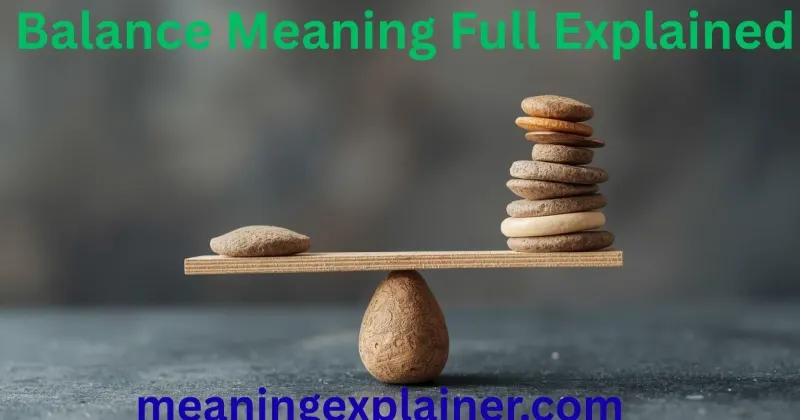
Balance meaning refers to the state of stability, harmony, or equality between different parts of life, money, or physical forces. It’s the feeling of things being in proportion, whether it’s your daily routine, your bank account, your emotions, or even forces in nature. In simple terms, balance keeps things steady, fair, and manageable, helping us navigate life without tipping over.
At first glance, balance seems simple—just “even things out,” right? But in reality, it’s often harder than it looks. People search for it because everyone wants stability in life, finances, and emotions, yet achieving it feels elusive. Understanding balance meaning isn’t just about theory—it’s about spotting hidden patterns, making practical choices, and finding real-life harmony.
Balance Meaning in Simple Words
What Is the Basic Meaning of Balance?
Balance simply means keeping things steady or in proportion. In everyday language, it’s about having neither too much nor too little of anything.
Examples:
- Carrying a tray with equal weight on both hands so it doesn’t tip.
- Spending a few hours working and a few hours relaxing to feel refreshed.
Balance Meaning in Daily Life
In daily life, balance is about managing time, energy, and focus. For example, you might divide your morning between exercise, work, and breakfast without overdoing any one thing. A balanced day is one where tasks, rest, and personal time coexist without stress.
Why Balance Has Different Meanings in Different Situations
Balance Meaning by Context
Balance can change depending on where you apply it:
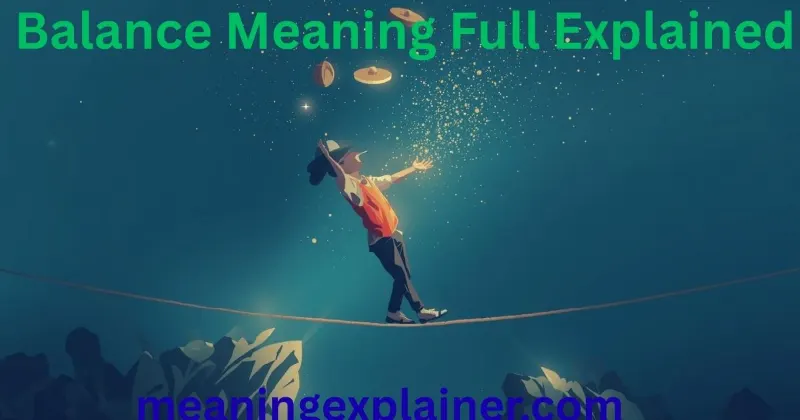
- Physical: Staying upright on a bike or walking a tightrope.
- Emotional: Managing stress and happiness to avoid mood swings.
- Financial: Keeping spending, saving, and investing in harmony.
- Social: Balancing time between family, friends, and personal space.
Why Balance Feels Confusing to People
The confusion arises because the same word, “balance,” applies to so many areas. For example, someone might say:
“I need balance in my life,” meaning mental peace, while another might mean time management. Context is everything.
Balance Meaning in Life, Mental Health, and Work
Balance Meaning in Real Life
In real life, balance means managing priorities in a way that protects your energy and peace of mind. Instead of trying to do everything at once, it helps you decide what truly deserves attention at a given moment. Sometimes that means spending more time with family, other times it may involve focusing on your career or slowing down to take care of yourself.
A simple example is completing your work tasks on time so you can relax later without stress. When your responsibilities are handled, you’re able to enjoy moments with loved ones more fully. This kind of balance doesn’t make life perfect, but it does make it calmer, healthier, and more sustainable in the long run.
Work-Life Balance Meaning
Work-life balance refers to maintaining a healthy relationship between your professional responsibilities and personal life. When work takes over completely, burnout becomes likely. On the other hand, neglecting work can slow personal and career growth.
For instance, meeting deadlines during the workday while keeping evenings free for hobbies, rest, or social time creates a more stable rhythm. This balance allows productivity and personal well-being to support each other instead of competing.
Balance Meaning in Mental Health
Mental balance is about emotional regulation—handling stress without allowing it to control your thoughts or actions. Stress is unavoidable, but balance helps prevent it from overwhelming you.
After a tense meeting or a difficult day, small actions like taking a short walk, journaling, or practicing deep breathing can help reset your mood. These habits create a healthier balance between pressure and relaxation, making emotional well-being easier to maintain over time.
Balance Meaning in Money & Finance
What Does Balance Mean in a Bank Account?
In finance, balance is the amount of money in an account. Key terms include:
- Account Balance: Total money in the account at a moment.
- Available Balance: Funds you can actually use after holds or pending transactions.
Current Balance vs Statement Balance
Confusion often comes from differences in timing:
- Current balance: live, updated amount.
- Statement balance: shows end-of-month total, which may differ due to pending transactions.
Why Financial Balance Matters
Financial balance is about spending, saving, and debt management. Example: you earn $3000, spend $2500, save $500. Maintaining this balance prevents stress and ensures growth.
Balance Meaning in Science, Math & Design
Balance Meaning in Physics
In physics, balance means forces in equilibrium. Example: a seesaw stays level if both sides weigh equally. Balance ensures stability in structures, motion, and natural systems.
Balance Meaning in Math
In math, balance is about equality in equations. Example: 2 + 3 = 5. The left side and right side must match, representing balance in problem-solving.
Balance Meaning in Art & Design
In art and design, balance is about visual harmony. Symmetry, asymmetry, and proportion guide the viewer’s eye. Example: a painting with a large shape on one side is balanced by smaller shapes on the other.
Balance Meaning in Language, Slang & Idioms
Balance Meaning in Everyday Speech
In everyday language, balance shows up in many common expressions that go far beyond physical stability. You might hear someone say, “Find your balance,” which usually means adjusting emotions, habits, or priorities rather than standing still. Another familiar phrase is “strike a balance,” often used when someone is trying to compromise between two competing needs, such as work and personal life.
Together, these expressions reveal something important: balance isn’t just about equal weight or perfect symmetry. Instead, the meaning of balance in speech points to mental clarity, emotional control, and social harmony—finding a place where things feel steady enough to move forward.
Balance Meaning in Slang (Modern Use)
In modern lifestyle or hustle culture:
- “Lifestyle balance” → combining work, social life, and health.
- “Hustle-life balance” → managing productivity without burnout.
Young adults increasingly talk about balance as a mindset, not just a state.
Idioms Using Balance
Some idioms reflect uncertainty or evaluation:
- “On balance” → overall, after weighing pros and cons.
- “Hanging in the balance” → uncertain, yet to be decided.
Idioms teach that balance often implies judgment and assessment.
Balance Synonyms and Antonyms
Balance Synonyms
Words that capture balance include:
- Stability
- Harmony
- Equality
- Equilibrium
These help in understanding subtle differences in context—for example, “harmony” is emotional, while “equilibrium” is physical or scientific.
Balance Antonyms
Opposites reveal imbalance:
- Chaos
- Imbalance
- Disorder
Recognizing antonyms helps spot when life, finances, or design falls out of balance.
Example Sentences
- She found harmony between work and home.
- His emotions were in perfect equilibrium.
- Spending recklessly led to chaos in finances.
- The seesaw tipped, showing imbalance.
- Careless editing created disorder in the design.
The Biggest Myths About Balance
Does Balance Always Mean Equal?
Many assume balance means exactly 50/50. Reality: balance is relative and flexible. For example: some days you might work 8 hours and rest 2; other days, the ratio may reverse depending on priorities.
Why Perfect Balance Is Unrealistic
Life is dynamic. Jobs, emergencies, and mood swings mean that perfect balance is impossible. Instead, aim for adjusted balance that responds to changing circumstances.
How to Understand Balance Without Overthinking It
The Simplest Way to Think About Balance
Think of balance as one core rule: prioritize, adjust, repeat. A weekly check-in on time, energy, and finances is often enough to stay aligned.
How to Maintain Balance Realistically
Practical habits:
- Use a planner to track tasks and leisure.
- Set energy limits for work, exercise, and socializing.
- Regularly evaluate whether priorities need reshuffling.
Example: If you overworked this week, schedule more rest next week to restore balance.
Why Balance Matters More Than Ever Today
Why Balance Is Trending Now
Modern life is fast, digital, and demanding. Social media, remote work, and global news overload make maintaining balance critical to avoid burnout and decision fatigue.
How Modern Life Affects Balance
Technology can both help and hinder balance:
- Smartphones increase connectivity but blur work-life lines.
- Automation frees time but may create expectation to do more.
Understanding balance today requires awareness, not just routine.
FAQs / People Also Ask
Q: What does balance mean in simple words?
A: Balance means keeping things steady or proportionate, whether in life, money, emotions, or physical forces.
Q: How do you find balance in life?
A: Prioritize responsibilities, manage time and energy, and adjust routines weekly to maintain equilibrium.
Q: What is the difference between balance in life and work-life balance?
A: Life balance covers all priorities and emotions, while work-life balance specifically focuses on managing professional vs personal commitments.
Q: What does balance mean in finance?
A: In finance, balance refers to the money in an account or keeping spending, saving, and debts in harmony.
Q: Why is balance important in modern life?
A: Because fast-paced technology, work pressure, and social expectations can cause stress, burnout, or poor decision-making without proper balance.
Conclusion
Balance meaning goes far beyond a simple idea. It spans:
- Life & mental health: juggling priorities and emotional well-being.
- Money & finance: managing spending, saving, and debt.
- Science & design: maintaining physical, mathematical, or visual harmony.
- Language & idioms: expressing judgment, compromise, or stability.
Balance isn’t about perfection—it’s about flexibility, self-awareness, and small adjustments that keep your life, finances, and mind steady.
Finding balance is a daily practice, not a goal. Each step you take toward harmony creates a calmer, more focused, and more meaningful life.

Mush explores trending words, viral slang, and social media phrases, explaining them in simple English with fun examples for everyone.