If you searched for spiritualhubz.com USA, you may want to know what this website offers, who writes its articles, and whether it is actually based in the United States. These are fair questions, especially when a website publishes information under a name you do not know.
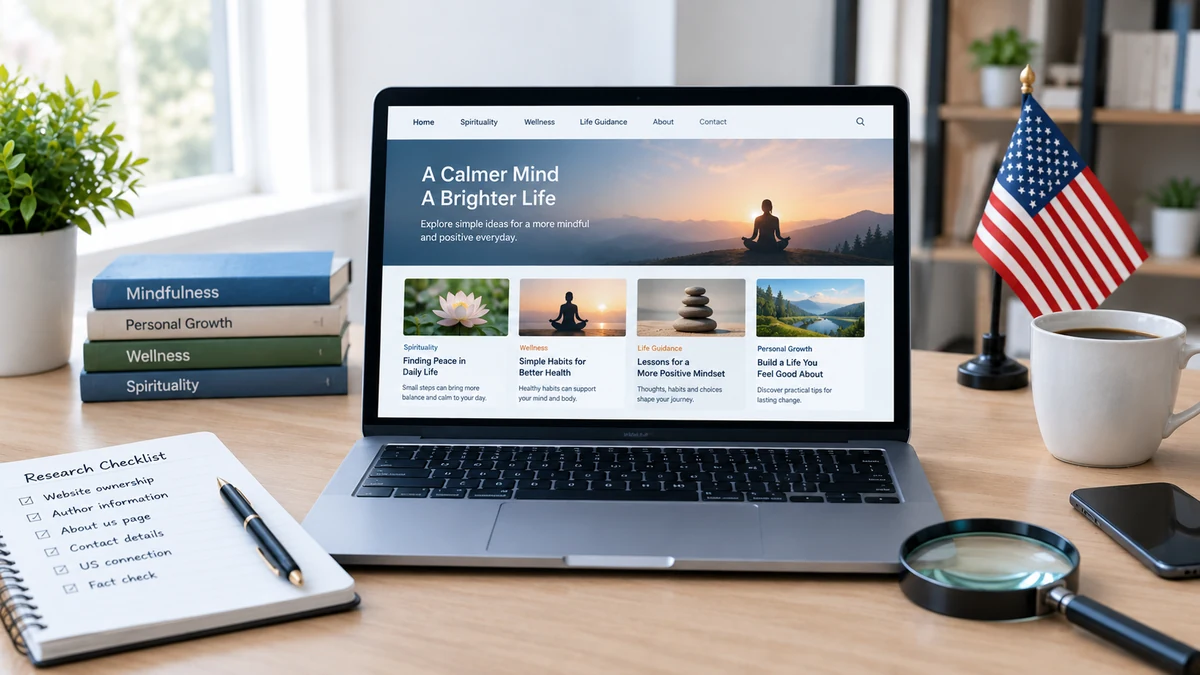
Spiritualhubz.com presents itself as a website about spiritual meanings, dreams, symbolism, and personal growth. However, its current homepage also features articles on wider subjects, including business, technology, and everyday life. Its spiritual focus is still part of its identity, but it is not the only type of content visitors can find there.
The word “USA” also needs a closer look. A website may attract American readers without being owned by a US company or having an office in the country. Those are separate things, and it is worth checking them before making a decision about the site.
Here is what the available public information tells us, what remains unclear, and how you can check the details for yourself.
What Is Spiritualhubz.com and What Does It Publish?
If you have opened Spiritualhubz.com and are unsure what kind of website you are looking at, start with its stated purpose and then compare that description with the articles it actually publishes.
The website describes itself as a place where readers can explore spiritual meanings, dream interpretations, tattoo symbolism, meditation, and personal growth. In simple terms, it offers articles for people who want to understand the meanings they connect with dreams, numbers, animals, symbols, and everyday experiences.
You can visit the official Spiritualhubz.com website to see its current homepage and available articles.
The site is better understood as an online publication than as a physical spiritual center. Its public pages provide articles and general information. They do not, by themselves, establish that it operates a meditation center, offers in-person spiritual sessions, or represents a formal religious organization.
This difference matters because the name may give visitors a wider impression than the service actually provides. If you are looking for spiritual reading, the site may offer topics that interest you. If you want a qualified spiritual counselor, an organized religious group, or face-to-face support, you will need to check those services separately.
Does the Actual Content Match Its Stated Purpose?
The quickest way to answer this question is to look beyond the welcome message and check the recent posts.
Spiritualhubz.com says its main interests include spiritual meanings, dreams, tattoo symbolism, and related subjects. Yet its homepage also displays articles on topics such as manufacturing, therapy, and remote work. This shows that the current content range is wider than the site’s original spiritual description.
That does not automatically mean the website is unreliable. A publisher can cover several subjects. The practical concern is whether readers can tell who wrote each article and whether the information is suitable for the topic.
For example, an article about the possible meaning of a dream is different from an article about mental health treatment. The first may discuss beliefs or personal interpretations. The second needs reliable evidence and care with medical claims.
Use these simple checks when reading a post:
- Check the topic. Does the article cover spirituality, or is it about a separate subject?
- Read the full explanation. Does it give reasons and useful examples, or does it make strong claims without support?
- Look for sources. If the article includes medical, legal, financial, or technical information, check whether it points to trustworthy evidence.
- Check the author. See whether the writer’s background fits the subject being discussed.
- Compare important claims. Look for confirmation from an independent, reliable source before acting on the advice.
Take dream interpretation as an example. You might find an article suggesting that a particular dream symbol represents change or personal growth. You can use that idea to reflect on your own experience, but you should not treat it as a proven explanation of what your dream means.
The same rule applies to spiritual signs and number meanings. They can be interesting from a personal or cultural point of view, but different traditions may explain the same symbol in different ways.
What should you do next? Decide what you want from the website. For general reading and personal reflection, explore the relevant articles with an open mind. For information that could affect your health, finances, legal rights, or safety, check the claims against qualified sources before relying on them.
Is Spiritualhubz.com Based in the USA?
If you searched for the website because you saw “USA” in its name or search result, you may be trying to confirm whether it is an American website. The important point is that its target audience and its legal location are not necessarily the same.
The homepage uses the phrase “spiritualhubz.com usa,” but that wording does not prove that the website is owned by a US company, registered in the United States, or managed from an American office. Its public About page describes the website’s purpose, while its Contact page provides a way to send a message. These pages do not establish a verified US headquarters.
So, based on the public pages reviewed, its US business location has not been independently confirmed. That is different from saying the website is fake or that its operator cannot be based in the United States. The available information simply does not settle the question.
A website can publish content for US readers from another country. It can also cover American topics without having a local office. To verify its location, you need evidence about the operator, not just the words used in its title.
What Does a US Legal Address or Governing-Law Clause Actually Prove?
A US address or a reference to US law can provide a useful clue, but neither should be treated as complete proof of where a website is run.
A legal page may name a state whose laws apply to certain disputes. That wording can tell you something about the terms the operator wants visitors to accept. It does not, on its own, confirm that the business is registered in that state or that its staff work there.
A contact address also needs context. It could belong to the operator, a registered agent, a mailing service, or another party. You need to know what the address represents before using it as evidence of a business location.
If you want to check the US connection, follow these steps:
- Read the official About and Contact pages. Look for a named business, a physical address, and clear details about the people or organization behind the website.
- Check the legal pages. See whether the Terms of Service identify a company, state, or responsible legal entity. Treat the wording as a claim to verify, not final proof.
- Search official business records. If a company name and state are provided, check the relevant state business registry to see whether the details match.
- Compare the information. The company name, address, and other public details should be consistent across the website and official records.
- Keep the conclusion narrow. If you cannot find a matching record, say that the location remains unconfirmed. Do not assume that the business does not exist.
For example, suppose a website mentions New York law in its terms but does not name a registered company or provide a verifiable office address. You could report that its terms refer to New York law, if that wording is present, but you could not use that detail alone to confirm a New York headquarters.
The same care applies to domain registration details. A domain registrar handles the registration of a web address; it does not necessarily own the website or run the business behind it.
What should you do next? If knowing the operator’s US location is important to you, look for a named legal entity and confirm it through official records. If those details are missing, treat the US connection as unverified rather than filling the gap with a guess.
Who Is Devwiz, and What Is Known About the Author?
If you have seen articles credited to “Devwiz,” you may be wondering whether it is a person’s real name, a pen name, or a publishing account. The useful question is not just who appears in the byline, but whether readers can verify the writer’s identity and background.
Some third-party coverage of Spiritualhubz.com reports that articles have appeared under the name Devwiz. However, the site’s current homepage displays recent posts credited to Nathaniel. That means the author name may vary across its publishing history or across different articles. A byline alone does not establish who owns the website.
The site’s About page refers to a team of researchers, writers, and spiritual enthusiasts, but that general description is not the same as a public list of named writers with detailed biographies.
This leaves some questions open. The public information reviewed does not provide enough verified detail to identify Devwiz as a particular individual or confirm the person’s professional qualifications. It would be misleading to guess at a real name or claim a background that the available evidence does not support.
How Much Does the Author Information Tell You About Article Quality?
An author name helps readers identify who is credited with a post, but it does not prove that the article is accurate. A writer’s background, the sources used, and the quality of the explanation matter more than a byline alone.
You can check an article’s authorship without making assumptions about the person behind it.
- Look for an author profile. Does it provide a full name, relevant experience, or links to other work?
- Check whether the background fits the topic. Experience writing about spiritual traditions does not automatically qualify someone to give medical or legal advice.
- Look at the evidence. Does the article link to reliable sources when it makes factual claims?
- Check for clear corrections or updates. If the information has changed, does the page explain what was updated?
- Compare the byline with the article itself. If the page credits one account but names another contributor in the text, look for an explanation instead of guessing who wrote it.
For instance, a writer may offer a personal view about the spiritual meaning of a bird appearing near your home. That kind of article can be read as an interpretation. If the same writer claims that the bird’s appearance predicts a medical problem or a financial event, you should ask for reliable evidence rather than accepting the statement as fact.
There is also a difference between an author and an owner. A person may write articles for a website without owning it, while the person who owns the domain may not write any of the content. To establish ownership, look for direct information from the operator or reliable business records.
What should you do next? When an article’s author is not clearly identified, judge the article by its evidence and the type of claim it makes. For casual spiritual reading, you may be comfortable treating it as one person’s interpretation. For serious decisions, look for qualified expertise and independent confirmation.
How Reliable Is the Information Published on Spiritualhubz.com?
If you are unsure whether to trust an article on Spiritualhubz.com, judge the information it provides rather than the website’s name or appearance. A site can publish useful content on one subject and weak information on another.
Spiritualhubz.com covers spiritual topics as well as subjects outside spirituality. This makes it important to consider the type of claim each article makes.
For example, an article about the meaning of a dream may explain a cultural belief or personal interpretation. It should not present that interpretation as a fact that applies to everyone. An article about health, law, or finance is different because readers may use its advice to make serious decisions.
Honestly, confident writing does not always mean the information is correct. What matters is whether the claims have suitable support.
Which Claims Need Independent Confirmation?
The type of claim determines how much evidence you should expect.
- Spiritual interpretations: Read these as beliefs or possible meanings, not guaranteed predictions.
- Health claims: Compare them with recognized medical sources and seek advice from a qualified health professional when needed.
- Legal information: Check official government websites or consult a qualified legal professional.
- Financial advice: Look for reliable financial sources and be cautious about promises of guaranteed results.
- Technical or general facts: Check whether the article provides credible sources and whether the information is current.
Imagine an article says that seeing a certain number repeatedly means money is coming your way. You can find that interpretation interesting without treating it as a reliable prediction.
Now imagine an article claims that a spiritual practice can cure a medical condition. That is a much more serious statement. Personal stories or spiritual beliefs cannot replace proper medical evidence.
The practical takeaway: Use spiritual articles for reflection and general reading. For claims that could affect your health, money, legal rights, or safety, rely on evidence suited to the subject.
What Do Spiritualhubz.com’s Contact and Privacy Policies Tell Visitors?
If you want to contact the people behind Spiritualhubz.com or understand how the site handles visitor information, its Contact page and Privacy Policy are the most relevant places to start.
The website provides public pages for these purposes. However, the existence of a contact form or privacy statement does not, by itself, confirm who operates the site or prove that every stated practice is followed.
You can visit the Contact page and Privacy Policy to read the current information.
The Contact page is useful for questions about articles, corrections, or the publication itself. The Privacy Policy explains the site’s stated approach to information that may be collected when people visit or interact with it.
What Should You Know Before Sharing Your Information?
The main concern here is privacy, not the quality of the site’s articles.
Before submitting a contact form, consider what information your message actually needs. If you are asking about an article, a short message and a reply address may be enough. There is usually no reason to include passwords, payment details, or unrelated personal information.
When reading the Privacy Policy, pay attention to:
- What visitor information the site says it collects.
- Whether it discusses cookies, analytics, advertising, or third-party services.
- How the information may be used or shared.
- Whether it explains how visitors can raise privacy concerns or request action concerning their data.
If a policy uses unclear language, you can ask the site for an explanation before sharing anything sensitive.
Also, remember that a privacy policy describes the site’s stated practices. It does not independently confirm the identity of the operator or the website’s physical location.
The practical takeaway: Read the policy before submitting personal information, and share only what is necessary for your request.
Is Spiritualhubz.com Different From Spiritualhubs.com?
If you have found both names online, it is easy to mistake one website for the other. Their spellings are similar, but Spiritualhubz.com and Spiritualhubs.com are different domain names.
A small spelling difference can lead to a separate website. It does not automatically mean that one site is fake or that the two sites have the same owner.
How Can You Avoid Confusing the Two Websites?
Start by checking the exact address shown in your browser. Do not rely only on a search result’s headline, a logo, or the way a website looks.
If you need to establish whether the two domains are connected, compare their published organization names, author information, contact details, and legal pages. A direct statement linking the two sites would be stronger evidence than similar branding or subject matter.
For example, two websites may both publish articles about dreams and spiritual symbols. That shared topic does not prove that they belong to the same company.
The same applies to articles that discuss Spiritualhubz.com on another website. Such articles may provide background, but they do not automatically establish ownership or an official relationship.
The practical takeaway: Treat the two addresses as separate websites unless reliable evidence confirms a connection. This helps you avoid attributing one site’s content or policies to the other.
What Is Confirmed About Spiritualhubz.com, and What Remains Unknown?
If you have read several pages about Spiritualhubz.com and still feel unsure, separating the available facts from unanswered questions can make the picture clearer.
The website has a public presence, publishes articles on spiritual and broader subjects, and provides Contact and Privacy Policy pages. These details can be checked directly on the site.
Other points remain less clear. The public information reviewed does not independently establish the operator’s identity, professional qualifications, or US business location. These are unanswered questions, not proof of wrongdoing.
| Question | What the available information supports |
|---|---|
| What is Spiritualhubz.com? | An online publication featuring spiritual topics and other subjects. |
| Does it publish only spiritual content? | No. Its content also covers topics outside spirituality. |
| Is it based in the USA? | Its US business location has not been independently confirmed by the information reviewed. |
| Who is Devwiz? | The name appears in third-party coverage, but a verified identity and professional background have not been established. |
| Can every article be trusted? | Reliability depends on the article, its claims, and the evidence supporting them. |
| Does the site provide contact and privacy pages? | Yes, public pages are available. Their existence alone does not establish the operator’s identity or actual privacy practices. |
| Is Spiritualhubs.com connected to it? | The similar names do not establish a relationship. |
One distinction is especially important: not verified does not mean false. If the operator’s location cannot be confirmed, the fair conclusion is that it remains unconfirmed. There is no need to make a stronger claim than the available evidence supports.
The practical takeaway: You can understand what the website publishes without assuming that every detail about its ownership or location is settled. Keep confirmed information separate from unanswered questions.
Frequently Asked Questions About Spiritualhubz.com USA
What is Spiritualhubz.com used for?
Spiritualhubz.com publishes articles about spiritual meanings, dreams, symbolism, personal growth, and other subjects. Its current content also extends beyond spirituality.
Is Spiritualhubz.com based in the USA?
Its US business location has not been independently confirmed by the public information reviewed. A website can target American readers without being operated from the United States.
Who is Devwiz?
Devwiz is a name associated with Spiritualhubz.com in third-party coverage. The available information reviewed does not establish a verified real-world identity or professional background for that name.
How can I find out who owns Spiritualhubz.com?
Start with the website’s About, Contact, and legal pages. If they name a person or business, that information may help you identify the operator. Official business records can provide further evidence when a legal company and jurisdiction are identified.
Is Spiritualhubz.com reliable?
That depends on the content you are reading. Spiritual interpretations can offer personal or cultural perspectives, while factual claims about health, law, finance, or safety need suitable supporting evidence.
Is Spiritualhubz.com the same as Spiritualhubs.com?
They are different domain names. Similar spelling does not establish common ownership, so the sites should be treated separately unless a reliable source confirms a connection.
Is it safe to share personal information with Spiritualhubz.com?
Read its current Privacy Policy and avoid sharing information that is not needed for your request. If the site asks for sensitive details without a clear reason, pause before providing them.
Final Thoughts
Spiritualhubz.com is an online publication that features spiritual content alongside articles on other subjects. Its public pages help readers understand its stated purpose and find its contact and privacy information.
Its operator’s verified identity, professional background, and US business location remain unconfirmed by the public information reviewed. That uncertainty should not be treated as proof of either legitimacy or wrongdoing.
If you are visiting for general spiritual reading, focus on whether the content is useful and whether it presents interpretations honestly. If you need to make an important decision, give greater weight to reliable evidence and qualified advice.