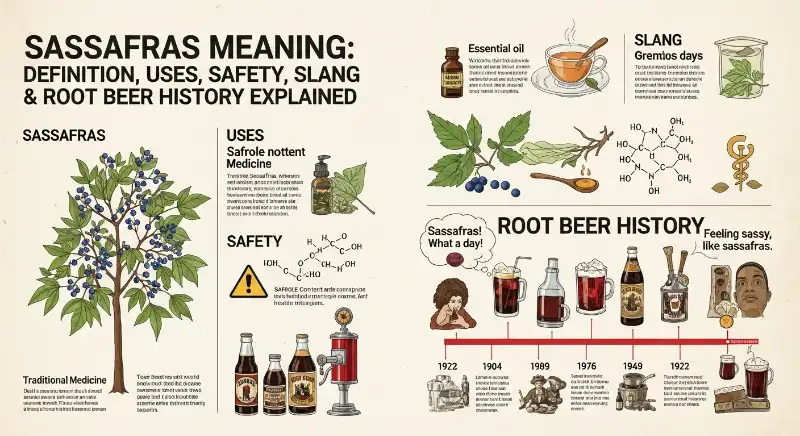
Sassafras is an aromatic North American tree known for its distinctive leaves, fragrant bark, and historical use in tea, root beer, and traditional remedies. It also refers to the dried root bark or flavoring material taken from the tree.
Sassafras Definition Simple
At its core, the sassafras definition is easy to understand. Sassafras is a deciduous tree from the laurel family with aromatic leaves and dark blue fruits. People also use the word sassafras for the tree’s fragrant root bark, which was once a popular flavoring ingredient.
Sassafras Pronunciation Meaning
Sassafras is usually pronounced sas-uh-fras. The word often appears in plant guides, herbal topics, cooking conversations, and old-fashioned English usage. When people search for sassafras meaning, they are usually asking one of three things: what the tree is, what the root bark is, or whether it is safe to use.
What Is Sassafras?
In simple terms, sassafras is a plant with several important identities:
- Botanical: a small to medium deciduous tree
- Culinary: a flavor used in traditional foods and drinks
- Historical: a plant linked to root beer and old herbal medicine
- Educational: a word people search when they want a clear plant meaning
That is why sassafras meaning is not just a dictionary answer. It is also a nature answer, a food answer, and a safety answer.
What Is Sassafras Tree and Where Does Sassafras Grow
The sassafras tree is a native North American tree that grows in the eastern part of the continent. USDA sources describe it as a species found from southwestern Maine and southern Ontario westward into parts of the Midwest and south to Florida and Texas. It is a small to medium-size deciduous tree with a wide natural range.
Sassafras Tree Meaning
A sassafras tree is easy to notice once you know what to look for. It often has leaves in more than one shape on the same branch, and the tree is well known for its aromatic bark and foliage. Dictionary and botanical sources both describe it as a fragrant tree with three-lobed or mixed-shaped leaves and dark blue fruits.
How to Identify Sassafras Tree
If you want to spot one in the wild, look for these clues:
- Three leaf shapes on one tree
- A sweet, spicy smell when leaves or bark are crushed
- Blue-dark fruits later in the season
- A small to medium deciduous tree form
Simple tip: if a tree has mitten-shaped leaves, oval leaves, and lobed leaves all on the same plant, sassafras is one of the first trees to check.
Sassafras Leaves Uses
Sassafras leaves are more than just pretty leaves. In cooking, they have been used in seasoning and in traditional Southern food culture. In some places, dried sassafras leaves are used to make filé powder, which helps thicken gumbo and adds a distinct flavor. This is one reason sassafras leaves remain popular in food history and plant education.
Helpful note: the leaves are usually discussed differently from the root or root bark. That distinction matters for both flavor and safety.
Sassafras Tea Benefits and Is Sassafras Safe to Drink
Sassafras tea has a long history as a traditional herbal drink. People have used it for comfort, flavor, and old home remedies. Collins also notes that sassafras tea is made from the aromatic dried bark of the root.
Sassafras Benefits and Side Effects
Traditionally, sassafras tea was used as a warming drink and was linked with digestive comfort and old herbal practices. But modern readers should also know the safety side. The main concern is safrole, a natural compound found in sassafras. FDA regulations say safrole is a natural constituent of the sassafras plant, and sassafras oil is about 80% safrole.
So the honest answer is this: sassafras tea is not the same thing as “safe for unlimited use.” Leaf-based products and small traditional uses are discussed differently from root extracts and concentrated oils.
Why Was Sassafras Banned?
This is an important search question, so let’s keep it simple. Sassafras itself was not “banned” as a tree. The concern is about safrole in food and flavoring products. Federal rules prohibit certain safrole-containing uses in human food, and sassafras oil is a natural source of that compound.
FDA Safrole Issue Explanation
Safrole is the key safety word here. It is a chemical naturally found in sassafras, especially in the oil and root-related products. That is why modern food use is handled carefully. When people ask about sassafras safe to drink, the real question is usually about which part of the plant, how much, and in what form.
Safety Checklist Table
| Sassafras Form | Safe to Consume? | Notes |
|---|---|---|
| Dried leaves | ✅ Often used traditionally | Common in culinary uses like filé powder |
| Root extracts | ⚠️ Use caution | Higher concern because of safrole |
| Commercial oil | ❌ Not for food use | Strong source of safrole |
| Herbal tea | ⚠️ Depends on form and amount | Leaf-based products are viewed differently from root products |
Bottom line: the safest way to think about sassafras is “leaf use is one topic, root and oil use is another topic.”
Sassafras Root Beer History and Traditional Uses
Few plants are as tied to old-fashioned flavor as sassafras. Historically, sassafras was used in root beer and other traditional drinks because of its strong aroma and taste. That is why many people still connect sassafras meaning with root beer history, herbal tea, and classic American food culture. Collins and Merriam-Webster both describe sassafras as a tree or root bark used for flavoring.
Sassafras Root Meaning
When people say “sassafras root,” they usually mean the part of the plant that was historically used for flavor and tea. The root bark is aromatic and has been important in traditional use. This is also where the safety conversation becomes more important, because the root and oil are the parts most closely linked to safrole.
Traditional Medicine Uses
In traditional herbal practice, sassafras was used for:
- warming teas
- old home remedies
- flavoring drinks
- folk medicine traditions
Important: traditional use does not always mean modern medical use is recommended. It simply shows how the plant was historically understood.
A Simple Timeline
- Indigenous and early traditional use: roots and bark used in everyday remedies
- Colonial period: sassafras becomes more known in tea and flavoring
- Root beer era: sassafras becomes linked with classic beverage history
- Modern time: interest continues, but safety awareness is stronger
Sassafras Meaning Slang and Sassafras Meaning in Literature
Sassafras is not only a plant word. In casual English, it can also show up in playful writing, old expressions, or creative language. Some people use it to give a sentence a warm, lively, or rustic feeling.
What Does Sassafras Mean in Slang
In slang-style use, sassafras may sound fun, energetic, or old-fashioned. But this is not the main meaning most searchers want. For SEO and user intent, the plant meaning is much stronger than the slang meaning, so that should stay the focus of the article.
Sassafras Meaning Spiritual
Some people connect sassafras with protection, purification, or folk traditions. These ideas belong more to cultural or spiritual interpretation than to science. If you include this section, keep it short and clearly framed as belief or tradition, not fact.
Sassafras Meaning in English
In English, sassafras usually brings to mind a fragrant tree, a root bark, or a traditional flavor. In literature, it can suggest nature, nostalgia, rural life, or old American herbal culture.
Sassafras vs Sarsaparilla Difference
Sassafras and sarsaparilla are often confused, but they are not the same thing.
| Feature | Sassafras | Sarsaparilla |
|---|---|---|
| Plant type | Tree | Vine |
| Main flavor | Sweet, spicy, aromatic | Earthy, root-like |
| Common use | Tea, filé powder, root beer history | Herbal drinks, flavoring |
| Safety note | Root and oil need caution | Usually seen as less restricted |
Easy memory trick: sassafras is the tree people remember for aroma and leaf shape, while sarsaparilla is usually the vine people remember for herbal drinks.
Sassafras Oil Uses and Modern Herbal Trends
Sassafras oil is known for its strong scent, but it is also the part that requires the most caution. Because safrole is naturally present in sassafras oil, it should not be treated like a simple kitchen flavor.
Oil Uses Sassafras
People may talk about sassafras oil in:
- fragrance discussions
- old-fashioned herbal history
- scent-based craft products
- traditional plant study
Key point: strong aroma does not always mean safe for food use. That is why understanding the plant form matters so much.
Quick Quiz: Can You Identify Sassafras Correctly?
Let’s make this easy and fun.
Friend: “I found a tree with mitten-shaped leaves. Is it sassafras?”
You: “Maybe. Do the leaves also come in different shapes on the same tree? Does it smell spicy when you crush a leaf?”
Friend: “Yes.”
You: “Then it is probably sassafras.”
Quiz Questions
- What does sassafras smell like?
- How many leaf shapes can appear on the same tree?
- Which part has the biggest safrole concern?
Answers
- Sweet and spicy
- More than one, often three different shapes
- The root and oil
Common Myths About Sassafras (Poisonous or Healthy)
Myth 1: All sassafras is dangerous
Fact: the safety concern is mainly about root extracts and oil, not the tree name itself.
Myth 2: Sassafras tea is always unsafe
Fact: the issue depends on the form and amount. Leaf-based products are treated differently from concentrated root products.
Myth 3: Sassafras and sarsaparilla are the same
Fact: they are different plants with different uses and different plant families.
Myth 4: Root beer still uses the old unsafe version
Fact: modern root beer usually uses safrole-free flavoring or artificial flavor systems.
Final Decision Guide: Should You Use Sassafras Today?
Before using sassafras, ask four simple questions:
- What is your purpose? tea, cooking, history, or study?
- Which part are you using? leaf, root, or oil?
- How much are you using? small traditional use is not the same as concentrated use.
- Do you have a health concern? pregnant people and anyone with liver concerns should be extra careful.
Simple rule: enjoy sassafras as a plant, a flavor, and a piece of history, but respect the safety differences between leaves, roots, and oil.
FAQ / People Also Ask About Sassafras
What is sassafras used for?
Sassafras has been used for flavoring, traditional tea, folk medicine, and root beer history. It is also studied as a native North American tree.
Is sassafras safe to drink?
It depends on the form. The main concern is safrole in root and oil products. Food-use rules treat safrole seriously, so root extracts and oils need caution.
Where can you find sassafras trees?
Sassafras grows naturally across much of eastern North America, including parts of the Northeast, Midwest, and Southeast.
What does sassafras mean in slang?
In casual writing, it can sound playful or old-fashioned, but that is not the main meaning most people search for.
Why was sassafras banned?
The plant was not banned as a tree. The concern is about safrole in food and flavoring uses.
How do you identify a sassafras tree?
Look for mixed leaf shapes on one tree, a spicy smell, and dark blue fruits.
Conclusion
Sassafras is more than a plant—it’s a piece of history, a flavor, and a symbol of nature’s subtle magic. From root beer traditions to herbal teas, and even as a playful word in slang, it connects culture, health, and curiosity.
Modern herbal trends in 2026 are reviving sassafras appreciation—but with smarter, safer use. Leaf-based teas, filé powders, and aromatherapy products allow you to enjoy its aroma and heritage without risking health.
If you are reading this for identification, look at the leaves. If you are reading it for cooking, pay attention to the part of the plant. If you are reading it for safety, remember that leaves, roots, and oils are not all treated the same. That is the real answer behind sassafras meaning.
📚 Related Articles
Lowkey Meaning: What People Really Mean When They Say “Lowkey”