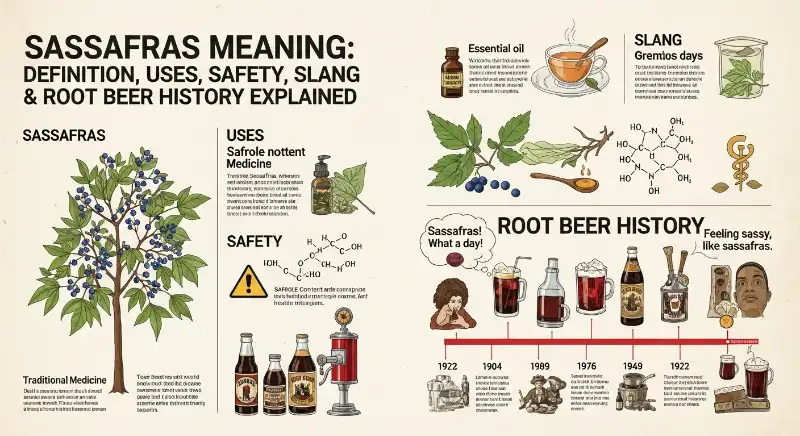
Sassafras meaning is more than just a dictionary definition—it’s a story of a tree, a spice, a cultural icon, and even a slang term. If you’ve ever wondered about this aromatic plant, its history, or how it appears in everyday language, you’re in the right place.
From herbal teas to root beer, sassafras has been part of human life for centuries. But understanding what is sassafras really requires looking at its botanical roots, traditional uses, and modern-day considerations.
Whether you’re curious about the sassafras tree in your backyard, the health benefits of its tea, or its place in language and culture, this guide will break it all down in an easy, engaging way.
Sassafras Meaning (Quick Answer for Beginners)
Quick Answer: Sassafras is a fragrant tree native to North America, known for its aromatic roots and leaves, which have been used in traditional medicine, teas, and flavorings like root beer.
Sassafras Definition Simple
At its core, the sassafras definition refers to any of the three species of the Sassafras genus, usually the North American sassafras tree. Its leaves can be mitten-shaped, its bark fragrant, and its roots contain an essential oil historically prized for flavoring and medicinal properties.
Sassafras Pronunciation Meaning
The word is pronounced /ˈsasəˌfras/. Interestingly, its name comes from the Latin saxifraga, meaning “stone-breaking,” a nod to its traditional use in herbal remedies.
What Is Sassafras?
In simple terms, sassafras is a plant with multiple identities:
- Botanical: A deciduous tree with distinct aromatic leaves
- Cultural: Flavoring agent in root beer and teas
- Linguistic: Slang for fun, playful energy or style
What Is Sassafras Tree and Where Does Sassafras Grow
The sassafras tree isn’t just a plant—it’s an experience for anyone who loves nature, gardening, or herbal traditions.
Sassafras Tree Meaning
Sassafras trees are medium-sized, deciduous trees growing up to 60 feet tall. Their leaves vary in shape—sometimes lobed like a mitten, sometimes oval—which makes them fascinating to identify. The bark emits a distinct aroma when scratched, often described as sweet and spicy.
How to Identify Sassafras Tree
If you want to spot one in the wild:
- Look for three distinct leaf shapes on the same branch
- Crush the leaves or bark gently to detect a distinctive spicy aroma
- Observe the bright yellow flowers in spring and blue-black berries in fall
Sassafras Leaves Uses
Leaves are not just ornamental—they can be dried for tea or used as seasoning. Some cuisines, especially in Southern US cooking, use dried and ground sassafras leaves as a filé powder in gumbo.
Visual Guide Suggestion: Include a side-by-side illustration showing the three leaf shapes, flowers, and berries to help beginners identify the tree accurately.
Sassafras Tea Benefits and Is Sassafras Safe to Drink
Sassafras tea has a long history as a soothing herbal beverage. But modern science urges caution.
Sassafras Benefits and Side Effects
Traditional uses of sassafras tea include:
- Digestive aid – helps with bloating or mild stomach discomfort
- Anti-inflammatory – used historically to reduce joint pain
- Flavor enhancer – aromatic, warming tea
However, the root contains safrole, a compound linked to liver toxicity in high amounts.
Why Was Sassafras Banned?
In the 1960s, the FDA banned sassafras oil and root extracts in commercial food and beverages due to safrole’s potential carcinogenic effects. Today, sassafras leaves (used as filé powder) are considered safe, but root extracts require caution.
FDA Safrole Issue Explanation
Safrole is naturally present in the roots and bark. While small culinary doses are generally safe, concentrated extracts can be harmful.
Safety Checklist Table
| Sassafras Form | Safe to Consume? | Notes |
|---|---|---|
| Dried Leaves | ✅ Yes | Common in tea and filé powder |
| Root Extracts | ⚠️ Limited | Avoid large amounts |
| Commercial Oil | ❌ No | Banned in food products |
| Herbal Tea (leaf-based) | ✅ Yes | Safe in moderate amounts |
Sassafras Root Beer History and Traditional Uses
Few beverages are as iconic as sassafras root beer, a drink with deep cultural roots in North America.
Sassafras Root Meaning
Originally, root beer was brewed using fermented sassafras roots, prized for their unique flavor and medicinal properties. The term “root” refers to the plant’s root, which contains natural aromatic oils.
Traditional Medicine Uses
Beyond beverages, Native American communities used sassafras for:
- Treating colds and fevers
- Anti-inflammatory purposes
- Skin treatments for minor ailments
Timeline Visual Suggestion
- 1600s: Indigenous use of sassafras roots for remedies
- 1700s: European settlers adopt sassafras tea
- 1800s: Commercial root beer production begins
- 1960s: FDA bans safrole in foods
- 2020s: Modern herbal teas revive leaf-based sassafras
Sassafras Meaning Slang and Sassafras Meaning in Literature
Sassafras isn’t just a plant—it’s a word with playful, cultural resonance.
What Does Sassafras Mean in Slang
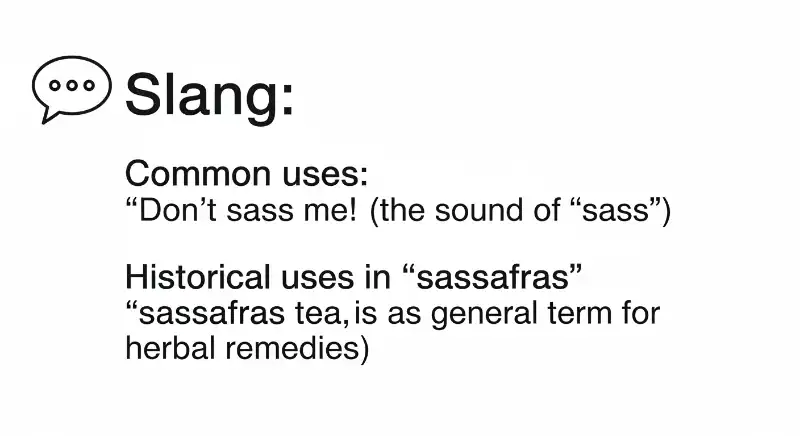
In slang, “sassafras” can describe someone with vibrant energy or cheeky style. Think of it as calling someone fun, lively, or a little spunky.
Sassafras Meaning Spiritual
Some traditions view sassafras as a symbol of protection and purification. Burning leaves in smudging rituals or using oils in spiritual practices is part of this heritage.
Sassafras Meaning in English
In literature, sassafras often evokes nostalgia, warmth, and rural Americana, appearing in poetry and stories that celebrate nature’s small wonders.
Sassafras vs Sarsaparilla Difference
Sassafras and sarsaparilla are often confused, but they are different plants with unique flavors and uses. Understanding the distinction helps in herbal teas, beverages, and natural remedies.
| Feature | Sassafras | Sarsaparilla |
|---|---|---|
| Taste | Sweet, slightly spicy, earthy | Sweet, bitter, more root-like |
| Safety | Leaves safe; roots high in safrole | Generally safe; few restrictions |
| Uses | Root beer, tea, filé powder, oil | Herbal medicine, soft drinks, teas |
| Botanical Family | Lauraceae (laurel family) | Smilacaceae (vine family) |
| Cultural History | North American traditional & colonial | Central & South American herbal use |
Key Takeaway: If your goal is flavor and aroma in teas or root beer, sassafras delivers that unique sweet-spicy note. Sarsaparilla is safer for medicinal preparations with fewer restrictions.
Sassafras Oil Uses and Modern Herbal Trends
Sassafras oil is experiencing a modern herbal revival, especially in DIY aromatherapy and niche herbal products—but with caution.
Oil Uses Sassafras
- Aromatherapy: Adds a warm, spicy scent to essential oil blends
- Topical applications: Small, diluted amounts used in massages or skin salves
- Crafting & DIY: Homemade soaps, candles, and natural perfumes
Herbal Revival Trend
In 2026, social media platforms highlight nostalgic and “heritage” herbal remedies, boosting curiosity about sassafras. Leaf-based teas and aromatherapy blends are trending, emphasizing safety and moderation.
Pro Tip: Always choose leaf-based extracts or diluted oils, avoiding concentrated root extracts due to safrole risks.
Quick Quiz: Can You Identify Sassafras Correctly?
Test your sassafras knowledge! Imagine this chat scenario:
Friend: “Hey, I found a tree with mitten-shaped leaves. Is this sassafras?”
You: “Could be! Are the leaves aromatic when crushed? Are there three leaf shapes on one branch?”
Friend: “Yes!”
You: “Then it’s likely sassafras. Check for yellow flowers in spring and bluish berries in fall to confirm.”
Quiz Questions:
- What distinctive aroma does sassafras bark and leaves have?
- How many leaf shapes can appear on the same branch?
- Which part of sassafras contains safrole?
✅ Answers: 1. Sweet-spicy, 2. Three, 3. Roots and bark
This approach turns learning into a story, helping readers identify the plant confidently.
Common Myths About Sassafras (Poisonous or Healthy)
Sassafras has a mixed reputation, but separating fact from myth is easy.
- Myth: All parts of sassafras are dangerous.
Fact: Leaves are generally safe; roots and concentrated oils contain safrole. - Myth: Sassafras tea cures diseases.
Fact: Tea can soothe digestion and mild discomfort, but it’s not a miracle cure. - Myth: Sassafras is the same as sarsaparilla.
Fact: They are different species, with distinct tastes, safety profiles, and botanical families. - Myth: Root beer contains toxic sassafras today.
Fact: Commercial root beer uses safrole-free extracts or artificial flavors, making it safe to drink.
Understanding these myths helps readers make informed decisions without fear or confusion.
Final Decision Guide: Should You Use Sassafras Today?
Here’s a simple framework for deciding whether to use sassafras in 2026:
- Purpose: Are you using it for tea, cooking, aromatherapy, or educational purposes?
- Form: Leaves are safe; avoid high-concentration root extracts.
- Dosage: Stick to moderate amounts in teas or culinary use.
- Health Condition: Consult a healthcare provider if you have liver issues or are pregnant.
- Source: Choose verified, reputable suppliers for herbal products.
Bottom Line: Sassafras is safe and enjoyable when used moderately and responsibly, especially leaf-based products. Its history, flavor, and cultural value make it a plant worth exploring—even in 2026’s herbal trend revival.
FAQ / People Also Ask About Sassafras
Q1: What is sassafras used for?
A: Sassafras has multiple uses—culinary, medicinal, and cultural. Leaves can be brewed as tea, used in cooking (like filé powder), and roots were historically used in root beer and herbal remedies. Aromatherapy and traditional crafts also use leaf-based extracts.
Q2: Is sassafras safe to drink?
A: Leaf-based teas are generally safe in moderation. Root extracts and oils contain safrole, which can be toxic in high concentrations, so they should be avoided or strictly limited. Commercial root beer uses safrole-free extracts, making it safe.
Q3: Where can you find sassafras trees?
A: Sassafras is native to eastern North America, from Canada to Florida. Look for mitten-shaped leaves, aromatic bark, and bright yellow flowers in spring. They thrive in forests, gardens, and parks.
Q4: What does sassafras mean in slang?
A: In slang, “sassafras” describes someone lively, playful, or full of energy—think of it as a fun, spirited compliment.
Q5: Why was sassafras banned?
A: The FDA banned sassafras root and oil in commercial food in the 1960s due to safrole, a compound linked to liver toxicity and cancer risk in large doses. Leaf-based products remain safe.
Q6: How to identify a sassafras tree?
A: Check for three leaf shapes on one branch, a sweet-spicy aroma when leaves or bark are crushed, bluish-black berries in fall, and bright yellow spring flowers.
Conclusion
Sassafras is more than a plant—it’s a piece of history, a flavor, and a symbol of nature’s subtle magic. From root beer traditions to herbal teas, and even as a playful word in slang, it connects culture, health, and curiosity.
Modern herbal trends in 2026 are reviving sassafras appreciation—but with smarter, safer use. Leaf-based teas, filé powders, and aromatherapy products allow you to enjoy its aroma and heritage without risking health.
Whether you’re exploring gardening, herbal beverages, or language curiosities, sassafras invites you to smell, taste, and experience a rich tradition that has stood the test of time. Approach it with respect, and it rewards you with flavor, history, and a spark of nostalgia.
📚 Related Articles
Lowkey Meaning: What People Really Mean When They Say “Lowkey”

Mush explores trending words, viral slang, and social media phrases, explaining them in simple English with fun examples for everyone.