If you have come across PressVibePulse.com, you may be wondering what this website actually does. Is it a news website, a general blog, or a place to find online information? You may also want to know whether its articles are reliable before using them for research.
These are fair questions. A website can look professional without proving that every claim on it is correct. Before trusting a site, it helps to check what it publishes, who stands behind its content, and whether its information can be confirmed elsewhere.
In this review, we will look at PressVibePulse.com from a reader’s point of view. We will explain what to check, how to judge the information it provides, and what you should know before relying on its content.
Quick Answer: What Is PressVibePulse.com?
PressVibePulse.com is the website being reviewed here, but its exact purpose and current publishing details need to be confirmed through accessible pages on the official domain. Before relying on its articles, check its content categories, author information, publication dates, and supporting sources. Its appearance or online presence alone cannot prove that all its information is reliable.
What Is PressVibePulse.com?
When you visit an unfamiliar website, the first question is simple: What is it meant to do? The name PressVibePulse.com may sound like a media or news platform, but a name alone cannot tell you what the site publishes.
The best way to identify the website is to look at its actual pages. Check the homepage, menu, category names, and a few recent articles. These details can help you understand its purpose without relying on guesses or claims made by other websites.
You should also separate what the website says about itself from what you can confirm independently. For example, a site may describe itself as a trusted source of news. That is a statement about the site, not proof of its accuracy.
What Kind of Content Does the Website Publish?
Start by checking the topics that appear on the website. Does it focus on news, technology, business, lifestyle, online services, or a mix of subjects? The answer should come from its current pages rather than assumptions based on its name.
Look at several articles instead of judging the site from one headline. Check whether the articles belong to clear categories and whether their subjects match the website’s stated purpose.
For example, if a website publishes technology tips, product explanations, and general lifestyle articles, it may serve as a broad information blog. If it mainly reports current events and supports its stories with original reporting, it may be closer to a news publication. The actual content matters more than the label.
Keep in mind that a wide range of topics is not automatically a good or bad sign. What matters is whether each article provides useful information and supports its important claims.
Who Is Behind PressVibePulse.com?
You may find an article helpful but still wonder who wrote it and who is responsible for publishing it. That matters because readers need a way to judge the author’s knowledge and understand where the information comes from.
Start with the website’s About and Contact pages. Look for a publisher name, an editorial team, author biographies, and a clear way to contact the people responsible for the site. If an editorial or corrections policy is available, read that too.
Do not assume that a website has no owner simply because you cannot find a name on its homepage. Some owners use privacy services to protect their personal details. At the same time, a hidden or unclear ownership record does not prove that a website is trustworthy.
The goal is to find out what can be confirmed, not to make a guess.
What Can You Confirm About the Website’s Ownership?
Ownership needs more than a name printed on a page. If PressVibePulse.com lists a company or publisher, check whether that information can be supported by an official company website, a reliable business record, or another independent source.
You can also look at domain registration records. Depending on the registration and privacy settings, these records may show useful details about the domain or its registrar. They may not reveal the actual person or company running the website.
Pay attention to the difference between these three situations:
- Confirmed: Reliable evidence supports the stated identity.
- Partly confirmed: Some details are available, but the full ownership picture remains unclear.
- Unverified: You cannot find enough reliable evidence to confirm the claim.
These labels help you stay fair. Missing information is a reason to investigate further, but it is not enough on its own to call a website fraudulent.
If you cannot confirm who runs PressVibePulse.com, state that limitation clearly and continue by examining the content itself. That gives readers a more useful answer than making an unsupported claim about the owner.
How Reliable Is the Information on PressVibePulse.com?
Knowing who runs a website is only part of the picture. You also need to check whether its articles support their claims with clear evidence. Even a real company can publish mistakes, while an unfamiliar publisher may sometimes provide accurate information.
A useful review should examine actual articles rather than judge the entire site from its design. Choose a few pages that cover different topics, then check their sources, dates, author details, and main claims.
For example, an article about a new government rule should point readers toward the relevant government announcement or official document. If it makes a claim about a product, readers should be able to check the manufacturer’s information or another reliable source.
Be careful with broad statements such as “experts agree” or “research proves.” These claims are more useful when the article identifies the experts or research and gives readers a way to check the evidence.
One article cannot prove that every page on a website is accurate. However, examining several articles can help you judge the quality of the material you are considering.
Do the Articles Provide Evidence for Their Claims?
Open the article and look beyond the headline. Does it explain where its information came from? Are the links relevant to the claims, or do they lead to pages that do not support the main points?
Check important details against the original source whenever possible. A government announcement, an official company statement, or a published research paper is usually more useful for checking a claim than another blog repeating the same information.
Also, check whether the article presents facts, opinions, and predictions as different things. An opinion can be reasonable without being a proven fact. A prediction may describe what the writer expects, but it should not be presented as a result that has already happened.
If a claim cannot be verified, do not automatically assume it is false. Record it as unconfirmed and look for better evidence before acting on it.
Are the Authors and Publication Dates Clear?
An article’s author and date can help you decide whether its information is still useful. Look for a byline, an author profile, and the original publication date. If the page says it was updated, check whether the update date is clear and whether the information appears current.
This matters most for subjects that change quickly. Technology instructions, product details, travel rules, and government policies can become outdated even when an article was accurate when first published.
An author biography may also help you judge whether the writer has relevant experience. For example, a technical explanation is easier to assess when the author provides a clear background in the subject. Still, a professional title alone does not prove that every statement in the article is correct.
If an article has no visible author or date, treat that as a limitation when judging its reliability. For an important decision, confirm the details through an authoritative source before relying on the article.
Is PressVibePulse.com Safe to Visit?
If you are unsure whether PressVibePulse.com is safe to open, do not judge it by its name or appearance alone. A professional-looking website is not automatically safe, and an unfamiliar domain is not automatically dangerous.
Start with basic browser safety. Check whether the browser displays a security warning, whether the website redirects you to unexpected pages, and whether it asks you to download unknown files. Be careful if a page asks for payment details, passwords, or personal information without a clear reason.
It is also important to separate two different questions: Is the website safe to browse, and is the information on it accurate? These are not the same thing. A website can use a secure connection and still publish incorrect information.
No complete safety verdict should be given without current checks of the actual website. If you cannot verify its security status, use caution rather than assuming either that it is dangerous or that it is completely safe.
What Does HTTPS Tell You—and What Does It Not Tell You?
Look at the website address in your browser. If it begins with https://, the connection uses encryption to help protect information sent between your browser and the website.
That is useful, but it does not prove that the website owner is honest or that every article is correct. HTTPS protects the connection; it does not check the truth of the content.
For example, a website may use HTTPS and still publish outdated advice. Another site may have a professional design but ask visitors to provide information they do not need to share.
Before entering sensitive information, check why the site needs it and whether you can confirm who is collecting it. If your browser displays a security warning, do not ignore it simply because the website looks familiar.
Is PressVibePulse.com Connected to Other Similarly Named Websites?
You may come across websites with names that look almost the same as PressVibePulse.com. This can make it difficult to tell whether you are visiting the right site or reading information about a different publisher.
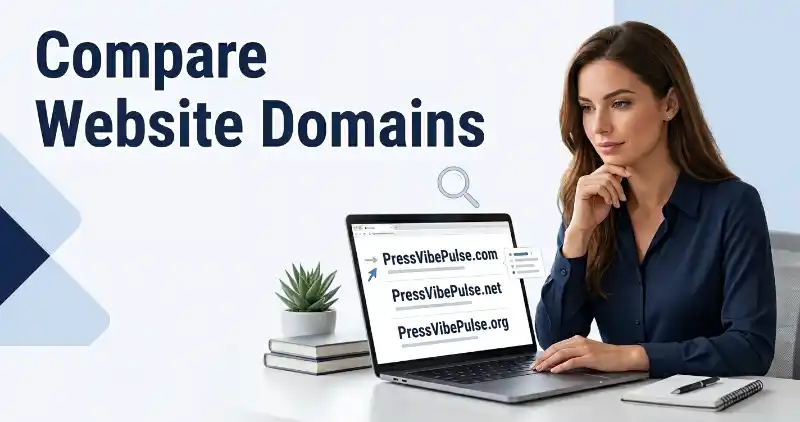
The domain ending matters. PressVibePulse.com, PressVibePulse.net, and PressVibePulse.org are different web addresses. Similar names do not prove that the websites have the same owner, share the same team, or publish the same content.
Check the full address in your browser before relying on information about any of these sites. Then compare their official descriptions, contact details, and available ownership information.
Do not assume that two sites are connected just because they use similar logos, colors, or names. Those details may look alike without proving a business relationship.
If you cannot confirm a connection between two domains, say so. This is more accurate than claiming that they are affiliated or unrelated without enough evidence.
How Can You Check an Important Claim Before Relying on It?
Sometimes you only need a quick explanation. Other times, an article may influence a purchase, a financial decision, a health choice, or an important deadline. In those cases, it is worth checking the information before acting on it.
You do not need to investigate every sentence on every website. Focus on the claims that matter most and follow a few simple steps.
- Identify the main claim. Find the exact statement you want to check instead of relying on the headline alone.
- Look for the original source. Open the official document, announcement, research paper, or company page linked by the article.
- Check the date and context. Make sure the information is current and that the source actually supports the claim.
- Compare reliable sources. For important claims, look for independent confirmation from sources with relevant expertise.
- Decide whether the evidence is strong enough. If the claim remains unclear, do not treat it as confirmed.
For example, suppose an article discusses a change to an airline’s baggage policy. You can check the airline’s official website to confirm the current rules. If an article explains a tax deadline, look for information from the relevant government tax authority.
The same principle applies to PressVibePulse.com. Use its articles as a starting point when helpful, but verify important details through suitable sources before making a decision.
What Should You Do When the Evidence Is Incomplete?
You may not always find enough information to confirm a claim. That does not automatically mean the claim is false, but it does mean you should avoid treating it as established fact.
Your next step depends on the possible consequences.
For a general-interest topic, you may simply need another reliable source. For a financial, legal, or medical decision, use an authoritative source or speak with a qualified professional when appropriate.
Be especially careful if a website asks you to pay money, share a password, or provide sensitive personal details while making claims you cannot verify. Do not rely on an unconfirmed statement as the only reason to take that risk.
Honestly, the sensible choice is sometimes to leave a question unanswered until better evidence becomes available. You do not need to label a website as a scam just because one detail is unclear.
What Does the Available Evidence Tell Us About PressVibePulse.com?
After checking a website’s purpose, ownership information, article quality, and safety, you can make a more informed judgment. The important thing is to separate what you have confirmed from what you have not.
For PressVibePulse.com, a final verdict should depend on current evidence from the official domain and reliable independent sources. If the website cannot be inspected directly, that limitation must be stated rather than replaced with assumptions.
Use these distinctions when reviewing the findings:
- Verified facts: Details supported by accessible pages or reliable independent evidence.
- Observed limitations: Specific issues found during the review, such as missing author information or unclear sourcing.
- Unresolved questions: Details that could not be confirmed, including ownership or the accuracy of claims that lack supporting evidence.
A missing author biography does not prove fraud. HTTPS does not prove editorial quality. Likewise, a website’s presence in search results does not guarantee that its content is accurate.
The fairest conclusion is one that matches the evidence. If the review confirms useful content and clear sources, explain those strengths. If it finds specific gaps, describe them with examples. If important facts remain unknown, say so plainly.
This approach helps readers make a decision without relying on an exaggerated positive or negative label.
Frequently Asked Questions
Is PressVibePulse.com a News Website?
Its classification should depend on the content and publishing practices visible on the official website. A site that publishes general articles is not automatically a traditional news organization. Check its current categories, reporting methods, and editorial information before deciding which description fits.
Can HTTPS Prove That PressVibePulse.com Is Trustworthy?
No. HTTPS helps encrypt the connection between your browser and the website, but it does not prove that the publisher is honest or that its articles are accurate. Check the website’s sources, author information, and important claims separately.
How Can I Verify Information Published on PressVibePulse.com?
Find the article’s main claim, locate its original source, check the publication date, and compare the information with reliable sources. For important financial, legal, or medical questions, use relevant authoritative sources rather than relying on a single website.
Final Thoughts
PressVibePulse.com should be judged by what can actually be verified about the website and its content. Its name, design, and online presence are not enough to establish whether its information is reliable.
Before relying on an article, check who wrote it, when it was published, and whether its important claims have supporting evidence. If you are concerned about browsing safety, look at technical warnings and unexpected requests separately from questions about content quality.
The key point is simple: do not assume that every unfamiliar website is dangerous, but do not trust every claim without checking it either. Use the available evidence, be clear about what remains unknown, and choose a more authoritative source whenever the decision requires greater confidence.