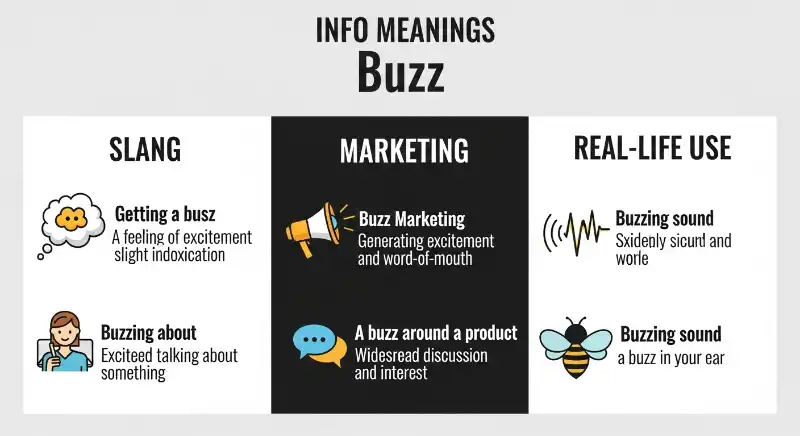
Buzz meaning is one of those simple words that quietly carries multiple meanings — from a soft humming sound to excitement, hype, and even viral popularity in today’s digital world.
In everyday conversations, people use it without thinking twice. You might hear, “There’s a buzz around this movie,” or “I’m feeling a buzz.” But what does it actually mean in each situation?
👉 Quick Answer:
Buzz means a low, continuous sound, a feeling of excitement, or growing attention depending on the context. It can describe a sound (like bees), an emotion (excitement), or popularity (something trending online).
What Does Buzz Mean?
Buzz is a flexible word with multiple meanings. It can describe a sound, a feeling, or even a trend.
In simple terms:
- A sound (like bees or electricity)
- A feeling (light excitement or energy)
- Popularity (something gaining attention fast)
👉 The meaning changes based on how you use it.
What Is the Core Meaning of Buzz in English?
Understanding the base meaning makes everything easier. Think of it as the root from which all modern uses grow.
Literal Meaning (Sound)
At its core, buzz refers to a low, continuous humming sound.
Examples:
- Bees buzzing around flowers
- A phone vibrating softly
- Electrical wires making a faint noise
👉 Imagine sitting quietly and hearing a soft “bzzzz” in the background — that’s the original meaning.
Basic Figurative Meaning
Over time, people started using buzz to describe energy or activity, not just sound.
Why? Because buzzing sounds often happen when something is active.
So now it can mean:
- A place full of energy → The room had a buzz.
- Growing excitement → There’s buzz about the event.
Think of it like this:
👉 Sound → Activity → Excitement → Popularity
That’s how the meaning evolved.
What Does Buzz Mean in Slang and Texting?
In modern language, especially among Gen Z and online users, buzz has taken on more emotional and social meanings.
Buzz = Excitement / Hype
This is the most common slang usage today.
- There’s a lot of buzz around that new game.
- That song created serious buzz online.
👉 Here, buzz = people talking, sharing, and getting excited.
It’s very close to words like hype or trend, but slightly more natural and organic.
Buzz = Slight Alcohol Effect
Another popular slang meaning:
- I’m not drunk, just a little buzzed.
👉 This means a light, pleasant effect from alcohol not fully drunk, just relaxed and slightly elevated.
It’s usually used in a casual, positive way.
Buzz in Texting & Social Media
Online, the word is often used for viral attention.
Examples:
- This post is getting buzz.
- What’s the buzz today?
- That influencer is creating buzz again.
👉 Translation: Something is trending or people are talking about it a lot.
📚 Related Articles Vibe Meaning in Texting (2026): What It Really Means in Chat, From a Girl or Guy
What Does Buzz Mean in Marketing and Business?
In business, buzz is not random it’s powerful.
Buzz Marketing Meaning
Buzz in marketing refers to creating excitement and conversation around a product or brand.
Instead of traditional ads, companies try to make people talk naturally.
Example:
- A new product leaks online → people discuss it → curiosity grows → sales increase
👉 That’s called buzz marketing.
It’s driven by:
- Word of mouth
- Social media sharing
- Influencer mentions
Social Media Buzz
In 2026, buzz is deeply connected to algorithms and virality.
A product or idea gains buzz when:
- People engage (likes, comments, shares)
- Content spreads quickly
- Conversations build momentum
Example:
- A short video goes viral → millions talk about it → brands jump in
👉 That’s modern digital buzz.
It’s fast, unpredictable, and incredibly valuable.
What Does Feeling a Buzz Mean Emotionally?
This is where the word becomes more human.
Feeling a buzz describes a light, positive emotional energy.
Emotional Interpretation
It can mean:
- Excitement before something big
- A happy, energetic mood
- A slight adrenaline rush
Examples:
- I felt a buzz before going on stage.
- There’s a buzz in the air before the match.
👉 It’s not intense like fear or joy it’s subtle, warm, and uplifting.
Deeper Emotional Layer
Think of buzz as:
- The moment before something exciting happens
- A mix of anticipation and happiness
It’s the feeling you get:
- Before opening good news
- Before meeting someone special
- Before a big opportunity
That’s why the word feels so alive.
How Is Buzz Used in Real-Life Sentences?
Here are simple, real-world examples you can instantly understand:
- The room was full of buzz before the concert started.
- That movie is creating a lot of buzz online.
- I felt a strange buzz of excitement.
- He’s slightly buzzed after one drink.
- Social media is buzzing with news today.
- There’s buzz around the new phone launch.
- The office had a positive buzz after the announcement.
- Everyone is talking the buzz is real.
- She felt a buzz of happiness.
- That brand knows how to create buzz.
👉 Notice how the meaning changes with context sound, feeling, or popularity.
Buzz vs Similar Words What’s the Difference?
Here’s a simple comparison to avoid confusion:
| Word | Meaning | Usage Context |
| Buzz | Excitement / sound / hype | General, flexible |
| Hype | Strong promotion | Marketing, media |
| Vibe | Emotional feeling | Personal, social |
| Trend | Popular topic | Social media, culture |
👉 Key insight:
Buzz sits in the middle it can be emotional and social at the same time.
Real Chat Scenario (How People Actually Use It)
Let’s see how this works in real life:
Friend 1: Have you seen that new series?
2: Yeah, there’s a lot of buzz about it.
Friend 1: Is it really that good?
2: People can’t stop talking about it.
👉 Here, buzz = growing popularity + excitement.
Emotional Tone Interpretation (Hidden Meaning)
Sometimes, the word buzz carries emotional signals beyond its literal meaning.
- Positive tone: excitement, energy, anticipation
- Neutral tone: general activity or attention
- Casual tone: relaxed (like being slightly buzzed)
👉 It rarely sounds negative which is why brands and people love using it.
What Are Common Mistakes When Using Buzz?
Even simple words can be misused. Here are common mistakes:
- ❌ Using it only as a sound word
- ❌ Confusing it with hype (they’re similar but not identical)
- ❌ Using it in serious/formal writing incorrectly
- ❌ Ignoring context (emotion vs marketing vs slang)
👉 Fix: Always check the situation is it sound, feeling, or popularity?
Why Is Buzz So Popular in 2026?
In 2026, attention is everything.
Short videos, viral posts, and fast trends dominate the internet. The word buzz fits perfectly into this world.
Why it’s trending:
- It’s short and easy
- Works in multiple contexts
- Sounds natural in speech
- Matches social media culture
👉 In a world driven by attention, buzz = visibility + excitement + momentum.
This half-article gives you a complete, human-friendly understanding of buzz without confusion from its original meaning to its modern digital power.
next half-article leko
What Does Buzz Mean in Different Contexts? (Deep Clarity Section)
By now, you understand that buzz changes meaning based on context. But here’s where most people get confused they mix all meanings together.
Let’s simplify it clearly.
Buzz in Daily Life
In everyday situations, buzz usually means energy or activity around something.
Examples:
- There’s a buzz in the market today.
- The classroom had a buzz before results.
👉 It shows something is happening, people are active, and attention is building.
Buzz in Digital Culture (2026 Update)
In today’s internet-driven world, buzz is almost equal to visibility.
- More buzz = more reach
- More reach = more influence
Platforms like TikTok, Instagram, and YouTube thrive on this idea.
👉 If content creates buzz, it spreads faster.
That’s why creators focus on:
- Hooks
- Trends
- Emotional triggers
Because buzz is no longer random it’s engineered.
How to Use Buzz Correctly (Without Sounding Awkward)
Many learners understand the meaning but struggle with usage. Let’s fix that.
Simple Usage Formula
You can use buzz in 3 easy ways:
- There is + buzz + about + topic
- There is a lot of buzz about the new app.
- Something creates buzz
- This campaign created massive buzz.
- Feeling a buzz
- I felt a buzz of excitement.
👉 If you follow these patterns, you’ll sound natural instantly.
When NOT to Use Buzz
Avoid using it when:
- The situation is too formal
- There’s no excitement or activity
- You need precise or technical language
❌ Wrong: The report generated buzz in legal documentation.
✅ Better: The report gained attention.
Advanced Examples (Real-Life + Modern Situations)
Let’s move beyond basic sentences and explore real-world usage.
Social Media Examples
- This reel is getting crazzy buzz overnight.
- The hashtag created global buzz in hours.
👉 Shows speed + virality.
Workplace Examples
- There’s internal buzz about the new policy.
- The startup is generating investor buzz.
👉 Shows curiosity + discussion.
Personal Life Examples
- I felt a buzz before my interview.
- The wedding had such a happy buzz.
👉 Shows emotional energy.
Buzz in Pop Culture & Trends
Buzz plays a huge role in entertainment and media.
Movies & Entertainment
Before a movie releases, people say:
- The film has strong pre-release buzz.
👉 This means people are already excited.
Sometimes, buzz alone can decide success.
Influencers & Internet Culture
Influencers don’t just create content they create buzz.
- A viral post → audience reacts → conversation grows
👉 Buzz becomes social proof.
The more people talk, the more others join in.
The Psychology Behind Buzz (Why It Feels So Powerful)
Here’s something interesting.
Humans are naturally attracted to what others are talking about.
This is called:
👉 Social validation
When we hear:
- Everyone is talking about it
Our brain thinks:
- I should check it too.
That’s exactly what buzz does.
Why Brands Chase Buzz
Because buzz creates:
- Curiosity
- Urgency
- Trust
Instead of saying Buy this, brands let people say:
- Have you seen this?
👉 That’s far more powerful.
Mini Case Study (Simple Story)
Imagine two products:
Product A:
Runs ads, but no one talks about it.
Product B:
People share it, discuss it, and post about it.
👉 Which one wins?
Obviously, Product B.
Why?
Because it has buzz.
FAQs People Also Ask
What does buzz mean in slang?
In slang, buzz usually means excitement, hype, or slight alcohol effect depending on the situation.
What does buzz mean in texting?
In texting, buzz means something trending or being talked about a lot.
What is a buzz feeling?
It’s a light, positive emotional excitement, often before something important or enjoyable.
Is buzz positive or negative?
Mostly positive or neutral. It rarely has a negative meaning.
What does getting a buzz mean?
It usually means feeling slightly affected by alcohol or experiencing a mild, happy sensation.
Final Thoughts (Human, Clear, and Real)
Buzz is a small word with a surprisingly big life.
It started as a simple sound like bees humming but evolved into something much more powerful. Today, it represents excitement, attention, emotion, and even digital influence.
In 2026, where attention is currency, buzz has become a signal:
👉 If something has buzz, it matters.
But the real magic of this word is its flexibility.
It can describe:
- A feeling inside you
- Energy in a room
- Or attention across the internet
And once you understand the context, you’ll never feel confused using it again.
📚 Related Articles
Temu Meaning (2026 Update): Is Temu Legit, What It Really Means & Why Millions Are Searching It