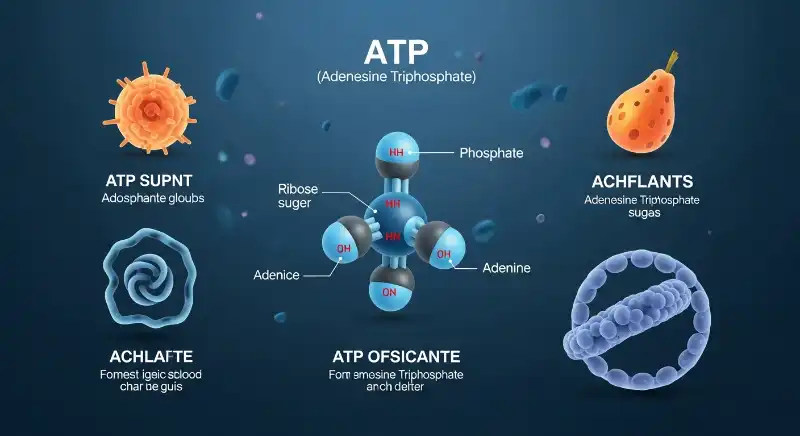
ATP meaning can sound confusing at first because this small three-letter term appears in completely different worlds — biology classrooms, social media chats, and professional tennis tournaments.
If you’ve ever searched “atp meaning text,” “atp meaning biology,” or even “atp meaning tennis,” you’re not alone. Millions of people look it up every month because ATP has multiple meanings depending on context. In science, it’s the molecule that fuels life itself. In texting, it’s modern slang. And in sports, it refers to a global tennis organization.
In this beginner-friendly guide, we’ll explore the most common meanings of ATP in a way that actually makes sense — with simple explanations, real-life examples, and a few surprising facts along the way.
What Does ATP Mean? A Simple Explanation
Before diving into complex details, let’s answer the core question most people search: what does ATP mean?
In the simplest terms, ATP is an abbreviation that can represent different things depending on where you see it.
ATP Meaning in the Simplest Terms
Here are the three most common definitions:
| Context | Meaning |
|---|---|
| Biology | Adenosine Triphosphate (energy molecule in cells) |
| Social Media / Text | “At This Point” |
| Tennis | Association of Tennis Professionals |
Because these meanings belong to completely different fields, the context around the word usually tells you which definition is intended.
For example:
- A biology student asking about ATP is referring to cellular energy.
- A TikTok user typing “ATP I’m tired of this trend” means “at this point.”
- A sports fan talking about the ATP Tour is referring to professional men’s tennis.
Understanding this context is the key to decoding the term.
Why ATP Appears in So Many Different Searches
Search engines show thousands of queries like:
- atp meaning texting
- atp meaning slang
- atp meaning in text
- atp meaning tennis
- atp meaning biology
This happens because ATP exists in three popular knowledge ecosystems:
- Science and education
- Internet slang and Gen Z communication
- Professional sports
Each meaning has its own story — and surprisingly, the biology definition is actually the most important one for life on Earth.
ATP Meaning in Biology: The Energy Currency of Life
When scientists talk about ATP, they mean Adenosine Triphosphate, a molecule that stores and transfers energy inside living cells.
Every organism — from bacteria to humans — relies on this molecule to power biological processes.
Why ATP Is Called the “Energy Currency”
Biologists often describe ATP as the energy currency of the cell.
Think of it like a rechargeable battery.
Cells constantly:
- store energy in ATP
- spend energy from ATP
- recharge ATP again
Whenever your body needs energy — whether to move muscles, send nerve signals, or build molecules — ATP provides it.
Without this system, life would simply stop.
A Real-Life Analogy for ATP
Imagine your smartphone.
Your phone needs a battery to operate. When the battery runs low, the phone shuts down.
Cells work in a similar way.
ATP acts as the battery pack that powers cellular activities like:
- muscle movement
- brain signaling
- digestion
- protein synthesis
For example:
- When you run, muscles rapidly break down ATP for energy.
- When neurons fire in your brain, ATP fuels the electrical signals.
In fact, the human body uses billions of ATP molecules every second just to stay alive.
ATP Full Form and What the Name Actually Means
Many students search for the ATP full form during biology lessons or exam preparation.
The full form is:
Adenosine Triphosphate
While it sounds complicated, the name simply describes the molecule’s structure.
Breaking Down the Name
Let’s simplify the components.
Adenosine
This part contains two smaller components:
- adenine (a nitrogen base)
- ribose (a sugar molecule)
Together they form the base of ATP.
Triphosphate
“Tri” means three, referring to the three phosphate groups attached to the molecule.
These phosphate groups are the key to ATP’s energy system.
Why the Phosphate Groups Matter
Energy in ATP is stored in the bonds between phosphate groups.
When the cell needs energy, it breaks one of these bonds.
This process:
- releases usable energy
- converts ATP into ADP (Adenosine Diphosphate)
Cells then recycle ADP back into ATP through metabolic processes.
It’s a continuous energy cycle that powers life.
ATP Meaning in Text, Slang, and Gen Z Communication
Outside science, ATP meaning in text usually refers to a completely different phrase.
In internet slang, ATP means:
“At This Point.”
This version of the term is especially common on:
- TikTok
- Twitter/X
- Snapchat
- group chats
ATP Meaning in Texting and Social Media
Gen Z and online communities often use the abbreviation to express frustration, acceptance, or a turning point in a situation.
Examples:
Example 1
“ATP I’m just going to ignore the drama.”
Meaning: At this point, I don’t care anymore.
Example 2
“ATP this trend is getting annoying.”
Meaning: Right now, it has become annoying.
This usage has become increasingly popular across TikTok captions and Twitter posts, which is why searches like “atp meaning tiktok” and “atp meaning slang twitter” have surged in recent years.
Why Gen Z Loves Short Slang Terms
Online communication rewards speed.
Typing full sentences slows down conversations, so users prefer short abbreviations like:
- BRB
- IMO
- TBH
- ATP
According to social media linguists studying Gen Z communication patterns, abbreviations are evolving faster than traditional slang.
By 2026, experts believe internet slang will continue to evolve through TikTok trends, meme culture, and AI-assisted messaging.
ATP is just one example of how language adapts to digital life.
ATP Meaning in Tennis and Professional Sports
If you see ATP mentioned in sports news, the meaning changes again.
In tennis, ATP stands for:
Association of Tennis Professionals
This organization governs the global professional men’s tennis circuit.
What the ATP Tour Is
The ATP Tour is the main professional tennis tour for male players worldwide.
It organizes major tournaments and rankings for elite athletes.
The tour includes events such as:
- ATP Masters tournaments
- ATP 500 events
- ATP 250 events
- ATP Finals
These tournaments determine global rankings for professional players.
Famous Players Associated With ATP Events
Many of the world’s greatest tennis players have competed on the ATP Tour, including:
- Novak Djokovic
- Roger Federer
- Rafael Nadal
These athletes built legendary careers competing in tournaments organized by the Association of Tennis Professionals.
For sports fans searching “atp meaning in tennis,” this is the definition they are referring to.
Structure of ATP: What Makes This Molecule Special
Understanding ATP meaning in biology gets even clearer when we look at its structure. The molecule is small but incredibly powerful.
Components of ATP
ATP consists of three main parts:
- Adenine – a nitrogen-containing base that acts like the “ID card” of the molecule.
- Ribose – a five-carbon sugar that connects adenine to the phosphate chain.
- Three Phosphate Groups – the real energy carriers. These phosphates store the potential energy that cells use.
Think of ATP like a tiny battery with three energy cells. Each phosphate group holds a charge. When one breaks off, energy is released, powering the cell’s activities.
Visualizing ATP
A simple diagram can help:
Adenine — Ribose — P — P — P
Where the **“P”**s are phosphate groups. The bond between the last two phosphates is high-energy and breaks easily, releasing energy.
This structure explains why ATP is called the energy currency of the cell — it’s the molecule your body constantly “spends” and “recharges.”
Why ATP Is Called the Energy Currency of Cells
ATP isn’t just another molecule — it’s the currency that powers life itself.
How Energy Is Released
The key process is ATP hydrolysis:
- One phosphate group is removed from ATP.
- This forms ADP (Adenosine Diphosphate) and a free phosphate.
- Energy is released, which cells use for tasks like:
- Muscle movement
- Transporting molecules across membranes
- Making proteins
Real-Life Analogy
Imagine paying for groceries with cash:
- ATP is the full wallet.
- ADP is the spent wallet after buying groceries.
- Cells “reload” the wallet with energy from food, sunlight, or chemical reactions.
This energy cycle happens billions of times per second in your body without you even noticing.
How Cells Produce ATP: Step-by-Step
Cells have several ways to make ATP, primarily through cellular respiration.
1. Glycolysis
- Glucose is broken down in the cytoplasm.
- Produces a small amount of ATP quickly.
- Creates molecules used in the next step.
2. Krebs Cycle (Citric Acid Cycle)
- Takes place in mitochondria.
- Extracts electrons from molecules produced in glycolysis.
- Produces a few more ATP molecules and energy-carrying electrons.
3. Electron Transport Chain
- Uses the electrons to generate a large ATP yield.
- Final step in cellular respiration.
- Most of the cell’s energy comes from this process.
Process Table:
| Step | Location | ATP Yield |
|---|---|---|
| Glycolysis | Cytoplasm | 2 |
| Krebs Cycle | Mitochondria | 2 |
| Electron Transport Chain | Mitochondria | 32–34 |
By the end, one glucose molecule can generate up to 38 ATP molecules — enough to power many essential cellular functions.
ATP vs ADP: Understanding the Difference
Cells constantly cycle ATP and ADP, so it’s important to know the distinction.
| Feature | ATP | ADP |
|---|---|---|
| Phosphate Groups | 3 | 2 |
| Energy Level | High | Lower |
| Function | Energy transfer | Energy recycling |
Think of ATP as a fully charged battery, while ADP is half-used and waiting to be recharged.
This cycle keeps life running smoothly.
Real-World Examples of ATP in Action
ATP isn’t just a textbook concept — it’s at work inside your body every second.
Everyday Activities Powered by ATP
- Running or walking – ATP powers muscle contractions.
- Thinking and learning – ATP fuels brain neurons.
- Digesting food – ATP helps build enzymes and move molecules.
- Heartbeat – Every contraction of your heart uses ATP.
Even when you’re sitting quietly, billions of ATP molecules are being created and used in your cells.
Fun Fact (2026 Update)
In 2026, researchers are exploring ATP-based energy sensors to monitor real-time metabolism in humans. Wearable devices may soon tell you exactly how your cells are using ATP during workouts or stress — turning biology into a real-time performance metric.
Where Is ATP Found in the Cell?
ATP is everywhere in your cells, but certain locations produce and store it more efficiently.
Main Locations of ATP
- Mitochondria – Often called the “powerhouse of the cell,” mitochondria generate most of the ATP through cellular respiration.
- Cytoplasm – Glycolysis produces ATP in the fluid outside organelles.
- Chloroplasts (in plants) – Convert sunlight into ATP during photosynthesis.
Even tiny cells like bacteria have mechanisms to produce ATP, proving that ATP is truly universal in living organisms.
Fun Fact
Your mitochondria alone produce billions of ATP molecules every second, enough energy to keep your cells active and your body functioning continuously.
Other Meanings of ATP (Not Biology)
Besides biology, ATP has multiple interpretations in everyday life, social media, and professional fields.
| Field | Meaning |
|---|---|
| Text / Chat | “At This Point” (slang used on TikTok, Twitter, Instagram) |
| Sports | Association of Tennis Professionals (men’s pro tennis circuit) |
| Technology | Advanced Technology Program |
| Medicine | Anti-tachycardia pacing (cardiac treatment) |
| Aviation | Airline Transport Pilot (pilot certification) |
Why Context Matters
If you see “ATP” online, always consider the surrounding words or field. The meaning could change completely, from cell energy to internet slang or tennis rankings.
FAQ / People Also Ask About ATP
1. What does ATP stand for in biology?
ATP stands for Adenosine Triphosphate, the main energy molecule that powers all cellular processes.
2. Why is ATP called the energy currency of the cell?
Because it stores and releases energy for muscle movement, nerve signals, digestion, and more — similar to money fueling transactions.
3. Where is ATP produced in the cell?
Primarily in the mitochondria, with smaller amounts from the cytoplasm (glycolysis) and chloroplasts in plants.
4. What does ATP mean in texting?
On social media and chat apps, ATP usually means “At This Point,” often used to express frustration or a turning point in a conversation.
5. What does ATP stand for in tennis?
In sports, ATP is the Association of Tennis Professionals, the global men’s professional tennis organization.
6. How is ATP different from ADP?
ATP has three phosphate groups and high energy, while ADP has two phosphates and lower energy, acting as a recycled form in the cell.
Conclusion: Why ATP Matters in Life, Chat, and Sports
ATP is a small molecule with a huge impact. In biology, it literally fuels life, making muscle movement, thinking, and metabolism possible. Online, ATP keeps conversations short and expressive, helping people communicate quickly. And in tennis, ATP governs the world’s top male athletes, shaping the global sport.
Understanding ATP in any context helps you decode science, culture, and sports — all from three simple letters. It’s proof that even tiny things can hold immense power and meaning.
📚 Related Articles
The Most Common SMD Meaning in Text Messages

Mush explores trending words, viral slang, and social media phrases, explaining them in simple English with fun examples for everyone.



1 thought on “ATP Meaning: The Tiny Molecule That Powers Life, Texting, and Even Tennis”