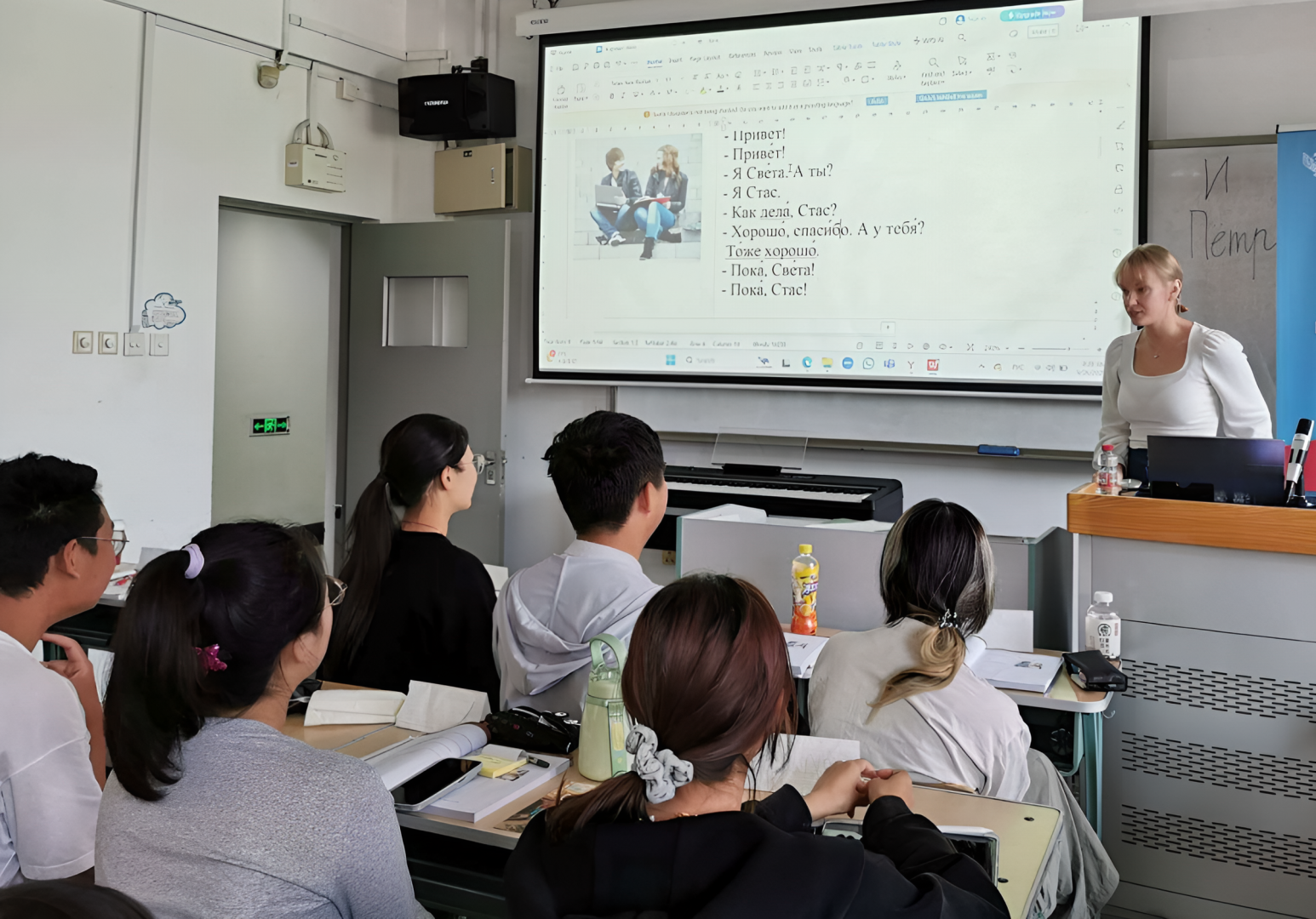
When a Russian speaker answers «Пожалуйста», they might be saying “please” or “you’re welcome.” The clue is what came before it. If someone just thanked them, the second meaning fits. Treat each of the six expressions below as a reply to a specific turn in a conversation, and it becomes much easier to choose the right one yourself.
1. Listen for what the other person wants
Пожалуйста (pozhaluysta): please, or you’re welcome
In «Повторите, пожалуйста» (Please repeat that), it softens a request. After «Спасибо за помощь» (Thanks for the help), the same word accepts the thanks. Gramota’s guide to Russian politeness marks both uses. When you hear the word on its own, look back at the line it answers rather than assuming the speaker is asking for something.
Можно? (mozhno?): may I?
At a classroom door, «Можно войти?» means “May I come in?” The full question names the action, but the shorter «Можно?» works if it’s obvious what you want to do. If you’re pointing to a chair, «Можно здесь сесть?» (May I sit here?) is clearer than a bare question, especially if someone might think you are asking to take the chair away.
2. Tell an agreement from a simple acknowledgment
Понятно (ponyatno): I see, or got it
If someone says «Занятие начинается в шесть» (The class starts at six), «Понятно, спасибо» (Got it, thanks) shows you heard and understood them. It does not say that six works for you.
Put the same word at the end of a directive and it can sound sharper. «Ты остаёшься здесь, понятно?» (You’re staying here, understood?) expects confirmation. If you’re checking whether a learner wants more help, «Объяснить ещё раз?» (Shall I explain again?) is a better choice.
Хорошо (khorosho): well, or okay
In «Он хорошо говорит по-русски» (He speaks Russian well), the word describes how someone speaks. On its own after «Позвони мне вечером» (Call me this evening), it accepts the request. In a message about an appointment, «Хорошо, буду в шесть» (Okay, I’ll be there at six) leaves less room for doubt than a one-word reply.
3. Repair the conversation without losing your place
Извините (izvinite): excuse me, or sorry
Use it before interrupting a stranger: «Извините, где остановка?» (Excuse me, where’s the bus stop?). After a minor mistake, «Извините, я ошибся номером» (Sorry, I got the wrong number, said by a man) apologises. A woman would say «я ошиблась номером». The shorter «извини» fits one person you already address as «ты». Until you know which form someone expects, «извините» is a useful starting point.
Ничего страшного (nichego strashnogo): no harm done
You might say this when a friend apologises for arriving five minutes late. It reassures them. Don’t use it to mean “I didn’t understand.” If you missed the words, say «Я не понял» or «Я не поняла» (I didn’t understand), and ask them to repeat what they said.
Put the phrases into a three-turn rehearsal with a partner:
Give your partner a situation, such as arriving at the wrong room. Let them open with a sentence you haven’t read.
Reply without looking at the list. If you only caught the key word, ask for the full sentence again before you answer.
Repeat the exchange after changing one detail, such as speaking to a close friend instead of a stranger. Decide if you need a different form.
If you want a teacher to listen and correct you, Prep.uz lists live mentor practice alongside recorded Russian lessons. Ask whether you can bring short exchanges like these to a lesson.
Try one now: someone tells you the bus stop has moved. Say you understand, then ask where it is now. «Понятно, спасибо. А где теперь остановка?» (Got it, thanks. Where’s the stop now?) keeps the conversation moving.