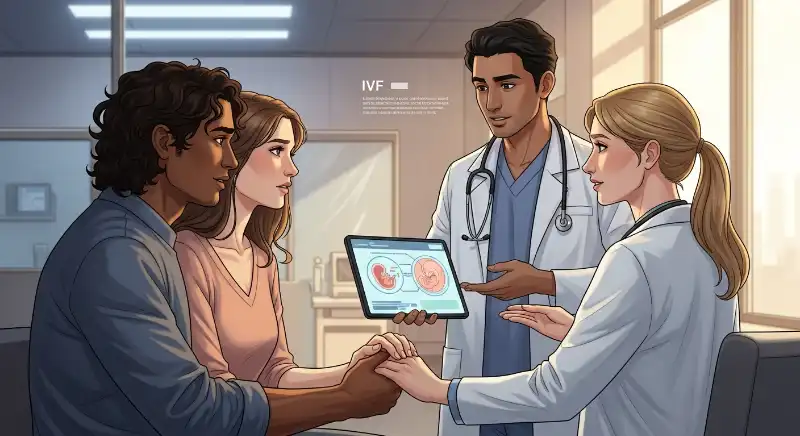
IVF meaning is one of the most searched fertility-related questions today, and for good reason. IVF stands for In Vitro Fertilization, a medical fertility treatment that helps people get pregnant when natural conception is difficult. In simple words, IVF means doctors help the egg and sperm meet outside the body and then place the embryo into the uterus.
At the same time, IVF is not just a medical term—it’s an emotional word. For many people, hearing “IVF” brings confusion, fear, hope, or even guilt. Myths, social pressure, and half-information make it sound scarier than it really is. This article is written for beginners, with clear language and real-life examples, so you can understand IVF calmly and confidently.
IVF Meaning (Simple Definition for Beginners):
IVF means In Vitro Fertilization — a medical fertility treatment where an egg and sperm are combined outside the body in a laboratory, and the resulting embryo is placed into the uterus to help achieve pregnancy.
What Does IVF Mean and Why Is Everyone Suddenly Talking About It?
IVF means assisted fertilization, not artificial pregnancy. It exists because human bodies don’t always work perfectly—and modern medicine steps in to help. Today, IVF is talked about more openly because infertility conversations are no longer hidden behind silence.
In 2026, people search IVF meaning more because:
- Couples are trying for pregnancy later in life
- Medical awareness has increased
- Social media and real stories reduced stigma
IVF isn’t “trendy.” It’s simply more visible and better understood now.
What Does IVF Actually Mean in Medical Terms?
Medically, IVF means fertilizing an egg with sperm in a controlled laboratory setting. Once fertilization happens and an embryo forms, it is transferred into the uterus, where pregnancy continues naturally.
Doctor-style explanation:
“We help fertilization happen safely outside the body, then nature takes over.”
What Does IVF Stand for in Simple Language?
IVF = In Vitro Fertilization
“In vitro” means outside the body.
In easy terms:
👉 IVF helps the egg and sperm meet when they can’t meet on their own.
Layman example:
“It’s like helping two people meet in the right place, then letting them live their life normally.”
The Real Meaning of IVF That Most People Misunderstand
Many people misunderstand IVF because they hear bits of information without context. IVF is often seen as unnatural, extreme, or only for “hopeless cases.” That’s not true.
IVF does not replace pregnancy. It supports one step—fertilization—when the body needs help.
Is IVF the Same as a Test-Tube Baby?
No. “Test-tube baby” is an old and misleading term. Babies are not grown in tubes or machines.
Myth vs Reality:
- Myth: IVF babies grow in labs
- Reality: IVF babies grow in the womb, just like any other baby
Is IVF Natural or Completely Artificial?
IVF is medically assisted, not artificial life creation.
Simple comparison:
- Natural pregnancy → fertilization inside the body
- IVF → fertilization outside, pregnancy inside
The pregnancy itself is natural.
Why IVF Is Often Confused With Other Fertility Treatments
IVF is just one of several fertility treatments, but it gets the most attention. That’s why people often confuse IVF with simpler options like IUI or medication-based treatments.
Doctors don’t jump to IVF immediately—it’s chosen based on medical need, not preference.
How Is IVF Different From IUI?
- IUI helps sperm reach the egg
- IVF helps fertilization happen
Couple example:
A couple with mild issues may try IUI first. IVF is chosen when fertilization itself is the challenge.
Is IVF Always the First Fertility Treatment?
No. IVF is usually recommended:
- When other treatments fail
- When age or medical history matters
- When chances need to be higher sooner
Doctor scenario:
“We’ll try simpler options first. IVF gives us more control if needed.”
IVF Meaning in Simple Words for Beginners
For beginners, IVF simply means getting medical help to become pregnant. There’s no magic, no shortcuts—just science helping biology.
How Would You Explain IVF to Someone With No Medical Background?
You might say:
“Doctors help the egg and sperm meet, then place the embryo back so pregnancy can happen naturally.”
No machines raising babies. No science fiction.
What Does IVF Mean for Couples Trying to Conceive?
For couples, IVF often means:
- Hope after uncertainty
- A clear plan instead of guessing
- Emotional strength mixed with patience
Real-life feeling:
“It doesn’t mean we failed. It means we chose help.”
Why Do Doctors Recommend IVF in Certain Cases?
Doctors recommend IVF when medical evidence shows it gives better chances than waiting or simpler treatments.
Who Usually Needs IVF Treatment?
IVF may help people with:
- Blocked fallopian tubes
- Low sperm count or quality
- Hormonal disorders
- Unexplained infertility
Typical example:
A healthy couple with no clear issue—but no pregnancy after years—may benefit from IVF’s controlled process.
When Is IVF Considered the Right Option?
IVF is considered when:
- Age affects fertility
- Time matters
- Medical tests show low natural chances
Decision moment:
“IVF gives you the best chance now, not later.”
How IVF Actually Works Behind the Scenes
When people hear “IVF process,” they often imagine something complicated or scary. In reality, IVF follows a clear, carefully monitored medical flow. Doctors break the process into steps so the body isn’t overwhelmed, and patients always know what’s happening next.
The goal is simple:
👉 collect healthy eggs,
👉 help fertilization happen,
👉 place the embryo where pregnancy can grow naturally.
Nothing happens suddenly. Everything is planned, timed, and medically supervised.
IVF Process at a Glance (Simple Overview)
For readers who just want the big picture, here’s how IVF works in a simplified flow:
- Ovaries are stimulated to produce eggs
- Eggs are collected by doctors
- Eggs and sperm are combined in a lab
- Healthy embryos are observed for a few days
- One embryo is transferred into the uterus
- Pregnancy test confirms results
How Does the IVF Process Work Step by Step?
Here’s the IVF process in plain language, without medical jargon:
- The ovaries are gently stimulated to produce eggs
- Eggs are collected in a short medical procedure
- Sperm and eggs are combined in a lab
- Fertilized embryos are observed for a few days
- One embryo is transferred into the uterus
Timeline-style example:
“Week 1–2: preparation, Week 3: fertilization, Week 4: transfer.”
How Long Does One IVF Cycle Usually Take?
One IVF cycle usually takes 4 to 6 weeks from start to finish.
That includes:
- Preparation time
- Egg collection
- Lab fertilization
- Embryo transfer
- Waiting for results
Real-life perspective:
“It’s not one day—it’s a journey measured in weeks, patience, and small steps.”
Is IVF Safe or Is There Something People Aren’t Told?
Safety is one of the biggest concerns people have when learning about IVF. The truth is, IVF is considered medically safe when done under professional care—but like any treatment, it’s not completely risk-free.
What matters most is transparent guidance, realistic expectations, and proper monitoring.
Is IVF a Safe Medical Procedure?
Yes, IVF has been used for over 40 years, and millions of healthy babies have been born through it worldwide.
Safety comes from:
- Trained fertility specialists
- Regular ultrasounds and blood tests
- Personalized treatment plans
Doctor reassurance example:
“We adjust everything based on how your body responds.”
What Are Common Fears or Risks People Associate With IVF?
Common fears include:
- Hormone side effects
- Emotional stress
- Fear of failure
- Worry about long-term health
Myth vs reality:
Most side effects are temporary and closely monitored. Serious risks are rare.
The Emotional Side of IVF No One Prepares You For
IVF isn’t just physical—it’s deeply emotional. Hope, anxiety, excitement, and disappointment often exist at the same time. Many people say the emotional part surprised them more than the medical part.

This emotional wave is normal, not a weakness.
How Does IVF Affect Mental and Emotional Health?
IVF can create:
- Stress during waiting periods
- Emotional highs and lows
- Pressure to “stay positive”
Support matters more than strength.
Emotional phase example:
“Some days feel hopeful. Other days feel heavy. Both are okay.”
How Do Families and Society Influence IVF Decisions?
In many cultures, IVF decisions are affected by:
- Family expectations
- Social judgment
- Unwanted advice
Family conversation example:
“Why don’t you just relax?” — a comment meant well, but often painful.
Understanding and boundaries are essential.
Common IVF Myths That Create Unnecessary Fear
A lot of fear around IVF comes from misinformation, not facts. Movies, outdated stories, and internet rumors create anxiety that doesn’t reflect reality.
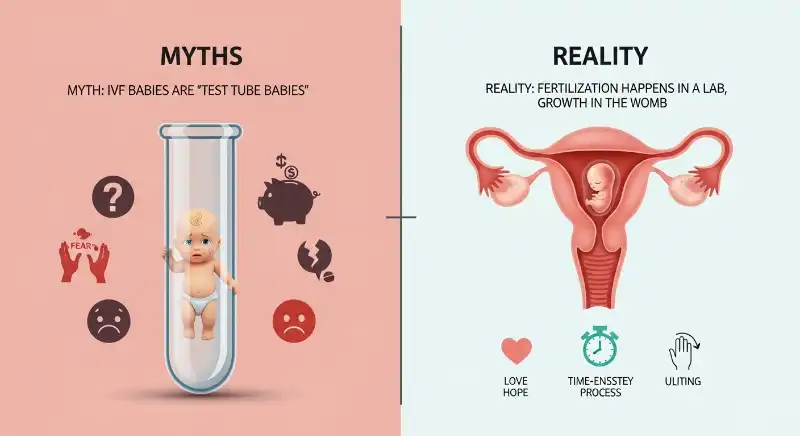
Learning the truth helps people breathe easier.
What Are the Biggest Misconceptions About IVF?
Some common myths:
- IVF always fails
- IVF babies aren’t healthy
- IVF is only for “last hope” cases
Reality:
IVF success depends on many factors, and outcomes are improving every year.
Does IVF Guarantee Pregnancy?
No, IVF does not guarantee pregnancy—but it improves the chances when natural methods struggle.
Expectation-setting example:
“IVF increases probability, not certainty. Hope should be realistic, not blind.”
Understanding IVF Clearly Before Making Any Decision
Before choosing IVF, understanding matters more than rushing. Knowledge helps people make decisions based on facts, not fear or pressure.
IVF availability, cost, success rates, and treatment protocols can vary by country, clinic, age, and medical history, which is why personal consultation with a fertility specialist is essential.

There is no right or wrong choice—only informed choices.
What Should People Understand Before Considering IVF?
People should consider:
- Emotional readiness
- Medical guidance
- Financial planning
- Support systems
Self-check example:
“Are we informed, supported, and emotionally prepared?”
Why Learning the Real Meaning of IVF Matters First?
Understanding IVF clearly:
- Reduces fear
- Builds confidence
- Prevents regret
Informed vs uninformed example:
Knowledge turns anxiety into clarity and confusion into calm decision-making.
Frequently Asked Questions
What Is the Meaning of IVF in Simple Words?
IVF means getting medical help to become pregnant when natural pregnancy is difficult. Doctors help the egg and sperm meet outside the body, then place the embryo into the uterus so pregnancy can continue naturally.
In short: IVF helps fertilization happen when the body needs support.
Is IVF a Natural Pregnancy or Artificial?
IVF is medically assisted, not artificial life creation.
Only fertilization happens outside the body. The pregnancy itself grows naturally in the womb, just like any other pregnancy.
Many people are surprised to learn this, but IVF does not replace pregnancy—it supports one step of it.
Is IVF Painful or Dangerous?
IVF is generally safe when done under medical supervision. Some steps may feel uncomfortable, but most patients describe IVF as manageable, not painful.
Doctors closely monitor hormone levels, response, and recovery to reduce risks.
Does IVF Guarantee Pregnancy?
No, IVF does not guarantee pregnancy. However, it significantly improves the chances for people who struggle with natural conception.
Success depends on factors like age, health, and medical history—not luck alone.
Is IVF Only for Women With Serious Fertility Problems?
No. IVF is used for many reasons, including:
- Unexplained infertility
- Male fertility issues
- Age-related fertility decline
- Genetic or medical concerns
IVF is not a “last resort”—it’s a medical option chosen when appropriate.
Final Conclusion: Understanding IVF Removes Fear Before Decisions
IVF is not just a medical term—it’s a word filled with hope, questions, and emotions. When people hear “IVF,” they often imagine complexity, fear, or failure. In reality, IVF is simply science supporting biology when the body needs help.
Understanding the real meaning of IVF changes everything. It replaces myths with facts, fear with clarity, and pressure with informed choice. IVF does not promise miracles, but it does offer possibility, structure, and medical guidance.
If you or someone you love is exploring IVF, knowledge is the first step. Ask questions. Talk to doctors. Explore trusted sources. Most importantly, remember—needing help does not mean something is wrong. It means you’re using the options available to you.
You’re not alone, and you’re not late. You’re informed—and that matters most.
How Does the IUI Procedure Work Step by Step?

Mush explores trending words, viral slang, and social media phrases, explaining them in simple English with fun examples for everyone.



1 thought on “IVF Meaning Explained: What It Really Is, How It Works, and Why More People Are Choosing It”